Cold Email Framework: 7 Proven Templates That Get Replies
Part of the SDR Playbook guide: The Complete SDR Playbook for 2026: Your End-to-End GuideMaster the cold email framework SDRs use to book meetings. Seven battle-tested templates, personalization tactics, and A/B testing strategies that drive replies.
Key takeaways
- A cold email framework provides a repeatable structure that balances personalization with scalability—the best frameworks achieve 15-30% reply rates when executed correctly
- The most effective cold emails are 50-125 words, lead with a personalized insight about the prospect's business, focus on one specific problem, and ask for a micro-commitment rather than a demo
- Seven proven frameworks (Problem-Agitate-Solve, Before-After-Bridge, Question-Story-CTA, Compliment-Connect-Ask, Pattern Interrupt, Peer Reference, and Content-First) each work for different prospect types and sales situations
- Personalization at scale requires researching trigger events, company news, and role-specific pain points—not just inserting a first name and company variable
- Testing subject lines, send times, and email length systematically can improve reply rates by 40-60% within 90 days of consistent iteration
Why most cold emails fail (and how frameworks fix it)
Your SDRs send hundreds of cold emails every week. Most get ignored, deleted, or—worse—marked as spam.
The problem isn't effort. It's structure.
Without a proven cold email framework, reps either write completely custom emails (doesn't scale) or blast generic templates (doesn't convert). Both approaches waste time and leave quota at risk.
A cold email framework gives your team a repeatable structure that balances personalization with efficiency. According to Gong's analysis of millions of cold emails, emails following proven frameworks see reply rates 3-5x higher than unstructured outreach.
This guide breaks down seven battle-tested frameworks your SDRs can deploy immediately, plus the personalization tactics and testing strategies that separate 5% reply rates from 25%.
The anatomy of a high-performing cold email framework
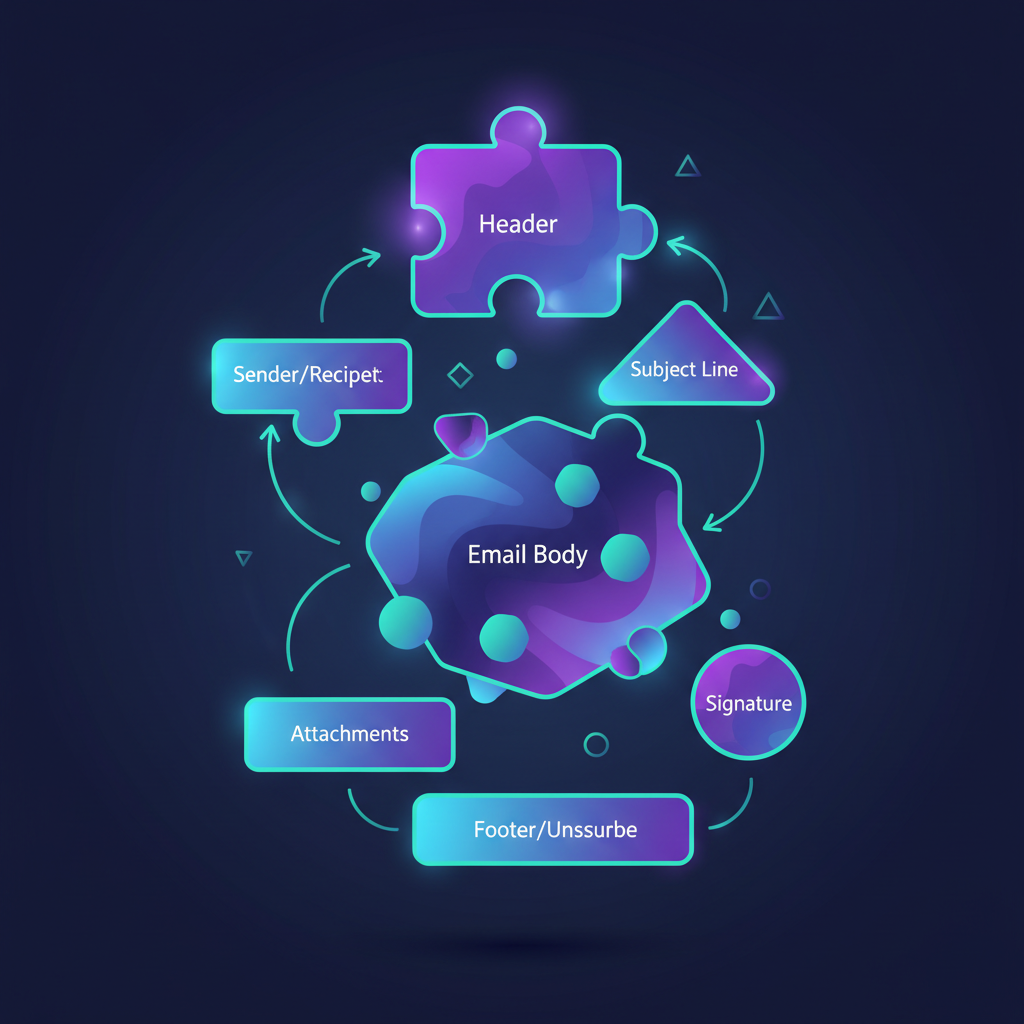
Before diving into specific frameworks, understand what every high-performing cold email must include:
Personalized hook (first 1-2 sentences): Reference something specific about the prospect's company, role, or recent activity. Generic openers like "I hope this email finds you well" get deleted. Specific observations like "Saw you just opened a Dallas office—congrats" get read.
Problem statement (1 sentence): Name the exact problem your prospect likely faces. Be specific to their role, industry, or company stage. "Managing sales coaching for a 50+ rep team" beats "improving sales performance."
Value proposition (1-2 sentences): Explain what you do and the outcome you deliver. Focus on business impact, not features. "We help VP Sales cut ramp time from 6 months to 90 days" is clearer than "We're an AI-powered sales training platform."
Proof point (1 sentence, optional but powerful): Add credibility with a relevant customer name, metric, or outcome. "We helped Acme Corp increase quota attainment from 62% to 84% in one quarter" works better than vague claims.
Single call-to-action (1 sentence): Ask for one specific, low-friction next step. "Worth a 15-minute conversation?" beats "Let me know if you'd like to learn more."
The best frameworks keep total length under 125 words. HubSpot's research on email engagement shows emails under 100 words get 50% higher reply rates than those over 200 words.
7 battle-tested cold email frameworks
Framework 1: Problem-Agitate-Solve (PAS)
When to use it: Your prospect has a known, urgent problem you can solve immediately.
Structure:
- Problem: Name the specific challenge they face
- Agitate: Make the pain real by highlighting consequences
- Solve: Position your solution as the direct answer
Example:
Subject: Your SDR ramp time
Hi Marcus,
Most VP Sales we work with struggle with 5-6 month SDR ramp times—which means you're paying full salary for half productivity.
That delay costs you roughly $40K per new hire in lost pipeline, plus the opportunity cost of deals your competitors close first.
We've helped eight SaaS companies cut ramp to 90 days using AI role-play. Worth a quick call to see if we can do the same for you?
Best, [Your name]
Why it works: PAS creates urgency by making the problem feel immediate and costly. It works best when you're confident about the prospect's pain point.
Framework 2: Before-After-Bridge (BAB)
When to use it: You want to paint a vision of transformation rather than focus on pain.
Structure:
- Before: Describe their current state
- After: Paint the desired future state
- Bridge: Position your solution as the path between them
Example:
Subject: 62% → 84% quota attainment
Hi Sarah,
Right now your team probably has 40-50% of reps missing quota, with inconsistent discovery skills across the floor.
Imagine 80%+ hitting number because every rep masters discovery through realistic AI practice before they ever touch a real prospect.
That's what we built at QUOTA. Acme Corp made that exact jump in one quarter. Want to see how?
Best, [Your name]
Why it works: BAB is aspirational rather than fear-based. It works well for prospects who are solution-aware but need to visualize the outcome.
Framework 3: Question-Story-CTA
When to use it: You want to engage curiosity and use social proof simultaneously.
Structure:
- Question: Ask about a challenge they likely face
- Story: Share a brief customer success story
- CTA: Invite them to explore the same outcome
Example:
Subject: Coaching 50+ reps?
Hi David,
How are you currently coaching 50+ reps without burning out your frontline managers?
We worked with a VP Sales at a similar-sized team who was spending 15+ hours/week in manual call reviews. We helped him automate feedback with AI, cutting his time to 3 hours while actually improving coaching quality.
His reps' conversion rates jumped 22% in 60 days.
Worth 15 minutes to explore?
Best, [Your name]
Why it works: Questions create open loops that make prospects want to keep reading. The story provides proof without sounding like a pitch.
Framework 4: Compliment-Connect-Ask
When to use it: The prospect or their company recently did something noteworthy (funding, launch, hire, content, award).
Structure:
- Compliment: Genuine praise for their achievement
- Connect: Link their achievement to a problem you solve
- Ask: Request a conversation
Example:
Subject: Congrats on the Series B
Hi Jennifer,
Congrats on the $30M Series B—saw the TechCrunch piece. Scaling from 15 to 40 reps in six months is aggressive.
That kind of growth usually creates coaching bottlenecks. Your managers will struggle to ramp that many reps while still closing their own deals.
We help hypergrowth teams scale coaching with AI role-play. Worth a conversation before you hit that wall?
Best, [Your name]
Why it works: Compliments earn attention when they're specific and genuine. Connecting the achievement to a future problem shows you understand their business.
Framework 5: Pattern Interrupt
When to use it: Your prospect gets dozens of similar cold emails. You need to stand out immediately.
Structure:
- Interrupt: Open with something unexpected
- Pivot: Quickly connect to business value
- Ask: Keep the CTA simple
Example:
Subject: You're probably ignoring this
Hi Tom,
You probably get 47 emails a week from sales tech vendors. I'll keep this short.
We help SDR leaders cut ramp time in half using AI role-play. We've done it for Acme, BetaCo, and Gamma Inc.
If that's interesting, reply "yes" and I'll send three times that work this week.
If not, reply "no" and I'll never email again.
Best, [Your name]
Why it works: The unexpected opener and the "reply no" option create novelty and respect. It works for prospects who are pattern-matching and auto-deleting traditional emails.
Framework 6: Peer Reference
When to use it: You have a customer in the same industry, role, or company size as your prospect.
Structure:
- Reference: Name a peer or competitor using your solution
- Result: Share the specific outcome they achieved
- Invite: Suggest a peer conversation or your involvement
Example:
Subject: How Acme ramps SDRs
Hi Lisa,
Your peer at Acme Corp (similar size, SaaS, 40-rep SDR team) was frustrated with 6-month ramp times.
They cut it to 11 weeks using our AI role-play platform. Their new hires now get 100+ realistic practice scenarios before touching a prospect.
Want to see how they did it? I can intro you to their VP Sales or just walk you through their playbook.
Best, [Your name]
Why it works: Peer social proof is the strongest form of credibility. If a competitor or peer is doing it, prospects feel urgency to keep up.
Framework 7: Content-First
When to use it: You have valuable content (guide, benchmark report, tool) that solves a problem independent of your product.
Structure:
- Offer value: Lead with free, genuinely useful content
- Explain relevance: Why this matters to them specifically
- Soft ask: Invite a follow-up conversation if they find it useful
Example:
Subject: 2026 SDR ramp benchmarks
Hi Rachel,
We just published our 2026 SDR Ramp Benchmark Report—data from 200+ B2B companies on what top performers do differently.
Given you're scaling your SDR team, thought you'd find the section on coaching cadence useful. No gate, just value: [link]
If the report sparks any questions about your own ramp strategy, happy to jump on a call.
Best, [Your name]
Why it works: Leading with value builds trust and reciprocity. Prospects who engage with your content are pre-qualified and warmer when you follow up.
Personalization at scale: How to make frameworks feel custom
A cold email framework only works if it doesn't feel like a template. Here's how to personalize at scale:
Trigger-based research: Use tools to identify prospects who just raised funding, hired a new executive, posted a job opening, or published content. Reference these triggers in your hook.
Role-specific pain points: Customize your problem statement based on title. A VP Sales cares about team quota attainment; an SDR Manager cares about ramp time and activity metrics.
Industry nuance: Adjust language and proof points by vertical. Don't send a SaaS case study to a manufacturing prospect.
Company-specific insights: Spend 60 seconds on LinkedIn or their website. Reference a recent post, company news, or team expansion.
Variable fields done right: Use merge tags for name, company, and role—but never make them obvious. "I help {title} at {company}" screams template. "I help VP Sales at fast-growing SaaS companies" feels human even with variables.
The goal: each prospect should feel like you wrote the email specifically for them, even though you're using a framework that allows you to send 50+ personalized emails per day.
This approach integrates naturally into your building high-converting outbound sales sequences strategy.
Subject line strategies that get opens
Your framework doesn't matter if the email never gets opened. Test these subject line approaches:
Curiosity without clickbait: "Your SDR ramp time" or "Quick question about coaching" work better than "You won't believe this" or "Open immediately."
Personalized references: "Saw your TechCrunch feature" or "Congrats on the Dallas office" signal you've done research.
Direct value: "2026 SDR benchmarks inside" or "Cut ramp time in half" tell prospects exactly what they'll get.
Question format: "Coaching 50+ reps?" or "How are you handling Q1 ramp?" create open loops.
Keep it short: 3-5 words often outperform longer subject lines. "Your Q1 ramp" beats "How are you planning to ramp your new SDR hires in Q1 2026?"
Test subject lines systematically. A/B test one variable at a time (length, format, personalization) across 100+ sends to identify winners.
Timing and frequency: When to send and follow up
Best send times: Tuesday-Thursday, 8-10 AM or 3-4 PM in the prospect's timezone. Avoid Monday mornings (inbox overload) and Friday afternoons (checked out for the weekend).
Follow-up cadence: Send 4-6 follow-ups spaced 2-4 days apart. Most SDRs quit after one follow-up, but 80% of conversations happen after the fifth touch, according to research from sales engagement platforms.
Follow-up frameworks: Each follow-up should add new value:
- Follow-up 1 (Day 3): Bump the original email with a single new insight
- Follow-up 2 (Day 7): Share a relevant piece of content or case study
- Follow-up 3 (Day 11): Ask a different question or reference a new trigger
- Follow-up 4 (Day 15): Offer an alternative (peer intro, free resource)
- Follow-up 5 (Day 20): The breakup email: "Should I close your file?"
Never send a follow-up that just says "Bumping this to the top of your inbox" or "Did you see my last email?" Add value or don't send.
Integrate your cold email framework into a broader multi-channel approach using sales cadence best practices to maximize coverage.
A/B testing your cold email framework
The frameworks above are starting points. Optimize them through systematic testing:
What to test:
- Subject line length and format
- Email length (50 vs. 100 vs. 150 words)
- Opening hook (question vs. compliment vs. problem)
- CTA type (calendar link vs. reply vs. question)
- Proof point inclusion (with vs. without)
- Send time and day
How to test:
- Change one variable at a time. If you test subject line AND email length simultaneously, you won't know which drove the result.
- Use meaningful sample sizes. Test each variant across at least 50-100 prospects before drawing conclusions.
- Track the right metrics. Open rate, reply rate, and positive reply rate matter more than click rate.
- Document everything. Keep a testing log so you build institutional knowledge over time.
What good looks like:
- Open rate: 40-60% is strong for targeted cold email
- Reply rate: 15-30% for well-targeted, personalized outreach
- Positive reply rate: 5-10% (meetings booked or genuine interest expressed)
If you're below these benchmarks, test more aggressively. A 5-point improvement in reply rate can mean 20-30 more meetings per rep per quarter.
Common cold email mistakes that kill reply rates
Even with a solid framework, these mistakes tank performance:
Talking about yourself too much: Prospects don't care about your company's founding story, your awards, or your features. They care about their problems. Keep "we/our/us" to a minimum.
Asking for too much: Requesting a 30-minute demo in the first email is a big ask. Request a 15-minute conversation or even just a reply to a question.
Sounding like a template: Overusing merge tags, awkward phrasing, or generic language signals mass email. Read your email out loud—if it sounds robotic, rewrite it.
No clear next step: Ending with "Let me know your thoughts" is vague. "Are you free Tuesday at 2 PM?" is specific and actionable.
Ignoring mobile: 50%+ of emails are opened on mobile. Long paragraphs, complex formatting, and large images don't render well. Keep it simple.
Following up without adding value: If your follow-up doesn't include new information, a different angle, or additional value, don't send it.
Integrating cold email into your SDR motion
A cold email framework works best as part of a multi-touch sequence. Here's how it fits into the broader SDR motion:
Day 1: Send cold email (Framework 1-7)
Day 2: LinkedIn connection request with personalized note
Day 4: Cold calling attempt
Day 6: Email follow-up #1 (add new value)
Day 8: LinkedIn message referencing email
Day 11: Email follow-up #2 (share content)
Day 13: Phone call #2
Day 16: Email follow-up #3 (different angle)
Day 20: Breakup email
This multi-channel approach, documented in the Complete SDR Playbook for 2026, increases total touchpoints without feeling spammy because you're varying the channel and message.
If a prospect replies to your email but isn't ready to book a meeting, your job shifts to running an effective discovery call that uncovers true pain and qualifies fit.
Tools and tech stack for cold email at scale
Email sequencing platforms: Outreach, SalesLoft, Apollo, or Lemlist allow you to automate follow-ups while maintaining personalization.
Email verification: NeverBounce, ZeroBounce, or Clearout prevent bounces that hurt deliverability.
Personalization tools: Clearbit, LinkedIn Sales Navigator, or 6sense provide data for personalizing at scale.
Deliverability monitoring: Mailreach or GlockApps help you track sender reputation and inbox placement rates.
AI-powered writing assistance: Tools like Lavender or Regie.ai analyze your emails and suggest improvements for clarity, length, and tone.
CRM integration: Ensure your email activity syncs to Salesforce or HubSpot so you maintain complete records and can report on what's working.
Measuring success: Metrics that matter
Track these metrics weekly to understand what's working:
Volume metrics:
- Emails sent per rep per day
- Sequence completion rate
- Follow-up rate (% of prospects who receive all touches)
Engagement metrics:
- Open rate (target: 40-60%)
- Reply rate (target: 15-30%)
- Positive reply rate (target: 5-10%)
- Meeting booking rate (target: 3-8%)
Quality metrics:
- Meetings held / meetings booked (show rate)
- Qualified opportunities created
- Pipeline generated per 100 emails sent
Deliverability metrics:
- Bounce rate (keep under 2%)
- Spam complaint rate (keep under 0.1%)
- Unsubscribe rate (under 0.5% is healthy)
Review these metrics in your weekly pipeline reviews and adjust your frameworks, targeting, and personalization tactics based on what the data tells you.
Coaching your team on cold email frameworks
Rolling out frameworks to your SDR team requires coaching, not just documentation:
1. Train the "why" before the "how": Help reps understand why each element of the framework matters. When they understand the psychology, they'll execute better.
2. Provide before/after examples: Show real emails that failed and the improved versions that succeeded. Make the contrast obvious.
3. Review emails before they send: For the first two weeks, have managers approve emails before reps hit send. Catch bad habits early.
4. Create a swipe file: Build a shared library of high-performing emails organized by framework, industry, and persona. Let reps learn from each other.
5. Role-play email writing: Have reps write emails live in team meetings. Critique them together. This builds muscle memory.
6. Celebrate wins publicly: When a rep books a meeting from a great email, share it with the team. Recognition reinforces behavior.
7. Iterate based on data: Review metrics monthly and adjust frameworks, personalization tactics, or targeting based on what's working.
FAQ
What is a cold email framework?
A cold email framework is a structured template that guides SDRs in crafting outbound emails to prospects with no prior relationship. It typically includes a personalized hook, clear value proposition, social proof, and a single call-to-action designed to maximize reply rates.
How long should a cold email be?
The most effective cold emails are 50-125 words. Shorter emails (under 100 words) typically see 50% higher reply rates than emails over 200 words, because they respect the prospect's time and get to the point quickly.
What's the best time to send cold emails?
Tuesday through Thursday, between 8-10 AM or 3-4 PM in the prospect's timezone, typically generate the highest open and reply rates. Avoid Mondays (inbox overload) and Fridays (end-of-week distractions).
How many follow-ups should I send in a cold email sequence?
Send 4-6 follow-up emails spaced 2-4 days apart. 80% of sales require five or more follow-ups, yet most SDRs stop after one or two. Each follow-up should add new value, not just ask "Did you see my last email?"
What makes a cold email framework effective?
An effective cold email framework includes genuine personalization (beyond first name), focuses on the prospect's problem rather than your product, includes specific proof points, asks for a micro-commitment, and can be executed at scale without sounding templated.

Stefano Sechi
Co-founder, QUOTA Training
Stefano Sechi is co-founder of QUOTA Training. He works hands-on with B2B sales teams on cold calling, discovery and objection handling, and shaped much of the methodology behind QUOTA’s AI role-play scenarios.
Turn this into reps, not just reading
QUOTA Training lets your team practise these exact scenarios with an AI buyer that reacts like the real thing — then scores every call.
See it in action