The Complete Cold Calling Guide for 2026: Master Every Call
Part of the Cold Calling guide: The Complete Cold Calling Guide for 2026: Master Every CallThe definitive cold calling guide covering mindset, research, scripts, objections, voicemail, cadence, metrics, tools, and AI practice for B2B sales success.

Key Takeaways
- Cold calling remains highly effective in 2026: Despite digital alternatives, cold calling delivers 1-3% conversion rates when executed properly, with top performers achieving 5-7% by combining research, strong openers, and systematic follow-up.
- Success requires a complete system: Effective cold calling isn't just about scripts—it demands the right mindset, thorough pre-call research, proven frameworks, objection handling skills, voicemail strategy, multi-touch cadences, and continuous improvement through metrics and practice.
- AI-powered practice accelerates mastery: Modern sales teams use AI role-play simulations to practice scenarios, receive instant feedback, and build confidence without burning real prospects, reducing ramp time by 30-40%.
- Quality beats quantity every time: Well-researched calls to qualified prospects outperform high-volume spray-and-pray approaches, with personalized openers increasing connect-to-conversation rates by 3-5x.
- Measurement drives improvement: Track leading indicators (dials, connects, conversations) and lagging indicators (meetings booked, pipeline generated) to identify coaching opportunities and optimize your approach systematically.
What Is Cold Calling and Why It Still Works in 2026
Cold calling is the practice of reaching out to potential customers by phone without prior contact or relationship, with the goal of starting a conversation that leads to a qualified sales opportunity. Despite predictions of its demise, cold calling remains one of the most effective prospecting channels for B2B sales teams in 2026.
According to HubSpot cold calling data, 82% of buyers accept meetings with sellers who proactively reach out, and 57% of C-level executives prefer phone contact over other channels. The reason is simple: cold calling creates immediate, two-way conversations that build rapport and qualify opportunities faster than any asynchronous channel.
The landscape has evolved, however. Today's effective cold calling isn't about reading scripts robotically to hundreds of unqualified contacts. It's a strategic, research-driven activity that combines preparation, personalization, and persistence. This comprehensive cold calling guide walks you through every element you need to master the discipline in 2026.
Modern cold calling success requires mastering multiple interconnected skills: mindset and confidence, pre-call research and targeting, compelling openers that earn permission to continue, conversational frameworks that uncover needs, objection handling techniques that address resistance, voicemail strategies for unreachable prospects, multi-touch cadences that maximize contact rates, and systematic measurement that drives continuous improvement.
This guide serves as your definitive resource, covering each component in depth and linking to specialized resources where you can dive deeper into specific techniques.
The Cold Calling Mindset: Reframe Before You Dial

Your mindset determines your success before you ever pick up the phone. Cold calling anxiety is real—most sales professionals experience some level of call reluctance, especially when starting out or after a string of rejections. The difference between average performers and top producers often comes down to how they frame the activity in their minds.
Reframe rejection as information, not failure. When a prospect says "not interested" or hangs up, they're not rejecting you personally—they're communicating that your message didn't resonate at that moment, with that approach, in their current context. Each "no" provides data you can use to refine your targeting, messaging, or timing. Top performers view cold calling as a numbers game where every dial brings them statistically closer to a "yes."
Shift from selling to helping. The best cold callers genuinely believe they're offering value, not interrupting. Before each calling session, remind yourself of the real problems your solution solves and the customers whose businesses improved because of it. Your goal isn't to trick someone into a meeting—it's to identify people facing challenges you can genuinely address and start a conversation about whether you can help.
Focus on process, not outcomes. You can't control whether any individual prospect will take a meeting, but you can control your preparation, your activity levels, your message quality, and your follow-through. Set process goals (make 60 quality calls, research 20 new prospects, practice three objection responses) rather than outcome goals (book five meetings today). This keeps you motivated even during slow periods.
Build confidence through competence. Call reluctance often stems from feeling unprepared. The more thoroughly you research prospects, the more you practice your frameworks, and the more objections you successfully handle, the more confident you'll become. Many teams now use AI role-play training to practice scenarios in a safe environment before making real calls, building muscle memory and confidence without burning prospects.
Develop pre-call rituals. Top performers use consistent routines to get into the right mental state before calling sessions. This might include reviewing success stories, doing vocal warm-ups, standing up to increase energy, or starting with a few easier calls to build momentum. For specific techniques, explore our guide on overcoming sales call anxiety.
The mental game matters. Address mindset first, and the tactical execution becomes significantly easier.
Pre-Call Research: Know Before You Dial
The era of spray-and-pray cold calling is over. In 2026, personalization isn't optional—it's the price of entry. According to Gartner research on B2B buying, buyers are 3x more likely to engage with sellers who demonstrate knowledge of their specific business context.
Effective pre-call research doesn't mean spending 30 minutes on each prospect—that's unsustainable at scale. Instead, develop a systematic 3-5 minute research process that uncovers the key insights you need to personalize your opener and demonstrate relevance.
Company-Level Research
Start with the company. Visit their website and scan for:
- Recent news or announcements: Funding rounds, new product launches, expansion into new markets, leadership changes, or awards. These create natural conversation starters and indicate potential trigger events.
- Company priorities: Read the "About Us" and "Careers" pages to understand stated values, mission, and current hiring focus. Job postings reveal growth areas and pain points.
- Technology stack: Use tools like BuiltWith or Datanyze to see what technologies they're currently using, especially tools related to your solution category.
- Company size and growth trajectory: Understand whether they're a 10-person startup or a 10,000-person enterprise, as this shapes their buying process, budget authority, and typical pain points.
Prospect-Level Research
Next, research the individual you're calling:
- LinkedIn profile: Review their role, tenure, previous experience, and any content they've shared or engaged with. Look for common connections, shared backgrounds, or mutual interests.
- Recent activity: Check if they've posted on LinkedIn, authored blog posts, or appeared in news articles. Referencing something they've personally created or said is the strongest form of personalization.
- Role-specific pain points: Based on their title and department, what challenges do people in their position typically face? How does your solution address those specific challenges?
Trigger Events
Prioritize prospects experiencing trigger events that make them more likely to buy:
- Leadership changes (new VP of Sales often means new tools and processes)
- Funding announcements (budget availability)
- Rapid hiring (scaling pain points)
- New market entry (need for new capabilities)
- Technology changes (replacing or adding to their stack)
- Regulatory changes affecting their industry
The research goal isn't to become an expert on every prospect—it's to gather 2-3 specific, relevant facts that let you demonstrate you've done your homework and earn the right to a conversation. Use our sales call preparation checklist to systematize this process across your team.
Targeting and List Building: Call the Right People
Even perfect execution fails if you're calling the wrong prospects. Effective targeting ensures you invest your time in conversations with people who have a genuine need for your solution, the authority to buy it, and the budget to afford it.
Ideal Customer Profile (ICP)
Start by defining your Ideal Customer Profile based on your best existing customers:
- Firmographic criteria: Industry, company size, revenue range, geographic location, growth stage
- Technographic criteria: Current technology stack, especially tools you integrate with or replace
- Behavioral criteria: Companies actively hiring in relevant departments, recently funded, expanding into new markets
Buyer Personas
Within your ICP, identify the specific roles you should target:
- Economic buyers: Who controls the budget and makes final purchase decisions? (Often VP or C-level)
- Champions: Who will advocate for your solution internally? (Often director or manager level)
- End users: Who will actually use your product daily? (Often individual contributors)
For most B2B solutions, you'll need to engage multiple personas throughout the sales cycle, but your initial cold outreach should target either the economic buyer (for smaller companies or lower-price solutions) or a likely champion (for enterprise sales with complex buying committees).
List Sources and Quality
Build your calling lists from multiple sources:
- Intent data providers: Identify companies actively researching solutions in your category
- LinkedIn Sales Navigator: Filter by company and role criteria, identify job changes and trigger events
- Industry associations and directories: Find companies in specific verticals
- Event attendees: Target people who attended relevant conferences or webinars
- Referrals and warm introductions: Always prioritize these highest-quality leads
Regularly clean your lists. Remove outdated contacts, companies outside your ICP, and prospects who've explicitly opted out. A smaller list of high-quality, well-researched prospects will always outperform a massive list of generic contacts.
Cold Call Structure: The Anatomy of Effective Calls
While every conversation unfolds differently, effective cold calls follow a proven structure that maximizes your chances of earning a meeting. Understanding this framework lets you navigate calls confidently while remaining flexible and conversational.
The Pattern Interrupt Opener (0-10 seconds)
Your first few seconds determine whether the prospect hangs up or keeps listening. The goal isn't to pitch—it's to earn permission to continue the conversation.
A strong opener includes:
- Your name and company: "Hi [Name], this is [Your Name] from [Company]..."
- Reason for calling: "...I'm calling because [specific relevant reason]..."
- Permission-based transition: "...did I catch you at a bad time?" or "...do you have 30 seconds?"
The "did I catch you at a bad time?" question is counterintuitive but effective. It disarms the prospect by acknowledging you're interrupting and giving them control, which paradoxically makes them more likely to engage. Most will say "what's this about?" rather than hang up.
For proven frameworks and examples, see our deep dive on cold call opening lines.
The Value Proposition (10-30 seconds)
Once you've earned permission to continue, deliver a concise value statement that's relevant to this specific prospect:
"I noticed [specific observation from your research]. We work with [similar companies/roles] to [specific outcome], typically helping them [quantified benefit]. I thought it might make sense to have a brief conversation about whether we could help you achieve something similar."
This structure demonstrates relevance (you've done research), establishes credibility (you work with similar companies), and focuses on outcomes (not features).
The Qualification Question (30-60 seconds)
Don't launch into a pitch. Instead, ask a question that uncovers whether this prospect has the problem you solve:
"Before I share more, can I ask—how are you currently handling [specific process related to your solution]?"
or
"What's your biggest challenge around [relevant area] right now?"
This shifts the call from monologue to dialogue, gives you critical qualification information, and demonstrates you care about their needs, not just your pitch.
The Meeting Ask (60-90 seconds)
If the conversation reveals potential fit, transition directly to scheduling:
"Based on what you've shared, I think there could be real value in a more detailed conversation. I'd love to show you specifically how we've helped [similar company] achieve [relevant outcome]. Do you have your calendar handy? I have time Thursday at 2 PM or Friday at 10 AM—which works better for you?"
Use assumptive language and offer specific times rather than asking "when are you available?" This makes scheduling easier and increases booking rates.
For complete frameworks and word-for-word examples, explore our guide to cold calling scripts that book meetings.
Handling Objections: Turn Resistance Into Conversations
Objections are inevitable in cold calling—they're not roadblocks, they're opportunities to address concerns and continue the conversation. The best cold callers welcome objections because they indicate engagement; the prospect is thinking about your offer rather than simply dismissing it.
The Most Common Cold Call Objections
"I'm not interested."
This is typically a reflex response, not a thoughtful evaluation. Respond with:
"I appreciate that, [Name]. Most of the [roles] I talk to say the same thing initially—until they realize we've helped [similar companies] [specific outcome]. Can I ask what you're currently doing for [relevant area]?"
"Send me an email."
This is often a polite brush-off, but it can also be genuine. Respond with:
"Happy to send something over. Before I do, so I can make it relevant—are you currently facing any challenges around [specific area]? That way I can send you exactly what would be most helpful."
For a complete framework on this specific objection, see our guide on handling the 'send me an email' objection.
"We're already working with [competitor]."
This is actually a buying signal—they have budget and recognize the problem. Respond with:
"That's great, [Competitor] is a solid solution. Can I ask what made you choose them initially? And how is that working out for you?"
Then position your differentiators based on their response. For detailed frameworks, see our article on competitor objection handling.
"We don't have budget."
Budget objections often mask other concerns. Probe deeper:
"I understand. Can I ask—if budget weren't a constraint, is this something you'd want to solve? When do you typically revisit budget allocations?"
This reveals whether it's a timing issue, a priority issue, or a genuine lack of fit.
"I'm too busy right now."
Respect their time while securing a future commitment:
"I completely understand. When would be a better time to connect? I'm looking at my calendar for next week—would Tuesday or Thursday work better?"
The Universal Objection Handling Framework
For any objection, use this four-step framework:
- Acknowledge: "I understand..." or "That makes sense..."
- Clarify: "Can I ask..." or "Help me understand..."
- Respond: Address the specific concern with relevant information
- Advance: "Given that, does it make sense to..." or "Would you be open to..."
Never argue with objections or dismiss concerns. Instead, acknowledge them, ask clarifying questions to understand the real issue, address it with relevant information or examples, and then attempt to advance the conversation.
For comprehensive frameworks covering all major objection types, review our guide to objection handling techniques every SDR should master.
Voicemail Strategy: Make Your Messages Count
You'll reach voicemail on 70-80% of your cold calls. Most sales reps leave generic, forgettable messages or skip voicemail entirely. This is a missed opportunity. A strategic voicemail approach increases callback rates and warms up prospects for future attempts.
When to Leave Voicemail
Don't leave a voicemail on every attempt. A strategic cadence might be:
- Attempt 1: No voicemail (they don't know you yet)
- Attempt 2: Leave voicemail (introduce yourself and value)
- Attempt 3: No voicemail (avoid seeming desperate)
- Attempt 4: Leave voicemail (different angle or reference)
- Attempt 5+: Occasional voicemails with new information
The Effective Voicemail Structure
Keep voicemails to 20-30 seconds maximum. Include:
- Name and company: "Hi [Name], this is [Your Name] from [Company]."
- Specific reason for calling: "I'm calling because I noticed [specific observation] and thought..."
- Value statement: "We help [similar companies/roles] achieve [specific outcome]."
- Soft call to action: "I'll try you again, but if you'd like to connect sooner, my number is [number]."
- Repeat your number slowly: Say it twice, slowly and clearly.
Voicemail Variables
Don't leave the same message every time. Vary your approach:
- Reference different research points or trigger events
- Mention a specific customer success story
- Note a mutual connection or common background
- Reference a piece of content they might find valuable
- Mention you'll follow up via email (then do it)
The goal isn't to get callbacks from voicemail—callback rates are typically under 1%. The goal is to warm up the prospect so when you finally connect live, they've heard your name and have context for who you are.
For complete scripts and tactical examples, see our voicemail strategy guide.
Multi-Touch Cadences: Persistence Without Being Annoying
One call rarely results in a conversation. Most successful connections happen on the 4th-8th attempt, yet most sales reps give up after 1-2 tries. The key to effective cold calling in 2026 is building multi-touch cadences that combine phone calls with other channels to maximize contact rates without becoming a pest.
The Optimal Calling Cadence
Research shows the most effective cadences span 2-3 weeks and include 8-12 total touches across multiple channels:
Week 1:
- Day 1: Call attempt 1 (no voicemail) + LinkedIn connection request
- Day 2: Email 1 (reference the call attempt)
- Day 3: Call attempt 2 (leave voicemail)
- Day 5: Call attempt 3 (no voicemail)
Week 2:
- Day 8: Email 2 (different angle or value prop)
- Day 9: Call attempt 4 (leave voicemail)
- Day 11: LinkedIn message (if connected)
- Day 12: Call attempt 5 (no voicemail)
Week 3:
- Day 15: Call attempt 6 (leave voicemail)
- Day 16: Email 3 (breakup email: "should I close your file?")
- Day 17: Call attempt 7 (final attempt)
Channel Coordination
Each channel serves a different purpose:
- Phone calls: Create immediate conversations and qualify opportunities
- Emails: Provide detail, share resources, and maintain visibility between calls
- LinkedIn: Build familiarity and credibility through profile views, connection requests, and messages
- Video messages: Stand out with personalized Loom or Vidyard recordings
The channels should reference each other: "I left you a voicemail yesterday..." in an email, or "Following up on the email I sent..." in a call. This creates a cohesive campaign rather than disconnected touches.
Timing and Frequency
Respect reasonable boundaries:
- Space calls at least 2-3 days apart (daily calls feel harassing)
- Vary your calling times to increase connect probability
- Don't call outside business hours unless you have specific intel that the prospect prefers it
- If someone asks you to stop contacting them, honor it immediately and note it in your CRM
For complete frameworks on building effective multi-channel sequences, see our guide to sales cadence best practices.
Measuring What Matters: Cold Calling Metrics and KPIs
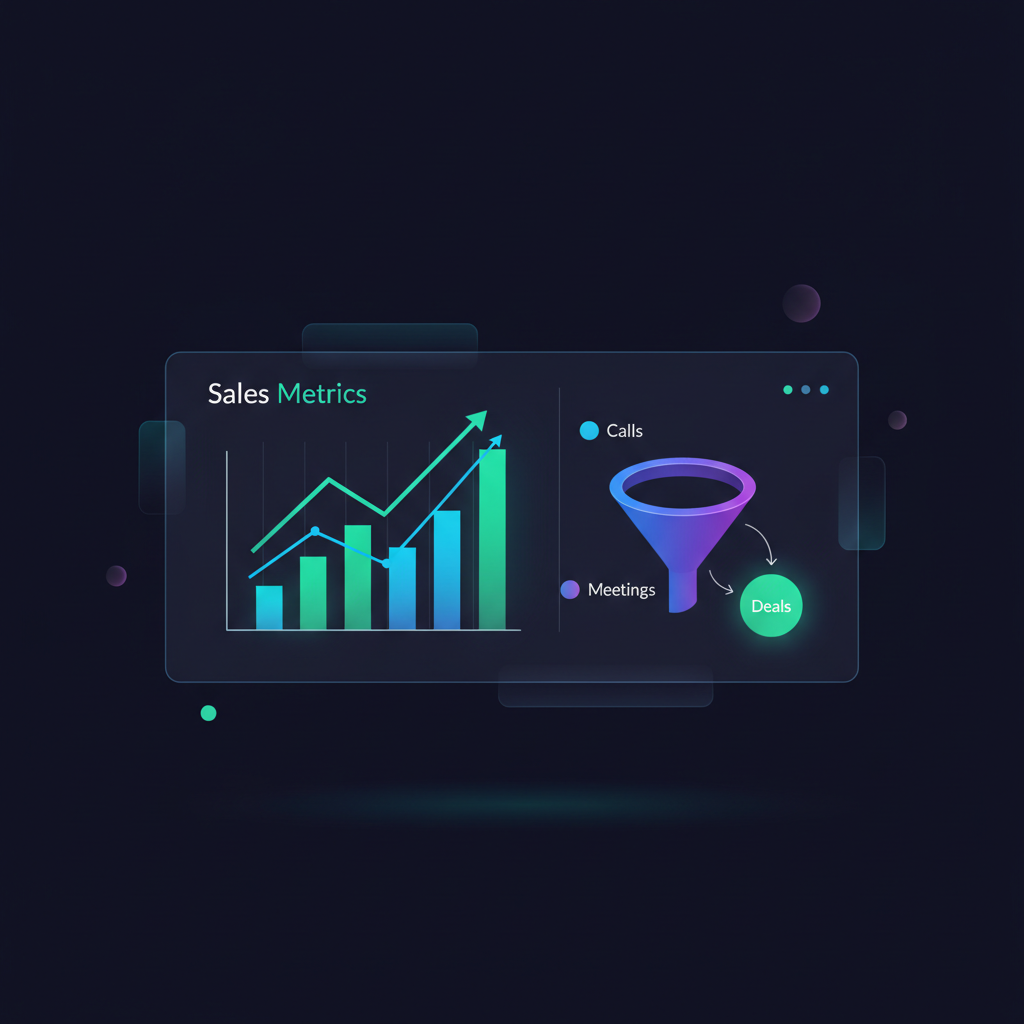
You can't improve what you don't measure. Systematic tracking of cold calling metrics lets you identify what's working, spot coaching opportunities, and optimize your approach over time.
Leading Indicators (Activity Metrics)
These metrics measure your inputs and effort:
- Dials per day: Total number of call attempts (target: 50-80 for SDRs)
- Connect rate: Percentage of dials that reach a live person (benchmark: 15-25%)
- Conversation rate: Percentage of connects that turn into meaningful conversations (benchmark: 30-50%)
- Voicemails left: Track to ensure you're following your cadence strategy
Leading indicators are fully within your control and predict future results. If your activity metrics are strong but outcomes are weak, the issue is technique (messaging, qualification, objection handling) rather than effort.
Lagging Indicators (Outcome Metrics)
These metrics measure your results:
- Meeting booking rate: Percentage of conversations that result in scheduled meetings (benchmark: 10-20%)
- Show rate: Percentage of booked meetings where the prospect actually shows up (target: 80%+)
- Qualified opportunity rate: Percentage of meetings that become real sales opportunities (benchmark: 30-50%)
- Pipeline generated: Dollar value of opportunities created from cold calling
- Closed/won deals: Ultimate measure of cold calling ROI
Efficiency Metrics
These help you optimize resource allocation:
- Calls per meeting booked: How many dials it takes to book one meeting (benchmark: 30-100 depending on ICP and offer)
- Time to first meeting: How many days from first touch to booked meeting
- Cost per meeting: Labor cost divided by meetings booked
- ROI: Revenue generated divided by cost of cold calling program
Best Practices for Tracking
- Log everything in your CRM: Use consistent disposition codes (no answer, left voicemail, gatekeeper, conversation, meeting booked, not interested, etc.)
- Review metrics weekly: Look for trends and patterns, not daily fluctuations
- Benchmark against yourself: Track your own improvement over time rather than only comparing to others
- Segment your analysis: Compare metrics across different ICPs, personas, or message variations to identify what works best
According to Salesforce sales statistics, top-performing sales teams are 2.3x more likely to use analytics and metrics extensively. For a broader framework on tracking performance, see our guide to sales performance metrics beyond quota.
Tools and Technology: Your Cold Calling Tech Stack
The right tools make cold calling more efficient and effective. Here's the essential technology stack for modern cold calling teams:
Core CRM Platform
Your CRM (Salesforce, HubSpot, Pipedrive, etc.) is the foundation. It should:
- Store all prospect and account information
- Log every call attempt, outcome, and next step
- Track cadence progress and trigger next actions
- Provide reporting and analytics on key metrics
Sales Engagement Platforms
Tools like Outreach, SalesLoft, or Apollo automate cadence execution:
- Automatically queue your next calls based on cadence rules
- Provide one-click dialing to maximize efficiency
- Integrate email and LinkedIn touches into the same workflow
- Track all activity automatically in your CRM
Intent Data and Prospecting Tools
Find the right prospects at the right time:
- LinkedIn Sales Navigator: Advanced filtering, lead recommendations, and trigger alerts
- ZoomInfo, Cognism, or Apollo: Contact data and company intelligence
- Bombora or 6sense: Intent data showing who's researching solutions like yours
- BuiltWith or Datanyze: Technographic data on prospect's current tools
Conversation Intelligence
Record, transcribe, and analyze your calls to improve:
- Gong, Chorus, or Clari: Automatic call recording, transcription, and AI-powered coaching insights
- Call libraries: Review successful calls and learn from top performers
- Keyword tracking: Identify which talk tracks and phrases correlate with success
For implementation guidance, see our article on AI conversation intelligence for sales teams.
Practice and Training Tools
Build skills before burning prospects:
- AI role-play platforms (like QUOTA): Practice calls with AI prospects that simulate objections and scenarios, get instant feedback, and build confidence in a safe environment
- Call recording and review: Record practice sessions for self-review and coaching
- Script libraries: Centralize proven frameworks and talk tracks
The best technology stack is the one your team actually uses. Start with the essentials (CRM + engagement platform + conversation intelligence) and add specialized tools as specific needs arise.
Building Cold Calling Skill: Practice, Coaching, and Continuous Improvement
Cold calling is a skill that improves with deliberate practice and quality coaching. The gap between average and exceptional cold callers isn't talent—it's the quality and quantity of their practice and the feedback they receive.
Structured Practice Routines
Top performers don't just "make calls"—they practice deliberately:
- Script practice: Rehearse your core frameworks until they're internalized and natural
- Objection drills: Practice responding to common objections until you can handle them smoothly
- Tonality work: Record yourself and listen for energy, pace, and confidence
- Role-play sessions: Practice with peers or managers who simulate prospect scenarios
Traditional role-play with managers or peers is valuable but limited by availability and scalability. Modern sales teams increasingly use AI role-play training platforms that let reps practice anytime, face unlimited scenarios, and receive instant feedback without requiring a coach's time.
Effective Coaching Approaches
Managers should implement systematic coaching processes:
- Live call shadowing: Listen to reps in real-time (remotely via conversation intelligence tools or in-person)
- Call reviews: Analyze recorded calls together, focusing on specific improvement areas
- Skill-specific coaching: Focus each session on one element (openers, objections, qualification questions, etc.) rather than trying to fix everything at once
- Positive reinforcement: Highlight what's working, not just what needs improvement
For frameworks on delivering effective feedback, see our guides on sales call feedback examples and sales call debrief best practices.
Creating a Learning Culture
The best cold calling teams build continuous improvement into their culture:
- Share wins: Celebrate successful calls and share recordings so everyone learns
- Weekly skill sessions: Dedicate 30-60 minutes each week to practice and skill development
- Peer learning: Create buddy systems where reps shadow each other and share feedback
- Competitive gamification: Use leaderboards, badges, and challenges to make practice engaging
Many organizations now use gamification in sales training to increase engagement and accelerate skill development.
Continuous Improvement Process
Implement a systematic improvement cycle:
- Measure: Track your key metrics (connect rate, conversation rate, meeting booking rate)
- Analyze: Identify your biggest gap (e.g., low connect rate vs. low conversion of conversations to meetings)
- Focus: Choose one specific skill to improve based on your gap
- Practice: Dedicate focused practice time to that specific skill
- Apply: Implement the improved approach in real calls
- Review: Measure results and identify the next improvement area
This cycle ensures you're always working on your highest-leverage improvement opportunity rather than practicing randomly.
Cold Calling in Different Contexts: Adapting Your Approach
While the core principles remain consistent, effective cold calling requires adaptation based on your specific context.
Industry and Vertical Considerations
Different industries have different norms:
- Financial services: Often requires compliance disclosures and recorded lines; prospects expect formal, professional communication
- Technology: Prospects are sophisticated about sales tactics; differentiation and technical credibility matter more
- Healthcare: Privacy regulations (HIPAA) shape conversations; clinical outcomes and evidence matter
- Manufacturing: Longer sales cycles and multiple stakeholders; focus on ROI and operational impact
Research the communication norms and buying patterns in your target industry and adapt accordingly.
Company Size Variations
Your approach should vary based on prospect company size:
Small businesses (1-50 employees):
- Decision-makers are more accessible (often answer their own phones)
- Shorter sales cycles and fewer stakeholders
- Price sensitivity is higher; focus on ROI and ease of implementation
- Less formal communication style often works better
Mid-market (50-500 employees):
- Some gatekeeping but not impenetrable
- Balance of accessibility and process
- Multiple stakeholders but not huge committees
- Value both ROI and strategic capability
Enterprise (500+ employees):
- Significant gatekeeping; executive assistants screen calls
- Complex buying committees and long sales cycles
- Less price-sensitive; focus on strategic value and enterprise capabilities
- More formal communication expected; credibility is critical
Role-Based Adaptations
Tailor your approach based on who you're calling:
C-level executives:
- Be extremely concise (30-second value prop maximum)
- Lead with strategic outcomes and business impact, not features
- Reference peer companies and industry trends
- Expect gatekeepers; develop strategies to get past or work with them
VP/Director level:
- Balance strategic value with tactical implementation
- Focus on departmental pain points and objectives
- Show how you help them achieve their goals
- More accessible than C-level but still time-constrained
Manager level:
- Focus on day-to-day operational challenges
- Emphasize ease of use and team adoption
- These are often your champions; build genuine relationships
- More willing to have longer exploratory conversations
Individual contributors:
- Focus on how you make their specific job easier
- They're users, not buyers, but can influence decisions
- Great for discovery and understanding ground-level pain
- Use these conversations to understand the organization before calling higher
Adapt your research depth, message focus, and conversation style based on who you're calling.
Common Cold Calling Mistakes and How to Avoid Them
Even experienced reps fall into these common traps. Awareness is the first step to avoiding them.
Mistake 1: Talking Too Much
The problem: Launching into a monologue about your company and product without letting the prospect speak.
The fix: Follow the 70/30 rule—the prospect should talk 70% of the time, you should talk 30%. Ask questions, listen actively, and let the conversation flow naturally.
Mistake 2: Pitching Too Early
The problem: Delivering your full pitch before understanding whether the prospect has the problem you solve.
The fix: Qualify first, pitch second. Ask discovery questions to understand their current situation and challenges before explaining how you can help.
Mistake 3: Giving Up Too Soon
The problem: Making 1-2 call attempts and moving on when you don't connect.
The fix: Implement systematic multi-touch cadences. Most successful connections happen on attempts 4-8. Persistence (done respectfully) is required.
Mistake 4: Sounding Scripted
The problem: Reading your script word-for-word in a monotone voice that screams "sales call."
The fix: Internalize your frameworks through practice so you can deliver them conversationally. Focus on sounding natural and genuinely curious, not perfect.
Mistake 5: Failing to Prepare
The problem: Calling prospects with zero research, forcing you to ask basic questions they find insulting ("So, what does your company do?").
The fix: Invest 3-5 minutes in pre-call research for every prospect. Use the research frameworks outlined earlier in this guide.
Mistake 6: Accepting Objections at Face Value
The problem: Hearing "send me an email" or "we're all set" and immediately ending the call.
The fix: Recognize that initial objections are often reflexive, not thoughtful. Ask clarifying questions to understand the real concern before giving up.
Mistake 7: Poor Time Management
The problem: Calling at random times throughout the day, never building momentum or rhythm.
The fix: Block dedicated time for calling sessions (ideally 90-120 minutes). Call in batches to build momentum and get into a flow state.
Mistake 8: No Follow-Through
The problem: Having a good conversation but failing to send promised information, confirm the meeting, or follow up as committed.
The fix: Immediately after each call, complete all follow-up tasks before moving to the next dial. Your credibility depends on doing what you said you'd do.
Mistake 9: Ignoring the Data
The problem: Making calls day after day without tracking results or analyzing what's working.
The fix: Log every call with detailed disposition codes. Review your metrics weekly and adjust your approach based on what the data reveals.
Mistake 10: Neglecting Continuous Improvement
The problem: Using the same approach indefinitely without practicing, getting coaching, or trying new techniques.
The fix: Implement the continuous improvement cycle outlined earlier. Dedicate time each week to skill development, not just activity.
Avoiding these mistakes will put you ahead of 80% of cold callers and significantly improve your results.
The Future of Cold Calling: Trends Shaping 2026 and Beyond
Cold calling continues to evolve. Understanding emerging trends helps you stay ahead of the curve.
AI-Powered Preparation and Practice
Artificial intelligence is transforming how sales teams prepare for and practice cold calling:
- AI research assistants: Tools that automatically gather and synthesize prospect information
- AI role-play: Realistic practice conversations with AI prospects that adapt based on your responses
- Real-time coaching: AI that listens to your calls and suggests next-best-actions in real-time
- Predictive analytics: AI that identifies which prospects are most likely to convert
Teams using AI sales coaching strategies are seeing 25-40% faster ramp times and higher win rates.
Hyper-Personalization at Scale
Generic outreach is dead. Technology now enables personalization at scale:
- Dynamic scripts: CRM systems that populate scripts with prospect-specific details
- Video prospecting: Personalized video messages that humanize cold outreach
- Intent-based targeting: Calling prospects based on their active research behavior, not just firmographics
Regulatory and Compliance Evolution
Privacy regulations continue to evolve:
- TCPA compliance: Stricter rules around when and how you can call mobile numbers
- GDPR and privacy laws: Expanded globally, affecting how you source and store contact data
- Call recording regulations: Varying by state and country, requiring careful compliance
Stay current on regulations in your markets and implement compliant processes from the start.
Integration with Digital Channels
Cold calling is increasingly part of integrated, multi-channel campaigns:
- Social selling: LinkedIn activity that warms up prospects before calls
- Marketing automation: Coordinating calls with email nurture sequences
- Conversational AI: Chatbots that qualify prospects before they reach human reps
- SMS and messaging: Text-based follow-up that complements phone conversations
The most effective prospecting strategies in 2026 orchestrate multiple channels rather than relying on cold calling alone. For frameworks on building integrated approaches, see our guide to building high-converting outbound sales sequences.
Remote and Distributed Teams
With remote work now standard, cold calling dynamics have shifted:
- Home office acoustics: Background noise and audio quality matter more
- Digital collaboration: Screen sharing and video add new dimensions to discovery
- Global teams: Time zone coordination and cultural adaptation are critical
- Virtual coaching: Managers coach remotely using conversation intelligence tools
Adapt your processes and technology for distributed team success.
Putting It All Together: Your 30-Day Cold Calling Improvement Plan
Reading this cold calling guide is valuable—implementing it is what drives results. Here's a practical 30-day plan to systematically improve your cold calling performance.
Week 1: Foundation and Preparation
Days 1-2: Audit your current approach
- Record yourself making 5-10 calls
- Listen back and identify your top 3 improvement areas
- Review your current metrics (connect rate, conversation rate, meeting booking rate)
Days 3-4: Build your infrastructure
- Clean and segment your prospect lists
- Set up or optimize your CRM and sales engagement platform
- Create templates for emails and LinkedIn messages in your cadence
Days 5-7: Develop your frameworks
- Write and practice your core opener framework
- Document responses to your top 10 objections
- Create your qualification question list
- Practice until frameworks feel natural, not scripted
Week 2: Skill Development
Days 8-10: Focus on openers
- Practice 20+ opener variations with different research hooks
- Use AI role-play or peer practice to get feedback
- Make live calls focusing exclusively on improving your first 30 seconds
Days 11-13: Master objection handling
- Practice your objection responses until they're smooth
- Make calls and track which objections you're hearing most
- Refine your responses based on what works in real conversations
Day 14: Mid-point review
- Analyze your metrics from week 2
- Identify your biggest improvement area
- Adjust your focus for week 3
Week 3: Volume and Refinement
Days 15-19: Increase activity
- Implement your full multi-touch cadence
- Make 60+ calls per day
- Focus on building momentum and rhythm
- Log everything meticulously in your CRM
Days 20-21: Coaching and feedback
- Share 3-5 recorded calls with your manager or peer
- Get specific feedback on your identified improvement areas
- Practice the recommended adjustments
Week 4: Optimization and Systematization
Days 22-25: Test and optimize
- A/B test different openers or value propositions
- Try calling at different times to find your best connect rates
- Experiment with voicemail frequency and messaging
Days 26-28: Document what works
- Create your personal playbook documenting what's working
- Share successful calls with your team
- Update your scripts and frameworks based on results
Days 29-30: Plan ongoing improvement
- Review your 30-day metrics and celebrate improvements
- Identify your next skill development priority
- Schedule ongoing practice and coaching sessions
This plan provides structure while remaining flexible enough to adapt to your specific situation. The key is consistent, deliberate practice combined with systematic measurement and adjustment.
FAQ
What is the best time to make cold calls in 2026?
Research shows the best times for cold calling are Tuesday through Thursday, between 8-9 AM and 4-5 PM in the prospect's time zone. Wednesday mid-morning (10-11 AM) consistently delivers the highest connect rates for B2B sales.
How many cold calls should an SDR make per day?
High-performing SDRs typically make 50-80 cold calls per day, with 60 being the industry average. Quality matters more than quantity—focus on well-researched calls to qualified prospects rather than hitting arbitrary volume targets.
What is a good cold call conversion rate?
A good cold call conversion rate (calls to meetings booked) ranges from 1-3% for outbound prospecting. Top performers achieve 5-7% by combining thorough research, strong openers, effective objection handling, and consistent follow-up cadences.
How do I overcome cold call anxiety?
Overcome cold call anxiety through preparation, practice, and reframing. Use a pre-call routine, practice with AI role-play simulations, focus on helping rather than selling, and start each session with easier calls to build momentum and confidence.
Should I use a script for cold calling?
Yes, but use scripts as frameworks, not word-for-word recitations. Scripts ensure you cover key points and handle objections consistently, while allowing flexibility to adapt to each conversation. Practice until the structure feels natural, not robotic.
How many times should I attempt to reach a prospect?
Most successful connections happen on the 4th-8th attempt. Implement a systematic cadence with 7-10 touches across 2-3 weeks, combining calls, emails, and LinkedIn. Space attempts 2-3 days apart and vary your timing to maximize connect probability.
What should I do if a prospect asks me to send an email?
Use this as an opportunity to qualify before sending. Ask what specific information would be most helpful, or what challenges they're currently facing, so you can send something genuinely relevant. Then send a personalized email and schedule your next call attempt.
How can I improve my cold calling skills quickly?
Focus on deliberate practice: record and review your calls, practice with AI role-play tools or peers, get regular coaching feedback, and work on one specific skill at a time (openers, objections, qualification questions). Improvement comes from focused practice, not just making more calls.

Stefano Sechi
Co-founder, QUOTA Training
Stefano Sechi is co-founder of QUOTA Training. He works hands-on with B2B sales teams on cold calling, discovery and objection handling, and shaped much of the methodology behind QUOTA’s AI role-play scenarios.
Turn this into reps, not just reading
QUOTA Training lets your team practise these exact scenarios with an AI buyer that reacts like the real thing — then scores every call.
See it in action