Cold Call Time Blocking: Schedule Your Day to Triple Connects
Part of the Cold Calling guide: The Complete Cold Calling Guide for 2026: Master Every CallMaster cold call time blocking to triple your connect rate. Learn the exact schedule, energy windows, and batch techniques that turn dials into meetings.

Key takeaways
- Cold call time blocking increases connect rates by 2-3x when you align dedicated 60-90 minute windows with prospect availability peaks (8:00-9:30 AM, 11:45 AM-12:15 PM, 4:00-5:30 PM in their time zone) and eliminate all context-switching during those blocks.
- The first 15 minutes of any cold call block are your lowest-performing dials because momentum, tonality, and mental state haven't peaked yet; top SDRs warm up with lower-priority accounts before calling high-value targets.
- Batching similar tasks outside call blocks prevents the 23-minute focus recovery cost documented by productivity research—schedule all list-building, research, and CRM hygiene in dedicated non-calling windows to protect your highest-revenue activity.
- Energy alignment matters more than time-of-day best practices: if you're a night-owl whose peak energy hits at 2 PM, block your most important calling window then, even if conventional wisdom says mornings are "best."
- Visible accountability structures double time-block adherence: public commitment (shared calendars, team calling hours, live leaderboards) makes it 2.1x more likely you'll complete your scheduled blocks without drifting into email or Slack.
If you're an SDR making 60 dials a day but connecting with only 4-6 prospects, the problem usually isn't your script, your list, or your tonality. It's your schedule.
Most reps treat cold calling as a task they squeeze between emails, Slack messages, research rabbit holes, and CRM updates. They dial for 12 minutes, get pulled into a question from a colleague, return to the phone 18 minutes later, check LinkedIn, make six more calls, then realize it's time for a demo.
That approach kills connect rates, destroys momentum, and makes every dial feel harder than it should.
Cold call time blocking—the practice of scheduling dedicated, uninterrupted windows exclusively for outbound calling—is the single highest-leverage change an SDR can make to triple connects without changing anything else about their approach.
This article walks you through the exact schedule, energy-management tactics, and environmental design that turn time blocking from a calendar theory into a connect-rate multiplier. If you're serious about cold call metrics that predict revenue, your schedule is where the leverage lives.
Why cold call time blocking works (and why most reps resist it)
Cold calling is a momentum activity. Your first three dials of the day feel clunky. Your tonality is stiff, your pacing is off, and your brain is still half-focused on the email you just read.
By dial 15, you've hit your stride. Your voice sounds natural, objections feel familiar, and you're pattern-matching in real time. By dial 40, you're operating on instinct.
Context-switching destroys that momentum. Every time you leave your dialer to answer a Slack message, research a prospect, or update Salesforce, you reset the clock. Research from the University of California, Irvine shows it takes an average of 23 minutes to fully regain focus after an interruption—and most SDRs interrupt themselves every 11 minutes.
Time blocking eliminates the switching cost. When you protect a 90-minute window for nothing but dials, you:
- Build and sustain momentum across 50+ calls instead of restarting every 15 minutes
- Train your brain to enter a flow state where objection handling and tonality become automatic
- Remove the cognitive load of deciding "what should I do next?" every few minutes
- Create accountability: a blocked window is a commitment, not a suggestion
Yet most reps resist it. Why?
Because unstructured time feels productive. Researching accounts feels like work. Updating your CRM feels like progress. Answering a teammate's question feels helpful. But none of those activities generate pipeline at the rate that live conversations do.
Time blocking forces you to confront the difference between activity and impact—and that discomfort is exactly why it works.
For a deeper dive into building the foundational skills that make every dial count, see our complete cold calling guide.
The anatomy of a high-performance cold call schedule
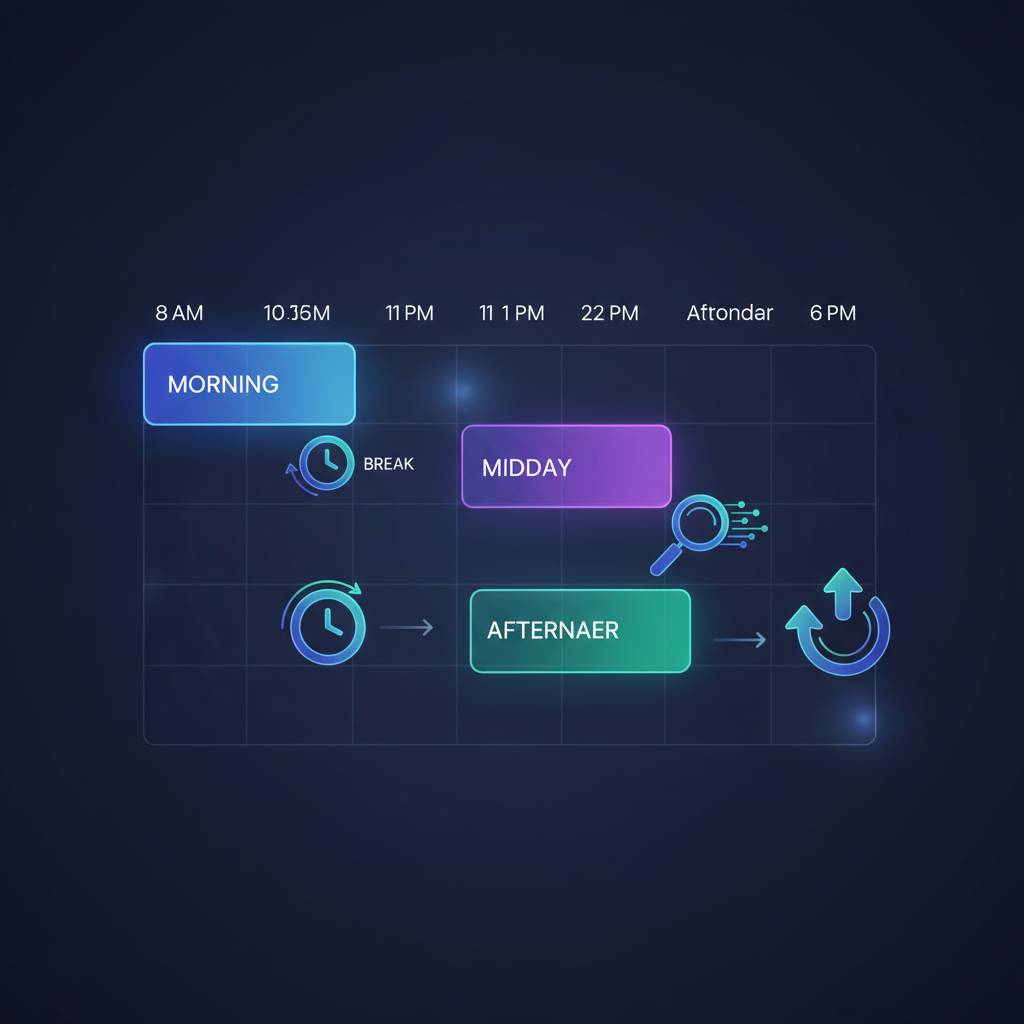
Here's the exact daily structure that consistently produces 12-18 connects per day for SDRs dialing into mid-market and enterprise accounts.
Block 1: 8:00–9:30 AM (Prospect's time zone)
Why this window: Decision-makers and gatekeepers arrive early, before meetings stack up. Voicemail boxes are less full. Gong's analysis of connect-rate timing shows this is the second-highest connect window of the day, behind only late afternoon.
What to dial: Your highest-priority accounts. You're fresh, your energy is high, and you haven't been beaten down by rejection yet. If you're targeting VPs or C-level buyers, this is your window.
Warm-up protocol: Spend the first 10 minutes (8:00–8:10 AM) dialing lower-priority accounts or re-engaging old leads. Your tonality needs to settle before you call your best targets. Think of this as a vocal and mental warm-up, similar to how athletes don't sprint all-out in the first 30 seconds of a race.
Block 2: 11:45 AM–12:15 PM (Prospect's time zone)
Why this window: The "lunch gamble." Many gatekeepers step away, and decision-makers who eat at their desks often answer their own phones. This is a short, high-variance block—your connect rate will either spike or tank depending on your industry and persona.
What to dial: Mid-priority accounts, or re-attempts on contacts you missed in the morning block. Keep your list ready to go so you're not wasting minutes searching for numbers.
Energy note: You're likely hitting a post-lunch energy dip. If this block consistently underperforms for you, move it or skip it entirely—your time is better spent on research or follow-up during a low-energy window.
Block 3: 4:00–5:30 PM (Prospect's time zone)
Why this window: The highest connect rate of the day. People are wrapping up, clearing their desks, and more likely to pick up an unknown number. Gatekeepers have often left for the day. This is your money block.
What to dial: A mix of top-priority accounts you missed in the morning and high-intent leads (referrals, warm intros, people who opened your email). You want a blend of volume and quality here.
Momentum tip: If you're on a roll at 5:15 PM and your energy is still high, keep going. Some of the best connects happen between 5:30–6:00 PM when only the hardest-working buyers are still at their desks—and they respect reps who are still dialing.
Non-calling blocks: Where the rest of your day goes
- 7:30–8:00 AM: List-building, CRM hygiene, review yesterday's voicemails
- 9:30–10:00 AM: Follow-up emails, LinkedIn connection requests, log notes from Block 1
- 10:00–11:30 AM: Research deep-dives for tomorrow's top 20 accounts, prep for demos or discovery calls
- 12:15–1:00 PM: Lunch, walk, reset
- 1:00–2:00 PM: AI role-play scenarios to refine objection handling and tonality (if you're using QUOTA), or live practice with a peer
- 2:00–4:00 PM: Meetings, team syncs, training, or a flex block for overflow tasks
- 5:30–6:00 PM: End-of-day CRM updates, plan tomorrow's call blocks, review metrics
The key principle: Never let a non-calling task bleed into a calling block. If you think of a great email to send at 8:47 AM, write it down and send it at 9:35 AM. Protect the blocks.
Energy management: Match your biology to your blocks
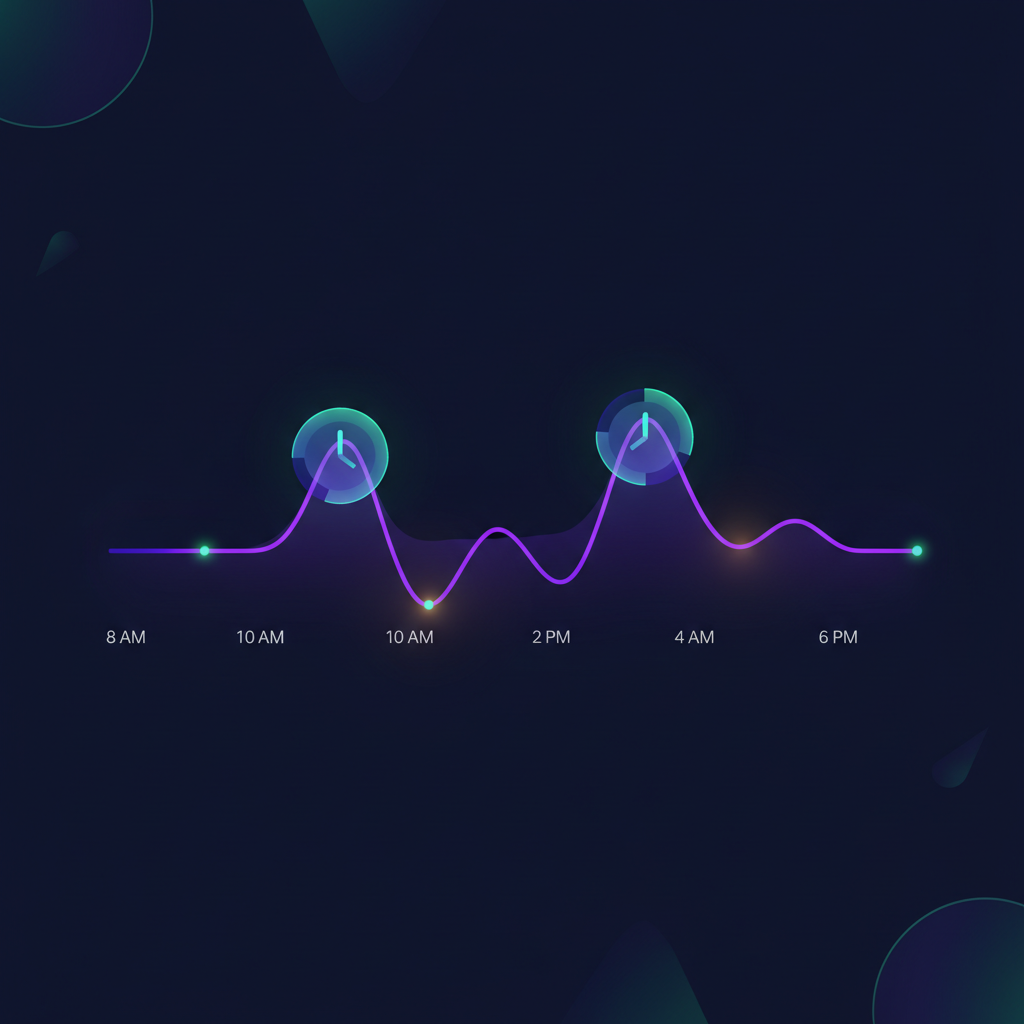
Not all hours are created equal—for your prospects or for you.
While the windows above reflect when prospects are most likely to answer, your personal energy curve matters just as much. A rep who's a night owl and doesn't hit peak cognitive function until 11 AM will struggle to perform in an 8:00 AM block, even if prospects are available.
Identify your peak energy window
Track your energy levels for one week. At the end of each hour, rate yourself 1–10 on:
- Mental clarity (how fast are you thinking?)
- Emotional resilience (how easily do you bounce back from a "no"?)
- Vocal energy (does your voice sound confident and natural, or flat and scripted?)
Most people fall into one of three patterns:
- Morning-peak: High energy 7 AM–11 AM, dip after lunch, moderate recovery 3–5 PM
- Afternoon-peak: Slow start, energy climbs 10 AM–2 PM, strong finish 4–6 PM
- Steady-state: Relatively consistent energy all day, with a post-lunch dip
Schedule your most important calling block during your peak window, even if it doesn't align perfectly with "best time to call" conventional wisdom. A rep at 9/10 energy calling at 10 AM will outperform a rep at 5/10 energy calling at 8 AM, even if 8 AM has a statistically higher answer rate.
For tactics on how to sound confident and natural regardless of your energy level, see our guide to cold call confidence training.
Protect your energy between blocks
What you do in the 15 minutes between call blocks determines whether your next block will be productive or a slog.
Do:
- Walk outside (even 5 minutes resets your nervous system)
- Hydrate and eat protein (blood sugar crashes kill performance)
- Review your wins from the last block (positive reinforcement sustains motivation)
- Do 10 deep breaths or a 2-minute meditation (sounds soft, works hard)
Don't:
- Scroll social media (it fragments attention and drains dopamine)
- Dive into a complex CRM task (you won't finish it, and you'll start the next block stressed)
- Rehash a bad call (reflection is useful after all blocks are done, not between them)
How to defend your time blocks (and why most reps fail here)
Scheduling the blocks is easy. Keeping them is where most SDRs fall apart.
Here's how to build a schedule that actually sticks.
1. Treat time blocks as non-negotiable meetings
Put them on your calendar with the same weight as a demo or a 1:1 with your manager. Title them clearly: "Cold Call Block – Do Not Disturb." If someone tries to book over your 8:00 AM block, you say no—just like you would if they tried to book over a customer meeting.
2. Communicate your schedule to your team
Let your manager, your AEs, and your peers know when you're unreachable. A simple Slack message at the start of the week works:
"Heads up—I'm blocking 8:00–9:30 AM, 11:45 AM–12:15 PM, and 4:00–5:30 PM daily for outbound calling. I'll be in DND mode during those windows and will respond to everything by 10 AM, 1 PM, and 6 PM. If it's urgent, text me."
This sets expectations and eliminates the guilt of ignoring messages.
3. Use environmental cues to signal focus
- Headphones on = I'm in a block (even if you're not listening to anything)
- Desk flag or sign = Visual signal for open-office environments
- Slack status: "🔴 Cold calling – back at 9:30 AM"
Harvard Business Review research on focus and productivity shows that visible commitment devices increase follow-through by 40%+.
4. Batch all distractions into designated windows
Every time you think "I should research this account" or "I need to update this opp" during a call block, write it in a running list. Then handle the entire list at 9:30 AM, 1:00 PM, or 5:30 PM.
The rule: If it's not a live conversation with a prospect, it doesn't happen during a call block.
5. Track adherence, not just outcomes
At the end of each day, log two numbers:
- Planned call blocks completed: Did you execute all three blocks, or did two of them get interrupted?
- Minutes spent in-block: Did your 90-minute block actually contain 90 minutes of dialing, or did you drift into Slack for 22 of those minutes?
You'll find that completing your blocks correlates more tightly with weekly connect rate than any other variable. Managers looking to scale this across a team should explore SDR ramp time optimization strategies that bake time blocking into onboarding.
Advanced time-blocking tactics that separate top performers
Once you've mastered the basics, here's how elite SDRs squeeze even more leverage out of their schedules.
Time-zone stacking for multi-region teams
If you're calling into multiple time zones, you can run more than three blocks per day by stacking windows.
Example: An SDR in Denver calling East Coast (8:00 AM ET = 6:00 AM MT) and West Coast (8:00 AM PT = 9:00 AM MT) can run:
- 6:00–7:30 AM MT: East Coast Block 1
- 9:00–10:30 AM MT: West Coast Block 1
- 2:00–3:30 PM MT: East Coast Block 2
- 4:00–5:30 PM MT: West Coast Block 2
This is exhausting and not sustainable five days a week, but some reps run it 2–3 days per week to front-load their pipeline, then use the other days for follow-up and research.
Theme your blocks by persona or account tier
Instead of calling a random mix of accounts in each block, theme them:
- Block 1: Enterprise accounts only (highest energy, highest prep required)
- Block 2: Mid-market accounts (moderate energy, faster pace)
- Block 3: SMB or inbound follow-up (lower cognitive load, high volume)
This reduces context-switching even within a block. Your messaging, tonality, and pacing stay consistent across similar buyer types.
Use "power hours" with your team
Some teams run synchronized calling blocks where everyone dials at the same time, with a live leaderboard visible on a TV or shared screen. The competitive energy and social accountability make it nearly impossible to drift into email or Slack.
QUOTA's gamification features are purpose-built for this: reps can see real-time progress, earn points for connects and meetings booked, and compete on leaderboards that update as they dial.
Pre-block rituals that prime your state
Top performers don't just start dialing at 8:00 AM—they prepare their mental and emotional state in the 10 minutes before.
Common rituals:
- Listen to a hype playlist (something with energy and tempo)
- Review a recent win (a great call recording, a "yes" email, a closed deal)
- Read your "why I do this" note (a reminder of your income goal, your career target, or who you're supporting)
- Do 10 power poses or jump in place (it sounds ridiculous, but it works)
The goal is to enter the block in a state, not just a time slot.
FAQ
What is cold call time blocking for SDRs?
Cold call time blocking is the practice of scheduling dedicated, uninterrupted windows specifically for outbound calling, typically 60-90 minutes per block, aligned with prospect availability and your peak energy levels. It eliminates context-switching and maximizes connect rates by batching similar activities.
What are the best times to block for cold calling?
The highest-connect windows are 8:00-9:30 AM, 11:45 AM-12:15 PM, and 4:00-5:30 PM in your prospect's time zone. Block your highest-energy period for your most important calling block, typically morning for most reps.
How long should a cold call time block be?
Optimal cold call blocks run 60-90 minutes. Shorter blocks don't allow momentum to build; longer blocks lead to fatigue and declining performance. Schedule a 10-15 minute break between blocks to reset energy and review outcomes.
How do I prevent interruptions during cold call blocks?
Set Slack to Do Not Disturb, close email and browser tabs, use a visible signal (headphones, desk flag) to indicate focus time, and communicate your schedule to teammates. Treat cold call blocks as non-negotiable meetings with yourself.
Should I time block on the same schedule every day?
Consistency builds habit, so yes—run the same blocks Monday through Thursday. Many top reps use Friday as a flex day for research, follow-up, and planning, or they shift their blocks earlier to front-load the week and finish Friday by 2 PM.
What if my manager schedules meetings during my call blocks?
Have a direct conversation. Share your connect-rate data before and after implementing time blocking, and propose alternative windows for recurring meetings. Most managers will protect your blocks once they see the revenue impact. If they won't, escalate or consider whether the role is structured for success.
Start tomorrow: Your first week of cold call time blocking
If you've never time-blocked before, don't try to implement the full schedule on day one. Here's a realistic ramp:
Week 1:
- Run one 60-minute block per day (pick your peak energy window)
- Track: Did you complete it without interruption? How many connects did you generate?
Week 2:
- Add a second block (morning + late afternoon)
- Communicate your schedule to your team
- Measure week-over-week change in connect rate
Week 3:
- Add the third block if your energy and results support it
- Start batching all non-calling tasks into dedicated windows
- Refine your pre-block rituals
Week 4:
- Lock in your rhythm and make it non-negotiable
- Share your results with your manager or team to build accountability
By the end of 30 days, time blocking won't feel like a discipline—it'll feel like the only way to work.
If you're ready to layer in skill development during your non-calling windows, explore how AI role-play scenarios let you practice objection handling, tonality, and pacing without burning live leads or waiting for a manager's calendar to open up.
Your calendar is your most valuable asset. Protect it like pipeline.
Sources

Stefano Breglia
Co-founder, QUOTA Training
Stefano Breglia is co-founder of QUOTA Training. He focuses on sales methodology, deal progression and how AI simulation accelerates rep ramp time across the SDR, BDR, AE and AM roles.
Turn this into reps, not just reading
QUOTA Training lets your team practise these exact scenarios with an AI buyer that reacts like the real thing — then scores every call.
See it in action