Sales Call Feedback Examples: How to Coach Reps That Stick
Part of the Sales Coaching guide: The Complete Sales Coaching Guide: Build a Program That DeliversDiscover proven sales call feedback examples that drive behavior change. Learn how to deliver coaching that reps actually apply on their next call.

Key takeaways
- Effective sales call feedback is specific, timely, and balanced—combining what worked with one clear action for improvement.
- The SBI framework (Situation-Behavior-Impact) helps managers deliver feedback that reps can immediately understand and apply.
- Vague praise like "good job" or criticism like "you need to listen better" rarely changes behavior; concrete sales call feedback examples with timestamps and exact language do.
- Feedback loops work best when paired with practice opportunities like AI role-play, where reps can test new approaches in a safe environment.
- The most coachable moments happen within 24 hours of a call, before reps forget context and move on to the next prospect.
Giving feedback on sales calls is one of the highest-leverage activities a sales manager can do—yet it's also one of the most inconsistent. Many managers default to generic praise ("Nice work!") or unhelpful criticism ("You talked too much"), leaving reps confused about what to actually change.
This guide provides proven sales call feedback examples across common scenarios—discovery calls, demos, objection handling, and closing conversations—so you can coach reps in a way that sticks. You'll learn how to structure feedback using tested frameworks, deliver it at the right moment, and tie it to practice so new behaviors become habits.
Why most sales call feedback fails to change behavior
The gap between feedback given and feedback applied is wide. Research from Gong shows that only 12% of sales coaching conversations result in measurable behavior change. Three failure modes dominate:
Vagueness. Telling a rep "be more consultative" or "build rapport" offers no actionable path forward. Reps don't know what specific words to say differently or which moments to adjust.
Delayed delivery. Feedback given days or weeks after a call loses context. The rep has moved on, forgotten the prospect's tone, and can't reconstruct the decision-making that led to the mistake.
Imbalance. Feedback that's all positive feels like empty cheerleading; all negative feels demoralizing. The most effective coaching balances recognition of what worked with one clear improvement area.
To fix this, managers need a repeatable structure and a library of concrete examples. That's where frameworks like SBI and tactical sales call feedback examples come in.
The SBI framework for sales call feedback
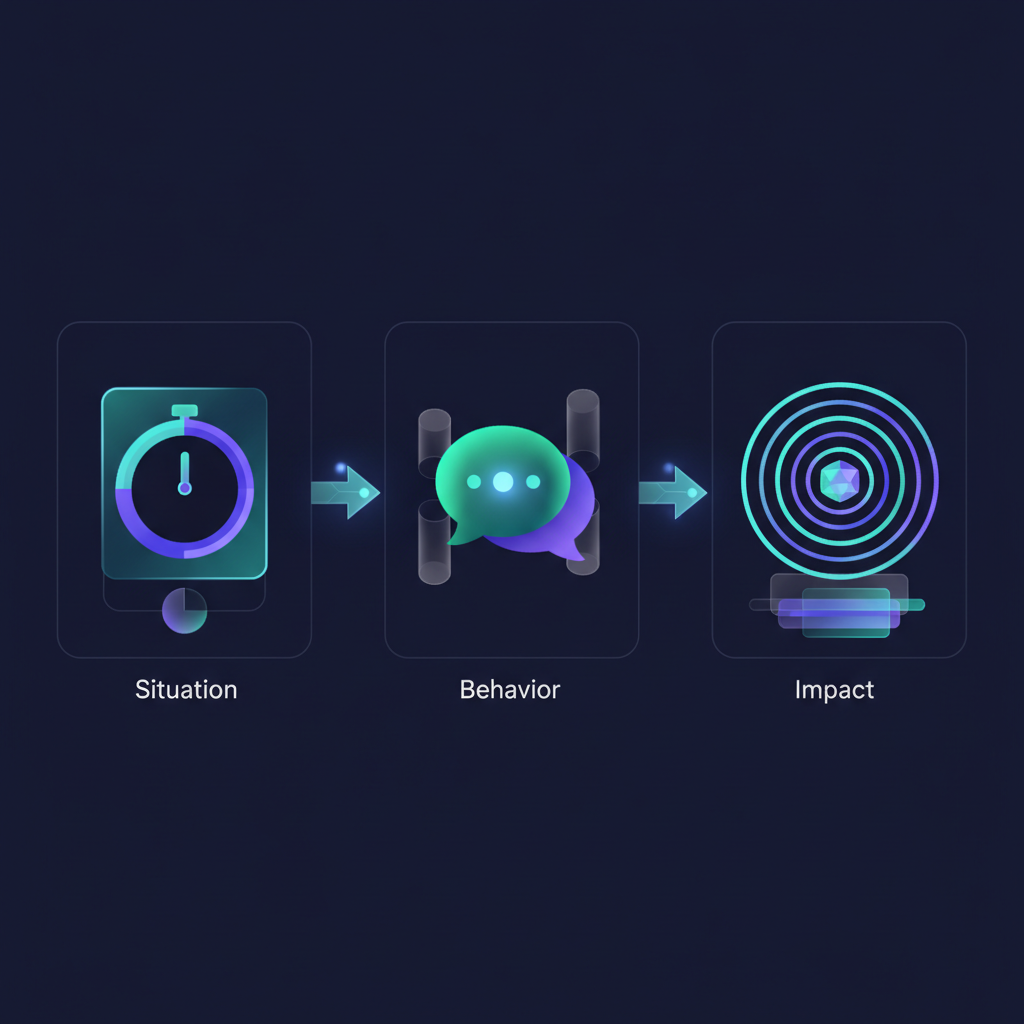
The Situation-Behavior-Impact model, developed by the Center for Creative Leadership, gives managers a three-part structure that makes feedback clear and non-threatening:
- Situation: Describe the specific moment (ideally with a timestamp if you're reviewing a recording).
- Behavior: State the observable action the rep took—what they said or did, without interpretation.
- Impact: Explain the effect that behavior had on the prospect, the deal, or the conversation flow.
Here's how it sounds in practice:
"At 14:30 in the call (Situation), you asked 'Does that make sense?' three times in two minutes (Behavior). Each time, the prospect gave a short 'yeah' and you moved on. That pattern made it feel like you were checking your own understanding rather than uncovering theirs, and we missed a chance to dig into their hesitation around budget (Impact)."
Notice how this avoids judgment ("You weren't listening") and instead ties observable behavior to a tangible outcome. The rep can replay that moment, see the pattern, and adjust.
For a structured way to organize these observations, consider using a sales call review template that standardizes what you evaluate across calls.
Sales call feedback examples by scenario
Below are proven feedback scripts for the most common coaching moments. Use these as-is or adapt the structure to your team's voice.
Discovery call feedback examples
Example 1: Jumping to solutions too early
"Around the 8-minute mark, the prospect mentioned their team was struggling with forecast accuracy. You immediately started explaining how our reporting dashboard solves that. The prospect said 'interesting' but didn't elaborate. By pivoting to the solution before understanding the root cause—like whether it's a data quality issue, a process gap, or a tool limitation—we couldn't tailor the demo later. Next time, try a follow-up like 'Help me understand what's driving that inaccuracy—is it the data coming in, or how your team is interpreting it?' That keeps the focus on diagnosis."
Example 2: Strong question sequencing
"At 12:15, after the prospect said they're evaluating three vendors, you asked 'What criteria matter most in that decision?' That was perfectly timed—it shifted the conversation from features to buying priorities. The prospect opened up about needing executive buy-in and a fast implementation. That intel shaped the rest of the call. Keep doing that: when a prospect mentions a process (like evaluation), ask about the decision criteria behind it."
For more tactical question examples, explore our list of discovery call questions that uncover real pain.
Demo and presentation feedback examples
Example 3: Talking past an objection signal
"At 19:40, the prospect said 'We tried something like this before and it didn't stick.' You acknowledged it with 'I hear you' and kept walking through the feature. That was a missed pivot point. When a prospect brings up past failure, it's usually their biggest fear. A stronger move: pause the demo, ask 'What happened there—was it the tool, the rollout, or something else?' and address that concern before continuing. Otherwise, they're mentally checked out, replaying that old failure while you're talking."
Example 4: Effective use of a customer story
"Around 23:00, when the prospect asked about ROI timelines, you shared the story of how Company X saw a 30% increase in connect rates within 60 days. You tied it directly to their earlier pain point about low activity-to-meeting conversion. That made the ROI concrete and relevant. The prospect leaned in and asked two follow-up questions. That's the pattern: match customer stories to the specific pain they've shared, not generic wins."
If your team struggles with demo pacing or structure, pair this feedback with AI role-play practice so they can test new approaches without risking live deals.
Objection handling feedback examples
Example 5: Weak response to pricing pushback
"At 26:10, the prospect said 'That's higher than we budgeted.' You offered a discount immediately. The prospect accepted, but we left money on the table—and we didn't learn whether price was the real concern or a negotiation tactic. A better sequence: acknowledge ('I appreciate you sharing that'), diagnose ('Help me understand—is it the total investment, the timing, or how it compares to other priorities?'), then explore creative structuring before discounting. Let's practice that in our next role-play."
Example 6: Confident objection reframe
"At 31:20, when the prospect said 'We need to think about it,' you responded with 'I totally understand—what specifically do you need to think through?' The prospect admitted they hadn't looped in their VP yet. That question transformed a stall into a concrete next step. You then offered to send a one-pager for the VP and scheduled a follow-up. That's textbook: treat 'I need to think' as a request for information, not a rejection."
For deeper objection frameworks, review our guide on objection handling techniques that every SDR should master.
Closing and next-step feedback examples
Example 7: Vague next steps
"At the end of the call, you said 'I'll send over some info and we can reconnect next week.' The prospect agreed, but we didn't lock a date or define what 'info' means. That's how deals slip. Instead, try: 'I'll send a recap by end-of-day Thursday with answers to your questions about integrations and security. Can we lock 20 minutes next Tuesday at 10 a.m. to review and map out next steps?' Then send the calendar invite before you hang up. Specificity creates momentum."
Example 8: Strong trial close
"At 34:50, you asked 'If we can solve the integration piece and get you a custom onboarding plan, is there anything else that would stop us from moving forward?' The prospect paused and surfaced a concern about user adoption we hadn't discussed yet. That question smoked out a hidden objection before the proposal stage, giving us time to address it. Use that trial-close pattern earlier and more often—it de-risks the deal."
Before high-stakes closing calls, encourage reps to complete sales call warm-up exercises to reduce anxiety and sharpen delivery.
How to deliver sales call feedback that reps actually hear

Even perfectly structured feedback can land poorly if the delivery is off. Follow these five principles:
1. Deliver feedback within 24 hours
Context fades fast. The sooner you debrief, the more the rep remembers the prospect's tone, their own thought process, and the competitive dynamics. If you can't meet live, send a quick Loom or voice note with timestamps.
2. Lead with what worked
Start every feedback session by naming one or two specific things the rep did well. This isn't fluff—it reinforces effective behavior and makes the rep more receptive to the improvement area. Use the SBI structure here too: "At 6:30, when you mirrored the prospect's language about 'pipeline visibility,' they nodded and expanded on the problem. That built credibility fast."
3. Focus on one behavior change per call
Managers often dump five or six critiques in one session, overwhelming the rep. Instead, pick the highest-impact improvement—the one that, if fixed, would most change the outcome—and make that the focus. Save secondary points for future debriefs.
4. Tie feedback to practice
Feedback without repetition doesn't rewire habits. After the debrief, have the rep practice the new behavior immediately—either in a live role-play with you or using an AI sales coaching platform where they can iterate privately until it feels natural.
5. Ask the rep to self-assess first
Before you share your observations, ask: "What do you think went well? What would you do differently?" Reps who identify their own gaps are more motivated to fix them. Your job shifts from critic to guide, reinforcing their insight and adding what they missed.
For a complete debrief structure, see our sales call debrief best practices guide.
Common feedback mistakes to avoid
Mistake 1: Feedback sandwiches that bury the message. The "compliment-critique-compliment" formula trains reps to ignore the middle. Be direct: lead with what worked, then transition clearly ("Here's the one thing I'd adjust"), then discuss the improvement.
Mistake 2: Comparing reps to each other. "Sarah handles objections better than you" creates resentment, not growth. Compare the rep to their own past performance or to a standard, not to peers.
Mistake 3: Giving feedback only after losses. If you only coach when deals go sideways, reps associate feedback with failure. Debrief wins too, so they understand why they won and can replicate it.
Mistake 4: Skipping the "why" behind the behavior. Sometimes a rep makes a mistake because they lack a skill (fixable with practice), and sometimes because they misunderstand the strategy (fixable with explanation). Diagnose which it is before prescribing the solution.
How to scale sales call feedback across your team
One-on-one feedback is powerful but time-intensive. To scale coaching without sacrificing quality:
Record and tag calls systematically. Use your conversation intelligence platform to tag calls by stage, outcome, and skill (e.g., "discovery," "objection: pricing," "closed-won"). This lets you pull anonymized examples for team training and spot patterns across reps.
Build a feedback library. Compile your best SBI-structured feedback examples in a shared doc, organized by scenario. New managers can learn your coaching language; experienced managers can contribute their own examples. Over time, this becomes a living playbook.
Use AI role-play for feedback follow-through. After a debrief, assign the rep a scenario in QUOTA Training that mirrors the skill gap. They practice the new behavior against an AI prospect, get instant feedback, and iterate until confident—no manager time required.
Run group call reviews. Once a week, play a 2-minute anonymized call clip (with the rep's permission) and have the team apply the SBI framework together. This crowdsources coaching, normalizes feedback, and builds a shared vocabulary.
For more on building this into a repeatable system, explore our sales coaching framework guide.
Measuring whether your feedback is working
Feedback quality shows up in leading indicators, not just quota attainment. Track:
- Behavior adoption rate: After a coaching session, how often does the rep apply the new behavior on their next three calls? Listen for it.
- Self-correction speed: How quickly do reps catch and adjust their own mistakes mid-call? This signals internalization.
- Coaching frequency: Are you debriefing calls weekly, or only quarterly? Consistency matters more than depth.
- Rep-requested coaching: When reps start asking you to review calls or role-play scenarios, you've built a feedback culture.
For a broader view of what to measure, see our framework on sales performance metrics beyond quota.
Integrating feedback into onboarding and ongoing development
New reps need more frequent, more granular feedback than veterans. During the first 30 days, aim to debrief every call—even cold calls and voicemails. Use a structured SDR onboarding plan that pairs live feedback with shadowing, role-play, and self-review.
For ongoing development, shift to a weekly cadence: review one discovery call, one demo, and one objection-handling moment per rep. Rotate focus areas monthly (e.g., January = questioning, February = objection handling) so reps build skills progressively rather than randomly.
FAQ
What is the best way to give feedback on a sales call?
The best way to give feedback on a sales call is to use the SBI framework: describe the Situation (specific moment), the Behavior (what the rep said or did), and the Impact (the effect on the prospect or deal). Deliver it within 24 hours, focus on one improvement area, and pair it with immediate practice so the rep can apply the change.
How do you structure sales call feedback for new reps?
For new reps, structure feedback with extra specificity: provide exact scripts or phrases they can use, explain the "why" behind each technique, and debrief every call for the first 30 days. Balance correction with confidence-building by highlighting small wins, and use role-play to let them practice the new behavior in a low-stakes environment.
Should sales call feedback always be delivered one-on-one?
Most feedback should be one-on-one to create psychological safety, especially when addressing mistakes. However, group call reviews—using anonymized clips with the rep's permission—are powerful for team learning. They normalize feedback, crowdsource coaching insights, and build a shared language around what good looks like.
How often should sales managers give call feedback?
Sales managers should give call feedback weekly at minimum—ideally reviewing 2-3 calls per rep. During onboarding or skill development sprints, increase frequency to daily or every-other-day. Consistency matters more than session length; a focused 10-minute debrief beats a monthly hour-long download.
What's the difference between sales call feedback and a formal performance review?
Sales call feedback is immediate, behavior-specific, and focused on a single call or skill. It's coaching in the moment. A formal performance review is periodic, evaluates aggregate results and trends, and ties to compensation or promotion decisions. Effective managers do both, but keep them separate so reps don't conflate coaching with evaluation.
How can AI help with sales call feedback?
AI can transcribe and analyze calls at scale, flagging moments like talk-time ratios, question counts, or competitor mentions. It can also provide reps with a safe practice environment through AI role-play, where they test new behaviors and receive instant feedback without risking real deals. However, AI should augment manager coaching, not replace the nuanced, relationship-based feedback that drives culture and trust.

Stefano Sechi
Co-founder, QUOTA Training
Stefano Sechi is co-founder of QUOTA Training. He works hands-on with B2B sales teams on cold calling, discovery and objection handling, and shaped much of the methodology behind QUOTA’s AI role-play scenarios.
Turn this into reps, not just reading
QUOTA Training lets your team practise these exact scenarios with an AI buyer that reacts like the real thing — then scores every call.
See it in action