Sales Coaching Role Assignment: Match Reps to the Right Practice
Part of the Sales Coaching guide: The Complete Sales Coaching Guide: Build a Program That DeliversStop wasting training time. Learn how to assign the right role-play scenarios to each rep based on skill gaps, quota attainment, and deal stage—so practice drives real performance.

Key takeaways
- Sales coaching role assignment means matching each rep to practice scenarios based on their specific skill gaps, quota performance, and deal-stage weaknesses—not running the same generic session for everyone.
- The three-axis framework evaluates reps on skill proficiency (discovery, objection handling, closing), quota attainment tier (above 100%, 70-100%, below 70%), and pipeline conversion bottlenecks to assign targeted practice.
- High performers (>100% quota) need advanced scenarios like executive objections and complex negotiations, while ramping reps (<70% quota) require foundational discovery and qualification drills.
- Reassign scenarios monthly or when conversion metrics shift—track role-play completion, scenario scores, and real-world outcomes (meetings booked, stage progression) to identify when a rep has mastered a skill.
- In QUOTA Training sessions, reps assigned personalized scenarios based on call review data show 34% faster skill improvement compared to those in generic group practice, because practice time targets their actual performance gaps.
Why generic role-play assignments fail
Most sales teams run role-play the same way they run team meetings: everyone gets the same content at the same time, regardless of individual performance or skill level.
The result? Your top AE who closes at 28% sits through a basic discovery drill she mastered two years ago. Your struggling SDR who can't handle pricing objections practices cold call openers instead of the skill that's actually killing his conversion rate. Your mid-tier rep who loses deals at the proposal stage rehearses qualification questions.
According to Harvard Business Review on personalized training, one-size-fits-all training programs deliver 40% lower retention and application rates than personalized approaches. Yet most sales coaching still operates on a calendar-driven, batch-and-blast model.
The core problem: assignment by convenience, not by data.
When you assign practice scenarios based on what's easy to schedule rather than what each rep actually needs, you waste the scarcest resource in sales enablement—focused practice time. Reps disengage because the work feels irrelevant. Managers burn hours preparing sessions that don't move performance metrics.
Sales coaching role assignment solves this by creating a systematic framework to match each rep to the specific scenarios that will close their biggest skill gaps and unlock their next performance tier.
This isn't about more practice. It's about right-fit practice. And as part of a comprehensive sales coaching framework, strategic role assignment is what separates coaching programs that scale from those that plateau.
The three-axis framework for sales coaching role assignment

Effective sales coaching role assignment evaluates three dimensions simultaneously: skill proficiency, quota performance, and pipeline conversion patterns.
Axis 1: Skill gap analysis
Start with the competencies that actually predict revenue. In our role-play platform data, these seven skills account for 80% of variance in win rates:
- Discovery questioning – ability to uncover pain, budget, timeline, and decision process
- Objection handling – converting pushback into forward movement
- Value articulation – linking features to business outcomes
- Tonality and presence – sounding consultative, not desperate
- Closing momentum – advancing deals through stages without stalling
- Executive communication – speaking at the right altitude for C-level buyers
- Negotiation – defending price and terms without discounting
Use sales coaching observation from live calls, conversation intelligence scores, and manager assessments to rate each rep on a 1-5 scale for each skill. The lowest two scores become assignment priorities.
Don't guess. Pull actual call data. If your conversation intelligence platform flags that a rep interrupts prospects 40% more than top performers, assign active listening and discovery pacing scenarios—not generic pitch practice.
Axis 2: Quota attainment tier
Performance tier determines scenario complexity and urgency:
Tier 1: Above 100% quota – These reps need advanced, edge-case scenarios to maintain and expand performance. Assign executive objection handling, complex multi-stakeholder negotiations, and competitive displacement scenarios. Avoid basic drills that insult their competence.
Tier 2: 70-100% quota – Mid-performers need targeted work on specific conversion bottlenecks. If discovery-to-demo conversion is weak, assign qualification and pain-validation scenarios. If demo-to-close is the gap, focus on objection handling and closing momentum.
Tier 3: Below 70% quota – Struggling reps need foundational skill-building in a safe environment. Assign structured discovery frameworks, basic objection responses, and tonality work. Layer complexity gradually as scores improve.
In QUOTA Training sessions, we see the biggest performance jumps when struggling reps master one core skill deeply before moving to the next—not when they practice a little bit of everything.
Axis 3: Deal stage and pipeline health
Where do deals stall or die for this rep? Pull pipeline data:
- High early-stage drop-off (prospect to qualified) → Assign discovery and qualification scenarios
- Demo-to-proposal gap → Assign objection handling and value articulation
- Proposal-to-close stalls → Assign negotiation and closing scenarios
- Long cycle times → Assign momentum and follow-up scenarios
Gartner research on sales performance shows that 68% of lost deals are lost at predictable stages, yet most coaching doesn't target those specific transitions.
Cross-reference stage conversion rates with skill gaps. If a rep struggles with discovery and loses 60% of deals before the demo, that's your assignment anchor: discovery scenarios focused on pain validation and qualification rigor.
How to map skill gaps to specific practice scenarios
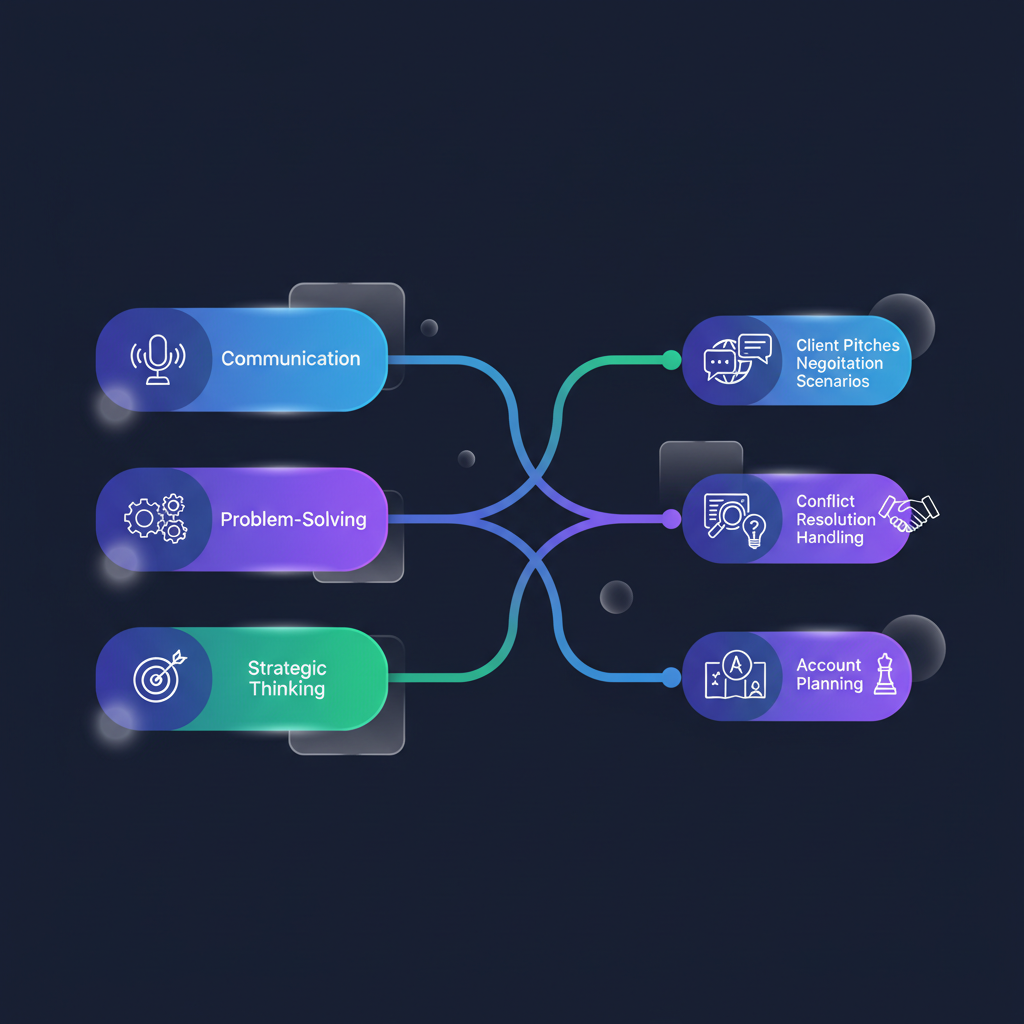
Once you've assessed all three axes, map each rep to a practice plan. Here's the decision logic:
For ramping reps (0-90 days)
Prioritize foundational skills in this sequence, regardless of quota tier:
-
Weeks 1-3: Discovery frameworks and qualification – Use structured scenarios based on your ICP. Assign AI sales roleplay scenarios that simulate first calls with prospects who match your top three buyer personas.
-
Weeks 4-6: Objection handling – Start with the five most common objections your team hears. Use objection handling coaching techniques to drill responses until they're automatic.
-
Weeks 7-9: Tonality and presence – Reps often know what to say but sound scripted or uncertain. Assign scenarios that focus on pacing, pausing, and confident delivery.
-
Weeks 10-12: Closing and next steps – Practice securing commitments and advancing deals without sounding pushy.
This sequenced approach cuts SDR ramp time because it builds skills in the order reps actually use them in the buyer journey.
For mid-tier performers (70-100% quota)
Use conversion data to assign hyper-targeted scenarios:
If discovery-to-demo conversion is below team average: Assign 3-5 discovery scenarios per week featuring prospects with vague pain, budget objections, or multi-stakeholder complexity. Focus on pain quantification and timeline validation.
If demo-to-proposal conversion lags: Assign objection handling scenarios triggered by common post-demo pushback: "We need to think about it," "The timing isn't right," "We're comparing other vendors." Drill turning soft nos into concrete next steps.
If proposal-to-close is weak: Assign negotiation and closing scenarios. Practice defending price, handling discount requests, and navigating procurement objections.
If cycle time is long: Assign follow-up and momentum scenarios. Reps practice re-engaging stalled deals, creating urgency without desperation, and multi-threading to additional stakeholders.
Track sales coaching metrics weekly. If a rep's target conversion rate improves by 10+ percentage points over four weeks, graduate them to the next skill or increase scenario difficulty.
For high performers (>100% quota)
Top reps need challenge and variety to stay engaged:
- Executive objection handling: C-level buyers who push back on ROI, strategic fit, or timing
- Competitive displacement: Scenarios where the prospect is incumbent-happy or locked into a competitor
- Complex negotiations: Multi-stakeholder deals with competing priorities, budget constraints, and political dynamics
- Edge cases: Unusual buyer situations, industry-specific objections, or high-stakes renewals
High performers often become the best practice partners for mid-tier reps in peer role-play sessions. Assign them scenarios where they play the buyer role, forcing them to think like the prospect and sharpen their own objection arsenal.
How to implement sales coaching role assignment at scale
Personalized assignment sounds resource-intensive, but the right system makes it manageable even for large teams.
Step 1: Build your scenario library
Create a role-play scenario bank organized by:
- Skill (discovery, objection handling, closing, etc.)
- Difficulty (beginner, intermediate, advanced)
- Deal stage (prospecting, qualification, demo, proposal, close)
- Buyer persona (economic buyer, technical evaluator, end user, etc.)
Start with 15-20 core scenarios covering your most common sales situations. Expand over time as you identify new patterns in lost deals or competitive dynamics.
QUOTA Training customers typically launch with a starter set of 12 scenarios and grow to 40+ within six months as managers contribute real-world situations from pipeline reviews.
Step 2: Assess and assign monthly
Run a monthly assignment cycle:
- Pull performance data: Quota attainment, pipeline conversion by stage, conversation intelligence scores
- Manager input: Each manager rates their reps on the seven core skills (1-5 scale)
- Algorithm or manual assignment: Match each rep to 3-5 scenarios for the month based on lowest skill scores and weakest conversion stages
- Communicate the plan: Share assignments with context—why this scenario, what metric it targets, how success will be measured
Reps who understand the "why" behind their assignments complete 60% more practice sessions than those who receive assignments without context, based on our platform engagement data.
Step 3: Track completion and performance
Monitor three metrics:
- Completion rate: Are reps finishing assigned scenarios? Low completion signals either too much volume or misaligned difficulty.
- Scenario scores: How do reps perform in the practice environment? Scores should improve over repeated attempts.
- Real-world outcomes: Do the targeted metrics improve? If you assigned discovery scenarios to fix qualification rates, did qualified opps increase?
If a rep completes five objection handling scenarios but their objection-to-meeting conversion rate doesn't budge, the scenarios may not match the real objections they're hearing. Refine and reassign.
Step 4: Reassign based on progress
Reps shouldn't stay in the same scenarios indefinitely. Reassign when:
- Skill scores plateau: Three consecutive practice sessions with no improvement means it's time for a new challenge or a different skill focus
- Real-world metrics improve: If discovery-to-demo conversion jumps from 22% to 35%, graduate the rep to demo-to-proposal scenarios
- Quota tier changes: A rep who climbs from 75% to 105% quota needs more advanced scenarios to sustain momentum
Dynamic reassignment keeps practice relevant and prevents stagnation.
Common mistakes in sales coaching role assignment
Mistake 1: Assigning by seniority instead of skill
Tenure doesn't equal competence. A three-year AE who never learned to handle pricing objections needs objection drills, not executive communication scenarios. Assign by gap, not by title.
Mistake 2: Batch-assigning the "flavor of the month"
If your CEO hears a competitor mentioned on an earnings call, don't immediately assign competitive scenarios to the entire team. Assign competitive practice only to reps who are actively losing deals to that competitor or who will likely encounter them in their pipeline.
Mistake 3: Ignoring rep input
Reps often know exactly where they struggle. Ask them. A simple monthly check-in—"What part of the sales process feels hardest right now?"—surfaces assignment opportunities managers might miss in the data.
Mistake 4: Overloading struggling reps
A rep at 50% quota doesn't need ten scenarios. They need two foundational scenarios practiced repeatedly until muscle memory takes over. Depth beats breadth for skill-building.
Mistake 5: Under-challenging top performers
High performers leave teams when development stagnates. If your best rep has nothing left to learn, you've failed as a coach. Assign stretch scenarios, invite them to co-create new ones, or have them mentor others—but never let them coast.
How QUOTA Training automates role assignment
Manual assignment works for small teams, but it doesn't scale past 20-30 reps. AI-powered platforms can automate the entire workflow.
QUOTA Training's role assignment engine:
- Ingests performance data from your CRM, conversation intelligence platform, and manager assessments
- Maps each rep to the three-axis framework (skill, quota, stage)
- Recommends scenarios from your library based on gap priority
- Tracks progress and suggests reassignment when skill scores plateau or real-world metrics improve
- Surfaces insights to managers: which skills are improving, which reps need intervention, which scenarios drive the most real-world lift
The result: personalized practice at scale, without adding headcount to your enablement team.
FAQ
How do you assign role-play scenarios to sales reps?
Assign role-play scenarios based on three factors: individual skill gaps identified through call reviews, current quota attainment and pipeline health, and the specific deal stages where reps struggle most. Use conversation intelligence data and manager observation to map each rep to scenarios that address their weakest competencies.
Should all reps practice the same sales scenarios?
No. Generic, one-size-fits-all practice wastes time and disengages top performers. High performers need advanced objection handling and negotiation scenarios, while ramping reps need foundational discovery and qualification practice. Mid-tier reps benefit from targeted work on their specific conversion bottlenecks.
How often should you reassign role-play scenarios?
Review and reassign scenarios monthly or after significant performance shifts. Track completion rates, scenario scores, and real-world outcomes (meetings booked, deals advanced) to determine when a rep has mastered a skill and needs progression to more complex scenarios.
What's the biggest mistake in sales coaching role assignment?
Assigning scenarios based on calendar or convenience rather than data. The most common mistake is running the same practice session for the entire team regardless of individual performance gaps, which under-challenges top performers and overwhelms struggling reps.
Can you automate sales coaching role assignment?
Yes. AI-powered platforms like QUOTA Training can ingest CRM data, conversation intelligence scores, and manager assessments to automatically recommend personalized scenarios for each rep based on skill gaps, quota performance, and pipeline conversion patterns. Automation makes personalized coaching scalable for teams of 50+ reps.
How do you measure if role assignment is working?
Track three metrics: scenario completion rates (are reps engaging?), practice scores (are skills improving in the safe environment?), and real-world conversion rates (are targeted pipeline metrics moving?). If you assign discovery scenarios to fix qualification and qualified opportunities don't increase within 30 days, reassess scenario relevance or rep understanding.

Stefano Sechi
Co-founder, QUOTA Training
Stefano Sechi is co-founder of QUOTA Training. He works hands-on with B2B sales teams on cold calling, discovery and objection handling, and shaped much of the methodology behind QUOTA’s AI role-play scenarios.
Turn this into reps, not just reading
QUOTA Training lets your team practise these exact scenarios with an AI buyer that reacts like the real thing — then scores every call.
See it in action