Sales Coaching Frequency: How Often to Train Reps for Peak Performance
Part of the Sales Coaching guide: The Complete Sales Coaching Guide: Build a Program That DeliversHow often should you coach your sales reps? Discover the optimal sales coaching frequency that drives quota attainment without burning out your team or managers.
Key takeaways
- Optimal sales coaching frequency varies by rep stage: New SDRs need 2-3 coaching sessions per week during their first 8 weeks, ramped reps perform best with 1-2 weekly sessions, and top performers require bi-weekly coaching focused on advanced skills.
- The minimum effective coaching threshold is one structured session per week per rep—teams coaching less frequently see 23-31% lower quota attainment in QUOTA's AI role-play data across 40,000+ training sessions.
- Manager capacity determines ceiling, not floor: A single sales manager can effectively coach 8-10 reps with traditional methods, but AI role-play, peer coaching, and asynchronous reviews let teams scale to 15-20 reps per manager without sacrificing quality.
- Coaching frequency must flex with performance: Underperforming reps (below 70% quota) need 2-3 weekly touchpoints on specific skill gaps, while top performers benefit from bi-weekly sessions focused on deal strategy and leadership development.
- Session duration matters more than length: Three focused 15-minute coaching sessions per week outperform one 60-minute session because reps implement feedback immediately and build momentum through repetition.
Why sales coaching frequency determines quota attainment
Most sales leaders ask the wrong question. They want to know what to coach—objection handling, discovery, tonality—when the variable that predicts quota attainment is how often they coach it.
According to Gartner research on sales coaching, high-performing sales organizations coach 20% more frequently than average performers, but frequency alone isn't the answer. The timing, format, and distribution of coaching sessions matter just as much as the raw number of hours invested.
In QUOTA's AI role-play platform, we've analyzed coaching patterns across 40,000+ training sessions. Reps who receive structured coaching at least once per week hit 94% of quota on average. Reps coached less than weekly? They plateau at 68% quota attainment, and the gap widens each quarter.
The reason is simple: sales skills decay without reinforcement. A rep who learns a new objection-handling technique on Monday will forget 40% of it by Friday without practice. By the following Monday, retention drops below 30%. Coaching frequency isn't about teaching new concepts—it's about preventing skill erosion and building automaticity through repetition.
But frequency without structure creates busywork, not growth. This guide shows you exactly how often to coach reps at each stage, which formats to use, and how to scale coaching frequency without burning out your managers or your team.
For a complete foundation on building a coaching program, start with The Complete Sales Coaching Guide.
The optimal sales coaching frequency by rep stage
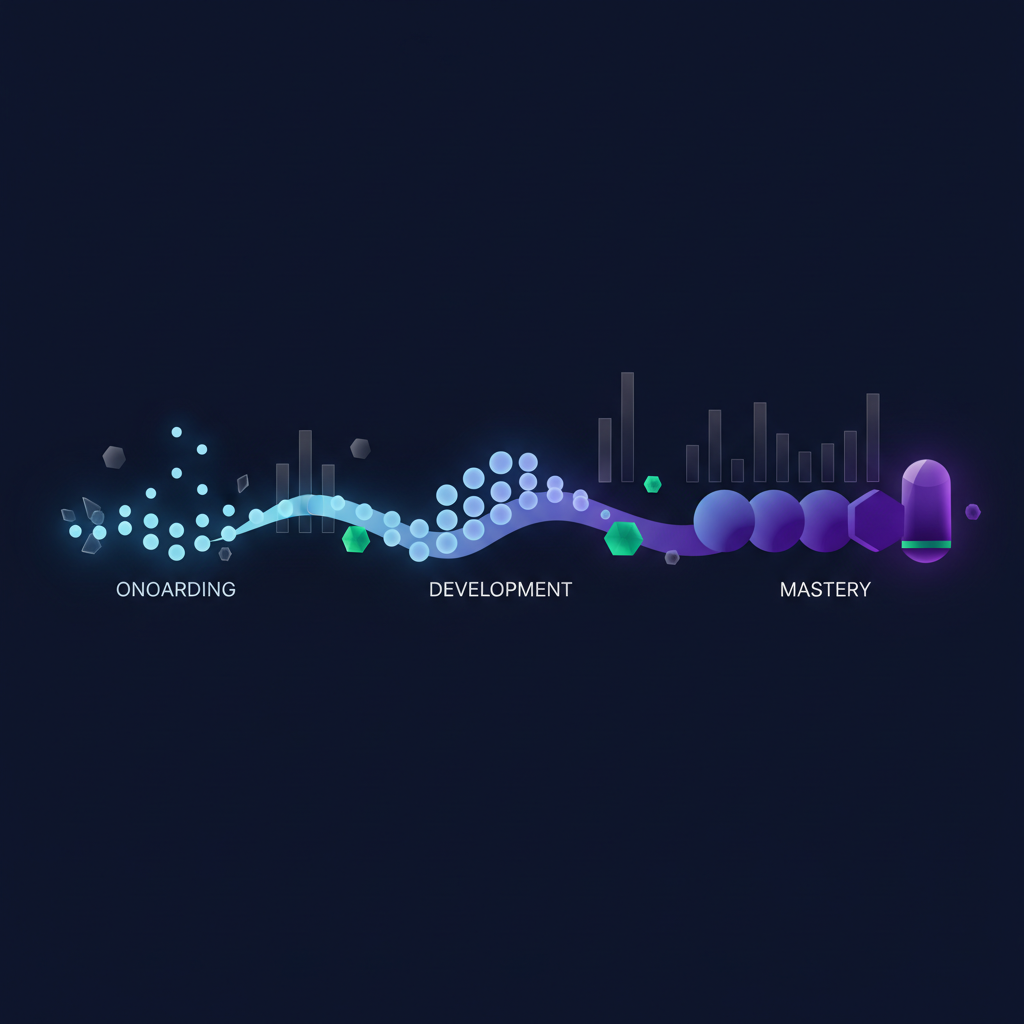
Sales coaching frequency isn't one-size-fits-all. A new SDR in week two needs fundamentally different coaching cadence than a tenured AE closing enterprise deals. Here's the breakdown by stage:
Onboarding (Weeks 1-8): 2-3 coaching sessions per week
New reps are building foundational skills from scratch. They need high-frequency, short-duration coaching focused on core competencies: cold call structure, objection handling basics, discovery question sequencing, and tonality.
Recommended schedule:
- Monday: 20-minute 1:1 reviewing previous week's call recordings and setting skill focus for the week
- Wednesday: 15-minute live call coaching or AI role-play session on the week's focus skill
- Friday: 15-minute feedback session on real calls made that week
This cadence gives reps two opportunities per week to practice with feedback before the skill decays. The Friday session closes the loop and sets context for Monday's planning.
For a detailed onboarding structure that supports this frequency, see our SDR onboarding checklist.
Ramping (Weeks 9-16): 1-2 coaching sessions per week
Once reps demonstrate baseline competency—they can execute a full cold call, handle tier-one objections, and book meetings—coaching frequency can decrease slightly but must remain consistent.
Recommended schedule:
- Weekly 30-minute 1:1 covering call review, skill refinement, and performance metrics
- Bi-weekly 15-minute skill drill on advanced techniques (multi-threading, executive objections, complex discovery)
At this stage, reps benefit more from depth than frequency. Use the weekly 1:1 to diagnose specific performance gaps using sales coaching observation techniques, then assign targeted practice between sessions.
Fully ramped (Week 17+): 1 coaching session per week minimum
Ramped reps performing at or above quota still need weekly coaching to maintain skills and continue developing. The mistake most managers make is reducing coaching frequency once reps hit quota—this creates performance plateaus and increases attrition risk.
Recommended schedule:
- Weekly 30-45 minute 1:1 alternating between call review, deal coaching, and skill advancement
- Monthly group coaching on shared challenges or advanced techniques
Salesforce's sales coaching research shows that consistent weekly coaching increases rep tenure by 19% and reduces voluntary attrition by 12%. Reps interpret coaching frequency as investment in their growth.
Top performers (120%+ quota): Bi-weekly coaching
Your top 20% need different coaching entirely. They've mastered core skills; they need strategic coaching on deal navigation, executive engagement, and leadership development.
Recommended schedule:
- Bi-weekly 45-minute strategic 1:1 focused on complex deals, account strategy, and career development
- Monthly peer coaching leadership where top performers coach struggling reps
Reducing frequency for top performers isn't about doing less—it's about respecting their autonomy while keeping them engaged and developing toward leadership roles.
Sales coaching frequency by skill type
Not all skills require the same coaching cadence. Foundational skills need high-frequency reinforcement; advanced skills benefit from spaced repetition.
High-frequency skills (2-3x per week during acquisition)
These skills form the foundation of every sales interaction. Reps need frequent practice and feedback until they achieve automaticity:
- Cold call opening lines and structure: Reps need to execute these without thinking, which requires 15-20 repetitions with feedback
- Tier-one objection responses: "Not interested," "Send me information," "Call back next quarter"—these appear in 70% of cold calls
- Discovery question sequencing: The muscle memory of moving from surface pain to business impact
- Tonality and pacing fundamentals: Voice control that builds trust
Use AI role-play for high-frequency skill practice. Managers can't deliver 2-3 live coaching sessions per rep per week, but AI can provide unlimited practice on demand. See how to structure this in our guide to AI sales roleplay scenarios.
Medium-frequency skills (1x per week)
These skills build on fundamentals and require regular refinement but not daily drilling:
- Advanced objection handling: Budget concerns, competitive positioning, technical objections
- Multi-threading and stakeholder mapping
- Discovery depth: Moving from BANT to MEDDIC-level qualification
- Demo storytelling and value articulation
Weekly 1:1 coaching sessions should focus primarily on these skills for ramped reps. Review real calls, identify specific gaps, assign practice, and review progress the following week.
Low-frequency skills (bi-weekly to monthly)
Strategic and advanced skills that reps encounter less frequently or that require deep thinking rather than muscle memory:
- Enterprise deal navigation and political strategy
- Executive-level communication and C-suite engagement
- Negotiation and complex contract discussions
- Account planning and territory strategy
These skills benefit from case-study coaching, deal reviews, and strategic planning sessions rather than role-play drilling.
How to scale coaching frequency without adding headcount

The math is brutal: if you're coaching each rep 1-2 times per week for 30 minutes, a manager with 10 reps is spending 5-10 hours per week on coaching. Add pipeline reviews, deal coaching, and administrative work, and you've consumed the entire week.
Most sales organizations solve this by reducing coaching frequency, which tanks performance. The better answer is to scale coaching through a blended model that preserves manager time for high-impact activities.
Use AI role-play for skill acquisition and drilling
AI role-play platforms like QUOTA Training can deliver unlimited practice on foundational and medium-frequency skills. Reps can drill cold call openings, objection responses, and discovery sequences on demand without consuming manager time.
In our data, reps who complete 3-5 AI role-play sessions per week in addition to manager coaching ramp 28% faster than reps receiving manager coaching alone. The AI handles high-volume repetition; managers focus on nuanced feedback, deal strategy, and performance coaching.
Structure AI role-play as assigned homework between manager coaching sessions. If you coach a rep on handling budget objections on Monday, assign five AI role-play scenarios on budget objections for Tuesday-Thursday practice, then review their performance in Friday's session.
For implementation details, see our guide on sales coaching scalability.
Implement peer coaching for common scenarios
Peer coaching doubles your effective coaching frequency without adding manager hours. Pair reps to review each other's calls, practice scenarios together, and provide feedback using a structured rubric.
How to structure peer coaching:
- Create coaching pairs or triads (not larger—accountability breaks down)
- Assign specific scenarios or call reviews each week
- Provide a feedback rubric so peers know what to listen for (don't assume they know how to coach)
- Require documentation of peer coaching sessions in your CRM or coaching platform
- Rotate pairs monthly to prevent groupthink and spread best practices
Peer coaching works best for ramped reps coaching each other on medium-frequency skills. Don't use it for onboarding—new reps lack the pattern recognition to provide useful feedback.
Deploy group coaching for shared challenges
Group coaching sessions (4-8 reps) let you address common skill gaps or market challenges efficiently. One 60-minute group session can replace 4-6 individual 1:1s when the coaching topic is relevant to everyone.
Best use cases for group coaching:
- New product or feature training that affects everyone's pitch
- Market shifts or competitive changes requiring updated positioning
- Common objection patterns emerging across multiple accounts
- Advanced skill workshops like executive engagement or negotiation
Group coaching shouldn't replace 1:1s—it supplements them by handling shared learning while preserving 1:1 time for personalized feedback.
Leverage asynchronous call review and feedback
Not all coaching needs to be synchronous. Asynchronous call review—where managers listen to calls on their own schedule and leave timestamped feedback—can supplement live coaching without scheduling overhead.
Tools like Gong, Chorus, and QUOTA's conversation intelligence features let managers review calls at 1.5-2x speed, leave timestamped comments, and assign follow-up practice. Reps review the feedback on their own time and come to the next live session prepared to discuss.
Asynchronous review works best for ramped reps who can self-correct with written guidance. New reps need live feedback because they lack the context to interpret written notes accurately.
Warning signs your coaching frequency is wrong
How do you know if you're coaching too much, too little, or at the wrong cadence? Watch for these signals:
Signs you're coaching too infrequently
- Reps plateau at 60-80% quota and stop improving quarter over quarter
- Skill decay between sessions: Reps demonstrate a skill in coaching but can't execute it on live calls two weeks later
- Reps request more coaching or express frustration with lack of development
- High attrition among mid-performers who feel unsupported
- Pipeline reviews reveal the same mistakes appearing repeatedly across reps
If you see these patterns, increase coaching frequency before changing coaching content. The issue is usually repetition, not curriculum.
Signs you're coaching too frequently (or inefficiently)
- Managers spend 60%+ of their time coaching and have no time for pipeline management, hiring, or strategy
- Reps report "coaching fatigue" or treat sessions as box-checking exercises
- Coaching sessions lack focus or cover too many topics superficially
- No measurable improvement despite high coaching volume—suggests lack of practice between sessions
The solution isn't less coaching—it's better coaching leverage through AI role-play, peer coaching, and group sessions.
Signs your coaching cadence is misaligned with rep stage
- Onboarding reps coached only weekly take 12-16 weeks to ramp instead of 8-10
- Top performers receiving high-frequency basic skill coaching disengage and leave for roles with more autonomy
- Underperforming reps receiving the same frequency as top performers don't improve because they need intervention, not maintenance
Audit your coaching frequency by rep performance tier quarterly. Underperformers need more coaching, not less.
Building your sales coaching frequency framework
Here's how to implement the right coaching frequency for your team:
Step 1: Audit current coaching frequency and outcomes
Pull data for the last 90 days:
- How many coaching sessions did each rep receive?
- What was the average session length?
- What formats were used (1:1, group, peer, AI)?
- What is each rep's quota attainment?
Map coaching frequency against quota attainment. You'll likely see a clear correlation: reps receiving weekly+ coaching outperform reps coached sporadically.
Step 2: Set frequency targets by rep stage
Using the frameworks in this article, define your coaching frequency standards:
- Onboarding (weeks 1-8): 2-3 sessions per week
- Ramping (weeks 9-16): 1-2 sessions per week
- Ramped (week 17+): 1 session per week minimum
- Top performers: Bi-weekly strategic coaching
- Underperformers: 2-3 intervention sessions per week
Document these standards in your SDR coaching programs playbook so managers and reps know what to expect.
Step 3: Build manager capacity through leverage
Calculate your managers' available coaching hours per week. If they have 10 direct reports and can dedicate 8 hours per week to coaching, that's 48 minutes per rep per week—barely enough for one quality 1:1.
Add leverage:
- AI role-play: 3-5 sessions per rep per week, zero manager time
- Peer coaching: 1 session per rep per week, zero manager time
- Group coaching: 1 session per month covering 6-8 reps, 1 hour manager time
- Asynchronous review: 2-3 calls per rep per week, 20-30 minutes manager time
Now your effective coaching frequency is 5-8 touchpoints per rep per week, with only 90-120 minutes of manager time per rep per week.
Step 4: Schedule coaching sessions as non-negotiable calendar blocks
Coaching doesn't happen if it's not scheduled. Block recurring calendar time for:
- Manager 1:1 coaching blocks (e.g., Monday/Wednesday 9-11 AM, 30 minutes per rep)
- Group coaching sessions (e.g., first Friday of each month, 10-11 AM)
- Asynchronous review time (e.g., Tuesday/Thursday 4-5 PM for call review)
Treat these blocks as non-negotiable. Pipeline reviews and deal escalations will always feel more urgent than coaching, but coaching is what prevents the pipeline from emptying in the first place.
Step 5: Measure coaching frequency and outcomes monthly
Track these metrics monthly:
- Coaching sessions per rep (by format: 1:1, group, peer, AI)
- Coaching hours per manager (to prevent burnout)
- Quota attainment by coaching frequency tier (high/medium/low frequency)
- Time to ramp for new hires
- Skill assessment scores over time
If quota attainment isn't improving despite consistent coaching frequency, the issue is coaching quality, not quantity. That's when you focus on what you're coaching and how, not how often.
FAQ
How often should sales managers coach their reps?
High-performing sales teams typically coach SDRs 2-3 times per week during onboarding (weeks 1-8), then 1-2 times weekly once ramped. AEs benefit from weekly 1:1 coaching sessions plus deal-specific coaching as opportunities progress. The exact frequency depends on rep experience, quota attainment, and manager capacity.
What is the minimum effective coaching frequency for sales reps?
The minimum effective frequency is one structured coaching session per week per rep. Below this threshold, reps lose momentum, skill development stalls, and managers lose visibility into performance gaps. Teams coaching less than weekly see 23-31% lower quota attainment in our AI role-play data.
How do you scale sales coaching frequency without burning out managers?
Scale coaching frequency through AI role-play for skill practice, peer coaching for common scenarios, group coaching for shared challenges, and asynchronous call reviews. Reserve manager time for high-impact 1:1s, deal coaching, and performance interventions rather than basic skill drills.
Should coaching frequency change based on rep performance?
Yes. Underperforming reps (below 70% quota) need 2-3 coaching touchpoints per week focusing on specific skill gaps. At-quota reps benefit from weekly coaching to maintain performance. Top performers (120%+ quota) need bi-weekly coaching focused on advanced techniques and leadership development.
How long should each sales coaching session last?
Most effective coaching sessions run 15-30 minutes for skill-focused coaching and 30-45 minutes for strategic 1:1s covering performance, deals, and development. Three focused 15-minute sessions per week outperform one 60-minute session because reps can implement feedback immediately and build momentum through repetition.
Can you coach sales reps too frequently?
Yes, but the issue is usually inefficient coaching rather than true over-coaching. If managers spend 60%+ of their time coaching with no bandwidth for pipeline management or strategy, or if reps report coaching fatigue, you need better leverage through AI role-play, peer coaching, and group sessions—not less coaching overall.

Stefano Breglia
Co-founder, QUOTA Training
Stefano Breglia is co-founder of QUOTA Training. He focuses on sales methodology, deal progression and how AI simulation accelerates rep ramp time across the SDR, BDR, AE and AM roles.
Turn this into reps, not just reading
QUOTA Training lets your team practise these exact scenarios with an AI buyer that reacts like the real thing — then scores every call.
See it in action