Sales Cadence Best Practices: How to Build One That Converts
Part of the SDR Playbook guide: The Complete SDR Playbook for 2026: Your End-to-End GuideLearn how to build a high-converting sales cadence with proven templates, multi-channel sequences, and timing strategies that book more meetings.
Key takeaways
- A sales cadence is a structured, multi-channel sequence of touchpoints designed to engage prospects over a defined period, typically 10-21 days with 8-15 touches.
- High-performing sales cadences combine at least three channels (email, phone, LinkedIn, video) and follow a proven rhythm: front-load early touches, space out later ones, and always personalize the first and last attempts.
- The optimal cadence length depends on deal size: 8-10 touches over 10 days for SMB, 12-15 touches over 21 days for mid-market, and 15+ touches over 30 days for enterprise.
- Cadence effectiveness should be measured by reply rate (target: 8-12%), connect rate (20-30%), and meeting-booked rate (2-5%), not just activity volume.
- AI role-play platforms like QUOTA Training enable reps to practice cadence conversations before live outreach, improving confidence and conversion rates across every touchpoint.
What is a sales cadence?
A sales cadence is a repeatable sequence of sales activities—calls, emails, social touches, and other outreach—designed to engage a prospect over a specific timeframe. Unlike ad-hoc prospecting, a cadence follows a deliberate structure that dictates which channels to use, when to use them, and what message to deliver at each step.
Think of your sales cadence as the backbone of your outbound motion. It removes guesswork, ensures consistency across your team, and creates predictable pipeline generation. For SDRs and AEs, a well-designed cadence means you're never wondering "what do I do next?" with a prospect.
The term "cadence" comes from music—it's about rhythm and timing. In sales, that rhythm determines whether you're perceived as persistent or pushy, helpful or annoying.
Why sales cadence best practices matter in 2025
Buyers are drowning in outreach. According to research from TOPO (now Gartner), the average B2B buyer receives 100+ sales emails per week. Your cadence isn't just competing with competitors—it's competing with every other vendor, recruiter, and newsletter in your prospect's inbox.
Sales cadence best practices matter because:
Consistency drives results. Teams using structured cadences see 2-3x higher response rates than those relying on random outreach, according to data from Salesforce.
Multi-channel wins. Prospects who receive touches across email, phone, and LinkedIn are 4x more likely to respond than those contacted via a single channel.
Timing is everything. The difference between a 10% and 2% reply rate often comes down to touch spacing, not message quality.
Reps need guardrails. Without a cadence framework, SDRs either give up too early (3 touches and done) or become spam (20 identical emails).
A strong sales cadence also feeds into your broader sales coaching framework, giving managers a clear structure to coach against and measure improvement.
Core components of a high-converting sales cadence
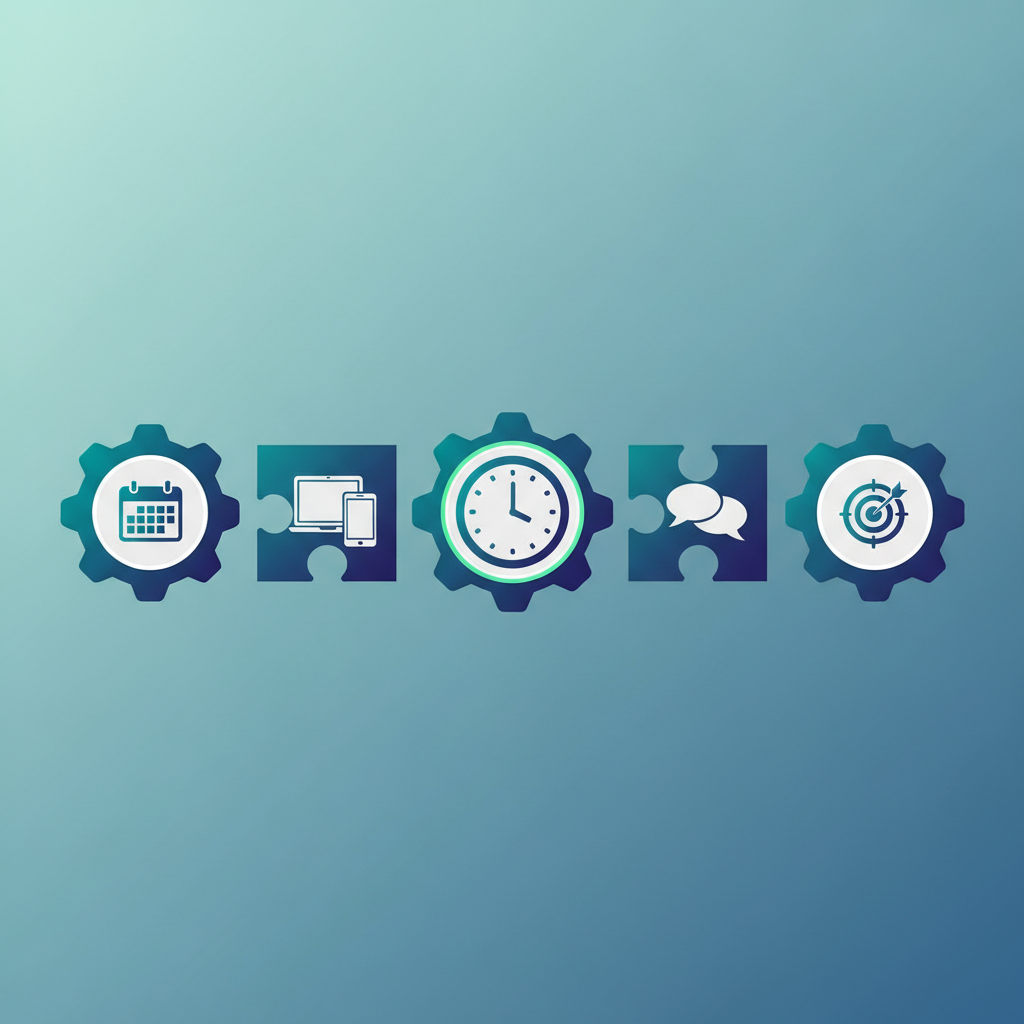
Every effective sales cadence includes these five elements:
1. Defined duration and touch count
Your cadence needs clear boundaries. Most B2B cadences run:
- SMB/transactional: 8-10 touches over 10 business days
- Mid-market: 12-15 touches over 21 business days
- Enterprise: 15-20 touches over 30+ business days
The more complex the sale and higher the deal value, the longer your cadence should run. But every cadence must have an end date—prospects who don't engage after your sequence should be recycled or disqualified, not endlessly pursued.
2. Multi-channel approach
High-performing cadences layer at least three channels:
- Email: Scalable, trackable, allows for rich content
- Phone: High-impact, enables real conversation, harder to ignore
- LinkedIn: Social proof, less formal, good for research and soft touches
- Video: Personalized, humanizing, stands out in crowded inboxes
The best cadences don't just use multiple channels—they orchestrate them. For example: send an email, call 2 hours later referencing the email, connect on LinkedIn the next day, then send a video message 3 days later.
3. Strategic touch spacing
Timing matters as much as message. Follow this proven rhythm:
- Days 1-3: Front-load touches (Day 1, Day 2, Day 3)
- Days 4-10: Moderate spacing (every 2-3 days)
- Days 11-21: Wider spacing (every 3-5 days)
- Final touch: A "breakup" email on the last day
Front-loading creates initial awareness while the prospect is most likely to remember your name. Spacing out later touches respects their time while maintaining presence.
4. Varied messaging and value
Each touch should offer something different:
- Touch 1: Introduce yourself and lead with value (insight, stat, or relevant trend)
- Touch 2-3: Share a specific use case or customer story
- Touch 4-6: Ask a provocative question or challenge the status quo
- Touch 7-9: Offer a resource (guide, tool, framework)
- Touch 10+: Acknowledge their silence, provide an easy out
Never send the same message twice. Each touch builds on the last, creating a narrative arc that moves from awareness to interest to action.
5. Clear call-to-action
Every touch needs one specific, low-friction ask. Good examples:
- "Are you open to a 15-minute conversation about [specific outcome]?"
- "Would it make sense to explore how [company] solved [pain point]?"
- "Can I send you our [asset] that shows [specific result]?"
Avoid vague CTAs like "Let me know if you're interested" or multiple asks in one message.
Sales cadence template: A proven 12-touch framework
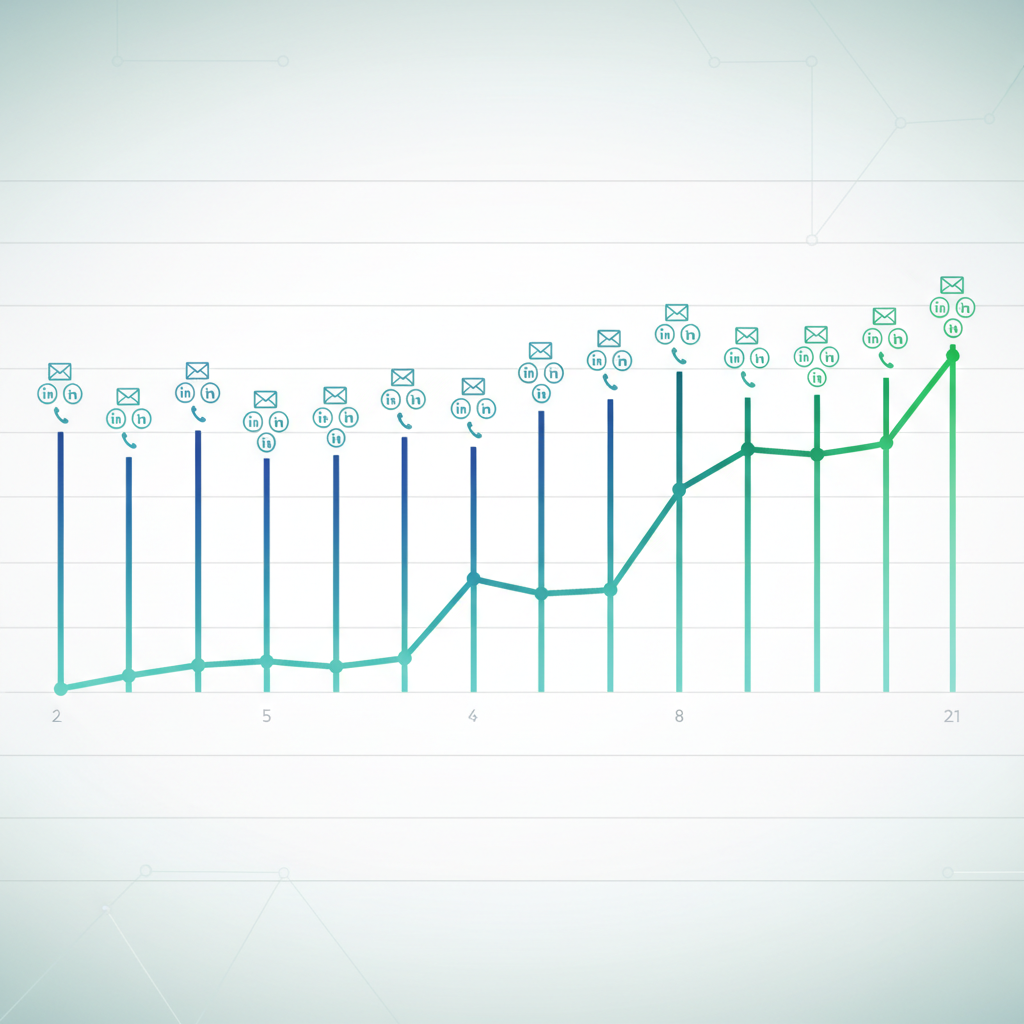
Here's a battle-tested mid-market cadence you can adapt:
Day 1 (Morning): Personalized email introducing yourself + specific reason you're reaching out
Day 1 (Afternoon): Phone call (leave voicemail referencing email)
Day 2: LinkedIn connection request with custom note
Day 3: Email with relevant case study or insight
Day 4: Phone call (no voicemail)
Day 6: LinkedIn InMail or comment on their recent post
Day 8: Email with provocative question about their business
Day 9: Phone call (leave voicemail)
Day 11: Video email addressing a specific challenge
Day 14: Email with valuable resource (no ask, just give)
Day 17: Phone call (no voicemail)
Day 21: "Breakup" email acknowledging silence and offering to reconnect later
This 12-touch sequence balances persistence with respect, uses four channels, and creates multiple opportunities for engagement.
For SDRs just starting out, practicing these conversations through AI role-play before going live can dramatically improve confidence and message delivery.
Sales cadence best practices by channel
Email best practices
- Keep subject lines under 50 characters and avoid spam triggers ("free," "guarantee," excessive punctuation)
- Write 50-125 words per email—longer than that and you lose them
- Use the prospect's name, company, and a specific detail in the first two sentences
- Include social proof (customer name, metric, or outcome) in touches 3-6
- A/B test one variable at a time (subject line, CTA, value prop)
Phone best practices
- Call within 2 hours of sending an email to increase connect rates
- Leave voicemails on touches 1, 3, and 9 only—not every call
- Reference your email or LinkedIn message in your voicemail: "I just sent you a note about..."
- Keep voicemails under 20 seconds with a clear callback reason
- Use a discovery call framework when you do connect
LinkedIn best practices
- Personalize connection requests with a reason (mutual connection, recent post, shared interest)
- Engage with their content before sending InMail—comment thoughtfully on 2-3 posts
- Use LinkedIn touches for softer, relationship-building messages, not hard pitches
- Video messages on LinkedIn have 3x higher response rates than text
- Reference LinkedIn interactions in your email and phone touches
Video best practices
- Record personalized videos using tools like Vidyard or Loom
- Keep videos 30-60 seconds maximum
- Show their website or LinkedIn profile in the video for personalization
- Use video for touches 6-9 when they've seen your name but haven't responded
- Always include a custom thumbnail with your face—it increases play rates
How to measure sales cadence effectiveness
Activity doesn't equal results. Track these metrics:
Leading indicators
- Email open rate: Target 40-60%
- Email reply rate: Target 8-12%
- Phone connect rate: Target 20-30%
- LinkedIn acceptance rate: Target 30-40%
Lagging indicators
- Meeting-booked rate: Target 2-5% of prospects entering cadence
- Opportunity creation rate: Target 1-3% of prospects becoming pipeline
- Time to first response: Average days from cadence start to reply
- Touches to conversion: Average number of touches before booking
These metrics should be reviewed weekly and feed directly into your sales performance metrics dashboard.
If your reply rate is below 5%, your messaging needs work. If your connect rate is below 15%, your timing or list quality is the issue. If your meeting-booked rate is below 1%, your qualification or offer needs adjustment.
Common sales cadence mistakes to avoid
Even experienced reps make these errors:
Giving up too early. Most reps stop after 3-4 touches, but data shows 80% of sales require 5+ follow-ups. Persistence wins.
Being too aggressive. Calling twice a day or sending daily emails burns your list. Respect the rhythm.
Using only one channel. Email-only cadences see 60% lower response rates than multi-channel sequences.
Copy-paste personalization. "I see you work in [industry]" isn't personalization—it's lazy. Reference something specific.
No breakup email. The final "I'll stop bothering you" email often gets the highest response rate. Always include it.
Ignoring responses. If a prospect replies asking to reconnect in 3 months, set a reminder and actually do it. Most reps forget.
Not testing. Your first cadence won't be perfect. A/B test continuously and iterate based on data.
Adapting your cadence for different scenarios
Inbound leads
Shorten the cadence to 5-7 touches over 7 days. They've shown interest, so front-load heavily: call within 5 minutes, email immediately, call again 2 hours later.
Cold outbound
Use the full 12-15 touch cadence. You're building awareness from zero, so you need more touches and longer duration.
Re-engagement cadences
For prospects who went dark after initial interest, use a 6-8 touch cadence over 14 days. Lead with "I know we spoke about this 6 months ago..." and share what's changed.
Event follow-up
After a trade show or webinar, use a 5-touch cadence over 5 days. Reference the specific event in every touch: "Great to meet you at [event]..."
How AI role-play improves cadence execution
Knowing what to say is different from saying it well. This is where gamification and AI-powered practice make a difference.
With platforms like QUOTA Training, reps can:
- Practice phone touches before making live calls, improving confidence and reducing stumbles
- Role-play objection responses that commonly arise during cadence conversations
- Receive instant feedback on talk time, filler words, and message clarity
- Simulate difficult scenarios (gatekeeper, voicemail, hostile prospect) in a safe environment
The result? Reps execute cadences more consistently, handle pushback more gracefully, and convert at higher rates. Sales leaders can also identify which touches in the cadence need the most coaching support based on role-play performance data.
This connects directly to building a scalable sales coaching program—cadence practice becomes a repeatable, measurable coaching moment.
Building your first sales cadence: A step-by-step process
Step 1: Define your ICP and segment
Different buyer personas need different cadences. An IT Director responds to different messages and channels than a VP of Sales. Build separate cadences for each segment.
Step 2: Map your value proposition to buyer pain
What specific problem do you solve? What outcome do you deliver? Your cadence messaging should ladder up to this in every touch.
Step 3: Choose your channels
Based on where your buyers spend time, select 3-4 channels. For technical buyers, email + LinkedIn + phone works well. For executives, add video and direct mail.
Step 4: Set duration and touch count
Use the guidelines earlier (SMB: 10 days, mid-market: 21 days, enterprise: 30 days) as your starting point.
Step 5: Script each touch
Write specific copy for every email, voicemail, and LinkedIn message. Use sales pitch examples as inspiration, but make them your own.
Step 6: Build it in your sales engagement platform
Use tools like Outreach, SalesLoft, or Apollo to automate the sequence while keeping personalization.
Step 7: Test with a small cohort
Run your cadence on 50-100 prospects first. Measure results weekly. Iterate based on data.
Step 8: Scale and coach
Once you hit target metrics, roll out to the full team. Use the cadence as a coaching framework—review execution, not just outcomes.
FAQ
How many touches should a sales cadence have?
Most effective B2B sales cadences include 8-15 touches depending on deal size and complexity. SMB deals typically need 8-10 touches over 10 days, while enterprise deals may require 15-20 touches over 30+ days. The key is balancing persistence with respect—enough touches to break through noise, but not so many you become spam.
What is the best time to call during a sales cadence?
The best times to call prospects are Tuesday through Thursday between 10-11 AM and 4-5 PM in their local timezone. Avoid Monday mornings (busy catching up) and Friday afternoons (mentally checked out). Within your cadence, call within 2 hours of sending an email to increase connect rates, and vary your call times across touches to catch prospects at different moments.
Should I personalize every touch in my sales cadence?
You should deeply personalize the first touch, the breakup email, and any touch after a prospect engages. For middle touches, use "personalization at scale"—reference their industry, company size, or common challenges rather than unique details about every individual. Full personalization on every touch doesn't scale and often yields diminishing returns after the first 2-3 attempts.
How do I know if my sales cadence is working?
Measure reply rate (target: 8-12%), connect rate (target: 20-30%), and meeting-booked rate (target: 2-5% of prospects entering the cadence). If reply rates are low, test new messaging. If connect rates are low, adjust your calling times or list quality. If meeting-booked rates are low, improve your qualification or offer. Review these metrics weekly and iterate based on data.
What should I say in a breakup email?
A breakup email acknowledges you've tried to reach them, assumes they're not interested, and offers a graceful exit. Example: "Hi [Name], I've reached out a few times about [value prop] but haven't heard back—I'm guessing it's not a priority right now. I'll stop reaching out, but if anything changes in the next few months, feel free to grab time on my calendar: [link]. Otherwise, best of luck with [specific business goal]." Breakup emails often generate the highest response rates in a cadence.
How long should I wait between touches in a sales cadence?
Front-load touches early (Days 1-3: daily touches), then space them out as the cadence progresses (Days 4-10: every 2-3 days, Days 11+: every 3-5 days). This rhythm creates initial awareness while respecting the prospect's time. Never send multiple emails in the same day unless they're responding, and avoid calling more than once every 2-3 days unless you have a specific reason.

Stefano Sechi
Co-founder, QUOTA Training
Stefano Sechi is co-founder of QUOTA Training. He works hands-on with B2B sales teams on cold calling, discovery and objection handling, and shaped much of the methodology behind QUOTA’s AI role-play scenarios.
Turn this into reps, not just reading
QUOTA Training lets your team practise these exact scenarios with an AI buyer that reacts like the real thing — then scores every call.
See it in action