Sales Pitch Examples That Close Deals in 2025
Part of the SDR Playbook guide: The Complete SDR Playbook for 2026: Your End-to-End GuideLearn how to craft winning sales pitches with real examples, frameworks, and scripts. Discover what top-performing reps say to close more deals.

Key takeaways
- A winning sales pitch focuses on the buyer's problem first, not your product features—leading with value creates 3x higher engagement than feature-led pitches
- The most effective sales pitches follow a proven structure: Hook (problem), Bridge (insight), Solution (your offer), and Proof (validation)
- Modern B2B buyers expect personalization—generic pitches have a 12% response rate while tailored pitches achieve 47% engagement, according to Salesforce research
- Practice and iteration are critical—top performers rehearse their pitches 10+ times and refine based on real buyer feedback
- AI-powered role-play platforms enable reps to practice unlimited pitch variations in realistic scenarios without burning real opportunities
What makes a sales pitch effective in 2025?
A sales pitch is your opportunity to articulate value in a way that resonates with a specific buyer's needs. But here's what's changed: buyers are more informed, more skeptical, and more pressed for time than ever before.
The best sales pitch examples share four characteristics:
Buyer-centric focus: They lead with the prospect's challenge, not your product roadmap. Your buyer doesn't care about your features until they understand you grasp their pain.
Concrete outcomes: Vague promises like "increase efficiency" don't land. Specific results—"reduce your sales cycle from 87 days to 52 days"—create belief.
Social proof: Modern buyers trust peer validation more than vendor claims. Weaving in customer stories, case studies, or recognizable logos builds credibility fast.
Conversational tone: The "presenter mode" pitch is dead. Today's winning pitches feel like collaborative problem-solving, not monologues.
According to Gartner's research, B2B buyers spend only 17% of their purchase journey meeting with potential suppliers. When you do get face time, every word counts.
The proven sales pitch framework
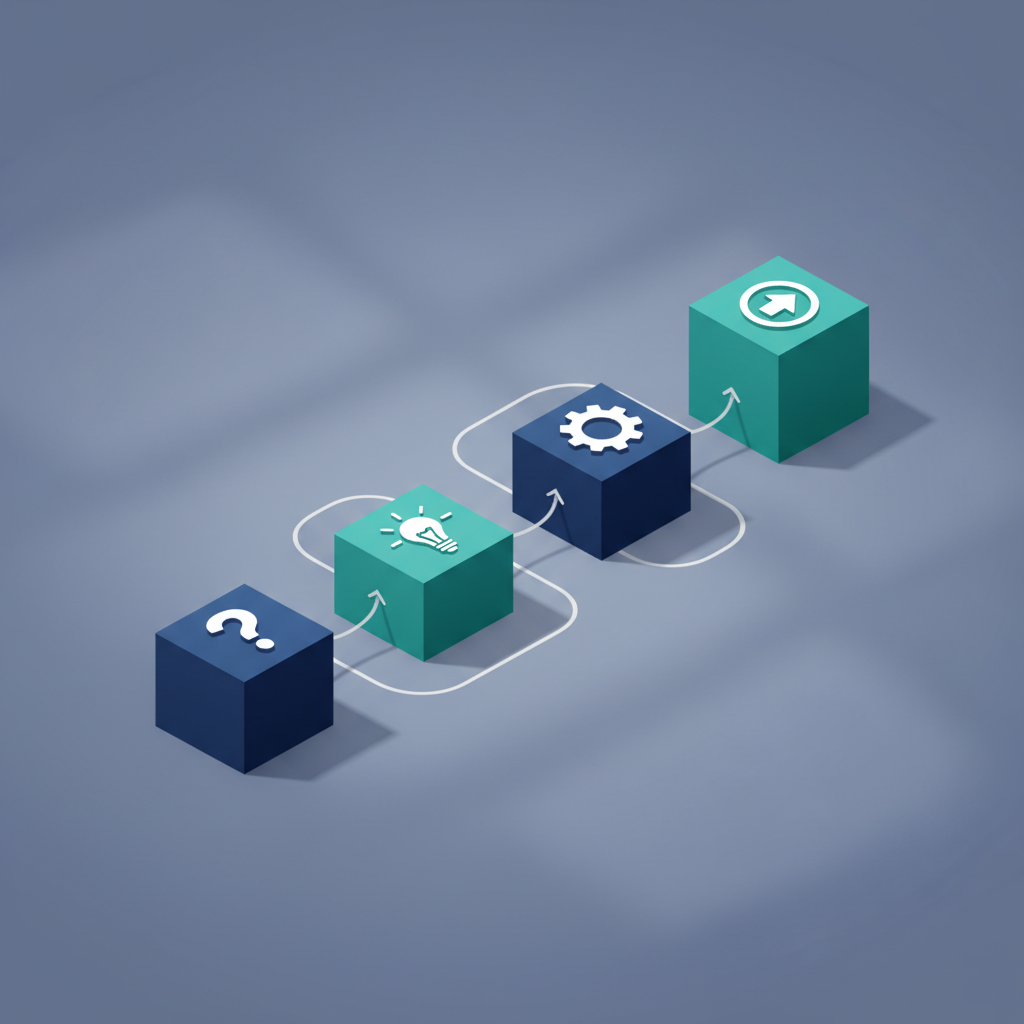
Before we dive into sales pitch examples, let's establish the structure that top performers use. This four-part framework works across industries, deal sizes, and buyer personas.
1. The Hook (Problem)
Open by demonstrating you understand their world. Reference a specific challenge they're facing—ideally one they've mentioned, or one that's endemic to their role or industry.
Example: "Sarah, you mentioned your SDR team is hitting only 60% of their monthly meeting targets. That's actually common for teams scaling from 5 to 15 reps—the coaching model that worked before breaks down."
2. The Bridge (Insight)
Share a perspective or insight they haven't considered. This is where you establish credibility and reframe their thinking.
Example: "What we've found across 200+ sales teams is that the bottleneck isn't effort or call volume—it's that reps get live feedback only once a week in 1:1s. By the time you catch a bad habit, they've already run 50 calls with the wrong messaging."
3. The Solution (Your offer)
Now—and only now—introduce your solution. Frame it as the logical answer to the problem and insight you've just established.
Example: "That's exactly why we built QUOTA Training. Our AI role-play platform lets every rep practice their pitch, objection handling, and discovery in realistic simulations—and get instant, personalized feedback. It's like having a coach in every rep's pocket."
4. The Proof (Validation)
Close with evidence that your solution delivers. Use specific metrics, customer names (with permission), or case study snippets.
Example: "TechCorp rolled this out to their 40-person SDR team last quarter. Within 60 days, their connect-to-meeting conversion rate went from 18% to 31%, and their new hire ramp time dropped by three weeks."
This framework works whether you have 30 seconds or 30 minutes. Scale the depth of each section to match your time window.
Sales pitch examples by scenario
Let's look at real-world sales pitch examples you can adapt for different selling situations.
Cold call opening pitch
You have 10-15 seconds to earn the right to continue the conversation.
Example:
"Hi Marcus, this is Alex from QUOTA Training. I'm calling because I work with Series B SaaS companies like yours that are scaling their sales teams quickly—and I noticed you just posted three SDR roles on LinkedIn. Most teams we talk to struggle to get new hires productive in under 90 days. Is that something you're focused on right now, or is your onboarding running smoothly?"
Why it works: It's personalized (LinkedIn research), acknowledges their context (hiring), presents a relevant problem, and ends with a pattern interrupt question that invites dialogue.
For more cold calling tactics, explore our guide on objection handling techniques that complement strong opening pitches.
Discovery call pitch
You've already earned a meeting. Now you need to position yourself as the guide, not just another vendor.
Example:
"Thanks for making time, Jennifer. Before I share what we do, I want to make sure I understand your world. You mentioned your AE team is missing quota by about 20% this quarter. When you dig into the pipeline, where do you see deals stalling—early stage, technical evaluation, or final negotiations?
[Listen to answer]
That makes sense. What we typically see is that when deals stall in [their answer], it's because reps haven't uncovered the true economic impact during discovery. They're selling features instead of outcomes. Our platform helps reps practice those critical discovery conversations in AI-powered simulations, so by the time they're on a real call, they know exactly which questions to ask and how to handle the tough moments.
Would it be helpful if I showed you what that looks like?"
Why it works: It leads with questions (building rapport and gathering intel), connects their pain to a root cause, and positions your solution as the bridge. The discovery call questions you ask set up your pitch.
Demo/presentation pitch
You're screen-sharing or presenting. The temptation is to dive into features. Resist.
Example:
"Before I walk you through the platform, let me frame what you're about to see. Based on our conversation, you have three core challenges:
- New SDRs take 4+ months to hit quota
- Your managers spend 15+ hours a week doing 1:1 coaching
- You have no visibility into skill gaps until deals are already lost
What I'm going to show you is how our product addresses each of those specifically. As I go through it, feel free to stop me if something doesn't map to your workflow—I'd rather spend time on what matters to you than show you everything we can do."
Why it works: It anchors the demo to their stated needs, sets expectations, and invites collaboration. You're framing features as solutions to their problems.
Elevator pitch (30 seconds)
You meet a prospect at a conference, in a Zoom lobby, or via introduction. You need a memorable, concise pitch.
Example:
"We help B2B sales teams ramp reps faster using AI role-play. Think of it like a flight simulator for salespeople—reps practice pitches, objection handling, and discovery calls against AI buyers that respond realistically. They get instant feedback on what worked and what didn't. Our customers typically cut onboarding time in half and see double-digit improvements in conversion rates within 60 days."
Why it works: It uses a clear analogy (flight simulator), explains the what and how quickly, and ends with tangible outcomes.
Closing pitch
You're near the finish line. The prospect is interested but hasn't committed. Your closing pitch addresses the final hesitation.
Example:
"Michael, it sounds like we're aligned on the value. I know you're weighing a few options, so let me make this simple: What's the one thing that would make this an obvious yes for you?
[Listen]
Got it. Here's what I propose: Let's run a 30-day pilot with your top 10 reps. We'll set a clear success metric—let's say a 15% improvement in connect-to-meeting rate. If we hit it, we roll out to the full team. If we don't, you've lost nothing but 30 days. Does that feel like a fair way to move forward?"
Why it works: It surfaces the real objection, proposes a low-risk path forward, and ties success to their metric (not yours).
How to customize your sales pitch for different buyers
Generic pitches fail. Here's how to tailor your message based on who you're speaking with.
For individual contributors (SDRs, AEs)
Focus on: Personal success, ease of use, immediate impact
"This helps you hit quota faster by giving you a safe place to practice before you're on a real call. No more winging it or learning by losing deals."
For front-line managers
Focus on: Team performance, coaching efficiency, visibility
"You'll spend less time listening to call recordings and more time coaching to specific skill gaps. The platform flags exactly where each rep needs help—objection handling, discovery depth, closing confidence—so your 1:1s become way more productive."
Our sales coaching framework article explores how managers can scale their impact.
For VP/CRO
Focus on: Revenue impact, scalability, strategic alignment
"This directly impacts two of your board metrics: time-to-productivity for new hires and win rate. You'll ramp reps in half the time and see measurable improvements in conversion rates at every funnel stage. Plus, as you scale from 20 to 50 reps, your coaching model doesn't break—the platform scales with you."
For procurement/finance
Focus on: ROI, risk mitigation, total cost of ownership
"The average cost of a mis-hire in sales is $240K when you factor in salary, ramp time, and lost pipeline. This reduces that risk significantly. Our customers typically see 10x ROI within the first year based on faster ramp and higher win rates. We also integrate with your existing stack—Salesforce, Gong, Outreach—so there's no rip-and-replace."
Check our integrations to see how we fit into your existing workflow.
Common sales pitch mistakes to avoid
Even experienced reps fall into these traps. Avoid them:
Leading with features: "We have AI-powered analytics, customizable dashboards, and 50+ integrations..." Your buyer doesn't care until they understand why those features matter to them.
Talking too much: The best pitches are 40% you talking, 60% them talking. Ask questions. Listen. Adapt.
Skipping personalization: If your pitch could apply to any company in any industry, it's too generic. Reference their company, role, or recent news.
Ignoring objections: When a buyer raises a concern, don't bulldoze past it. Address it directly, or you'll lose trust.
No clear next step: Every pitch should end with a specific call to action. "Does it make sense to schedule a 30-minute demo next Tuesday?" is better than "Let me know if you're interested."
Forgetting to practice: According to HubSpot's sales research, top performers practice their pitches significantly more than average performers. Yet most reps wing it.
This is where platforms like QUOTA Training become invaluable—you can rehearse your pitch against realistic AI buyers, get instant feedback, and iterate until it's sharp.
How to practice and improve your sales pitch
Your first draft is never your best pitch. Here's how to refine it:
Record yourself
Use your phone or Zoom to record your pitch. Watch it back. You'll immediately spot filler words, weak transitions, and moments where you lose energy.
Get peer feedback
Pitch to a colleague or manager. Ask them:
- What was the most compelling part?
- Where did you lose interest?
- What questions came up that I didn't address?
Test with real buyers
Your best feedback comes from prospects. After a pitch, ask: "On a scale of 1-10, how relevant was what I just shared? What would have made it a 10?"
Use AI role-play
Traditional practice has limits—you can only ask your manager for feedback so many times. AI role-play platforms let you practice unlimited variations in realistic scenarios. You can test different hooks, try new framings, and handle objections without burning real opportunities.
Our gamification approach makes practice engaging rather than tedious, so reps actually do it.
A/B test your messaging
Try two different versions of your hook or value prop across 20 calls each. Track which one gets better engagement. Let data guide your iteration.
Study top performers
If your team uses conversation intelligence tools, listen to calls from your top reps. What phrases do they use? How do they structure their pitch? Where do they slow down or speed up?
For teams building systematic coaching programs, our SDR onboarding framework includes pitch development as a core milestone.
Measuring sales pitch effectiveness
How do you know if your pitch is working? Track these metrics:
Cold call conversion: Of the prospects who answer, what percentage agree to continue the conversation or book a meeting?
Discovery-to-demo rate: After your discovery pitch, how many prospects schedule a full demo?
Demo-to-proposal rate: After presenting, what percentage move to the proposal stage?
Close rate: Ultimately, how many pitches turn into closed-won deals?
Time to yes/no: How long does it take prospects to make a decision after your pitch? Faster decisions (either way) often indicate clearer messaging.
Buyer engagement signals: Are they asking questions? Taking notes? Inviting colleagues to the next call? These qualitative signals matter as much as conversion rates.
According to Salesforce's State of Sales report, high-performing sales teams are 2.3x more likely to use analytics to guide their messaging and pitch refinement.
FAQ
What is a sales pitch?
A sales pitch is a concise, persuasive message that communicates the value of your product or service to a potential buyer. It explains how you solve their specific problem and why they should choose you over alternatives. Effective sales pitches are tailored to the buyer's context and focus on outcomes, not just features.
How long should a sales pitch be?
It depends on the context. An elevator pitch should be 30-60 seconds. A cold call pitch might be 15-30 seconds before you ask a qualifying question. A discovery or demo pitch can be 5-10 minutes. The key is to match your depth to the buyer's attention span and where they are in the buying journey—always leave room for dialogue.
What's the difference between a sales pitch and a value proposition?
A value proposition is a strategic statement of the unique value you provide—it's what you offer and why it matters. A sales pitch is the tactical delivery of that value proposition in a specific conversation. Your value prop stays consistent; your pitch adapts to each buyer's needs, role, and context.
How do I make my sales pitch more persuasive?
Focus on the buyer's problem first, use specific outcomes rather than vague benefits, include social proof (customer stories, data, logos), and speak conversationally rather than presenting. Ask questions to involve the buyer, address objections directly, and always tie features back to their stated needs. Practice extensively so delivery feels natural.
Should I use a script for my sales pitch?
Use a framework, not a rigid script. Have your key points, transitions, and proof points prepared, but allow flexibility to adapt to the conversation. Top performers know their pitch structure cold but adjust language, examples, and pacing based on buyer reactions. Practice enough that it sounds natural, not memorized.
How often should I update my sales pitch?
Review your pitch quarterly or whenever you notice declining conversion rates. Update it when you launch new features, enter new markets, or gather compelling new customer stories. Also refine it based on objections you're hearing repeatedly—if five prospects ask the same question, build the answer into your pitch proactively.

Stefano Breglia
Co-founder, QUOTA Training
Stefano Breglia is co-founder of QUOTA Training. He focuses on sales methodology, deal progression and how AI simulation accelerates rep ramp time across the SDR, BDR, AE and AM roles.
Turn this into reps, not just reading
QUOTA Training lets your team practise these exact scenarios with an AI buyer that reacts like the real thing — then scores every call.
See it in action