The Complete Guide to Sales Discovery Calls (2025)
Part of the Discovery guide: The Complete Guide to Sales Discovery Calls (2025)Master every sales discovery call with proven frameworks, question banks, qualification criteria, and next-step strategies that turn prospects into pipeline.

Key Takeaways
- A sales discovery call is a structured qualification conversation that uncovers pain, decision criteria, stakeholders, budget, and timeline—not a pitch meeting. Your goal is mutual qualification and building a business case for change.
- Use proven frameworks like SPIN, MEDDIC, or Gap Selling to systematically explore situation, problem, implication, need-payoff, metrics, economic buyer, decision process, and the gap between current and desired state.
- Multithreading—engaging multiple stakeholders—is critical for enterprise deals. Map the buying committee during discovery, identify champions and blockers, and create a plan to reach the economic buyer before your competitors do.
- Qualification is bidirectional: Disqualify early and respectfully when there's no fit. Protect your pipeline integrity by investing time only in deals you can genuinely win.
- Discovery never truly ends. Continue asking questions through demo, proposal, and negotiation stages as new information, stakeholders, and objections emerge.
What Is a Sales Discovery Call and Why It Matters
A sales discovery call is a structured conversation between a sales professional and a qualified prospect, designed to uncover the business challenges, goals, decision-making process, budget, and timeline that will determine whether a deal can close. Unlike cold calls or demos, discovery is about diagnosis before prescription—understanding before pitching.
According to Gartner research on B2B buying, the modern B2B buyer completes 27% of their purchase journey before ever engaging a sales rep. That means your discovery call isn't just about gathering information—it's about adding unique insight the buyer can't find on their own, challenging assumptions, and building a mutual business case for change.
Discovery calls serve three critical functions:
- Qualification: Determining whether this opportunity is worth pursuing based on fit, budget, authority, need, and timeline.
- Differentiation: Demonstrating your expertise and insight early, positioning yourself as a trusted advisor rather than a vendor.
- Roadmap creation: Building a shared understanding of the path from current state to closed deal, including stakeholders, milestones, and success metrics.
When executed well, discovery calls increase win rates, shorten sales cycles, and reduce discounting because you've built a compelling, evidence-based case for change that aligns with the buyer's internal priorities. When rushed or skipped, deals stall in later stages because critical information—who really makes the decision, what the true budget is, or whether the pain is urgent enough—was never uncovered.
Before your next discovery call, review our sales call preparation checklist to ensure you've researched the account, prepared hypotheses, and aligned on call objectives with any internal stakeholders.
The Three Core Discovery Frameworks Every Rep Should Master

No single discovery framework fits every sale, but three proven methodologies—SPIN Selling, MEDDIC, and Gap Selling—provide complementary lenses for uncovering what matters. Elite reps blend elements from each based on deal complexity, sales cycle length, and buyer sophistication.
SPIN Selling: The Question Sequence That Builds Urgency
Developed by Neil Rackham through analysis of 35,000 sales calls, SPIN Selling structures discovery around four question types that progressively build the case for change:
Situation questions establish context: current tools, processes, team structure, and baseline metrics. Keep these brief—buyers find excessive situational questions tedious, and most information is available through research.
Example: "Walk me through how your team currently handles lead routing from marketing to sales."
Problem questions uncover difficulties, dissatisfactions, and pain points. These are the heart of discovery—identifying gaps between current state and desired outcomes.
Example: "What happens when a high-intent lead comes in outside business hours? How often do you lose deals because of response time?"
Implication questions explore the consequences and ripple effects of those problems. This is where urgency is built—helping the buyer see that the cost of inaction exceeds the cost of change.
Example: "If you're losing 15% of inbound leads to competitors who respond faster, what does that represent in annual revenue? How does that impact your team's ability to hit quota?"
Need-payoff questions guide the buyer to articulate the value of solving the problem, creating ownership of the solution.
Example: "If you could respond to every lead within five minutes, 24/7, what would that mean for conversion rates? How would that change your team's ability to scale?"
SPIN works exceptionally well for complex B2B sales where the buyer may not fully recognize the implications of their current challenges. For a deeper dive with ready-to-use examples, see our guide to practical SPIN selling questions.
MEDDIC: The Enterprise Qualification Framework
MEDDIC (Metrics, Economic Buyer, Decision Criteria, Decision Process, Identify Pain, Champion) is a qualification framework designed for enterprise sales with multiple stakeholders and long cycles. It ensures you've uncovered every element needed to forecast accurately and navigate complex buying committees.
Metrics: Quantifiable business impact the buyer expects. What does success look like in numbers?
Example question: "What specific metrics would need to improve for this project to be considered successful six months after go-live?"
Economic Buyer: The person with ultimate budget authority and veto power. Often not the person you're speaking with in early discovery.
Example question: "Who ultimately signs off on investments of this size? What are their top priorities this quarter?"
Decision Criteria: The technical and business requirements the buyer will use to evaluate solutions. Understanding these early lets you shape the criteria in your favor.
Example question: "When you've made similar purchases in the past, what were the must-haves versus nice-to-haves? What would disqualify a vendor?"
Decision Process: The steps, stakeholders, timelines, and approvals required to get from handshake to signature.
Example question: "Walk me through what happens after our next meeting. Who else needs to be involved, and what does the approval process look like?"
Identify Pain: The critical business problem that, if left unsolved, creates unacceptable risk or cost.
Example question: "If you don't solve this in the next quarter, what happens? What's at stake personally for you and your team?"
Champion: An internal advocate with power, credibility, and motivation to sell on your behalf when you're not in the room.
Example question: "Who internally would benefit most from this working? Who has the influence to help us navigate stakeholders we haven't met yet?"
MEDDIC is particularly powerful when combined with multithreading (covered below) because it forces you to map the entire buying committee early. Many deals are lost not because the product doesn't fit, but because a key stakeholder was never engaged.
Gap Selling: Building the Business Case for Change
Gap Selling, popularized by Keenan, focuses on the delta between the prospect's current state and their desired future state. The "gap" is where value lives—and where urgency is created.
The framework has three components:
- Current State: Where the prospect is today, including problems, root causes, and the business impact of those problems.
- Future State: Where the prospect wants or needs to be—their goals, metrics, and definition of success.
- The Gap: The difference between current and future state, quantified in time, money, risk, or competitive advantage.
Gap Selling discovery questions explore:
- "What does your current process look like end-to-end?"
- "What's working well? What's breaking?"
- "Where do you need to be in 12 months to consider this a success?"
- "What's the cost—financial, operational, or strategic—of staying where you are?"
- "What's preventing you from closing that gap today?"
The power of Gap Selling is that it shifts the conversation from your product to their problem. You become a consultant diagnosing the gap, not a vendor pitching features. This approach aligns well with Harvard Business Review on solution selling, which emphasizes insight over information.
Elite reps don't pick one framework and ignore the others. They use SPIN to structure question flow, MEDDIC to ensure complete qualification, and Gap Selling to build the business case. Adapt based on what the deal and the buyer need.
Building Your Discovery Call Agenda
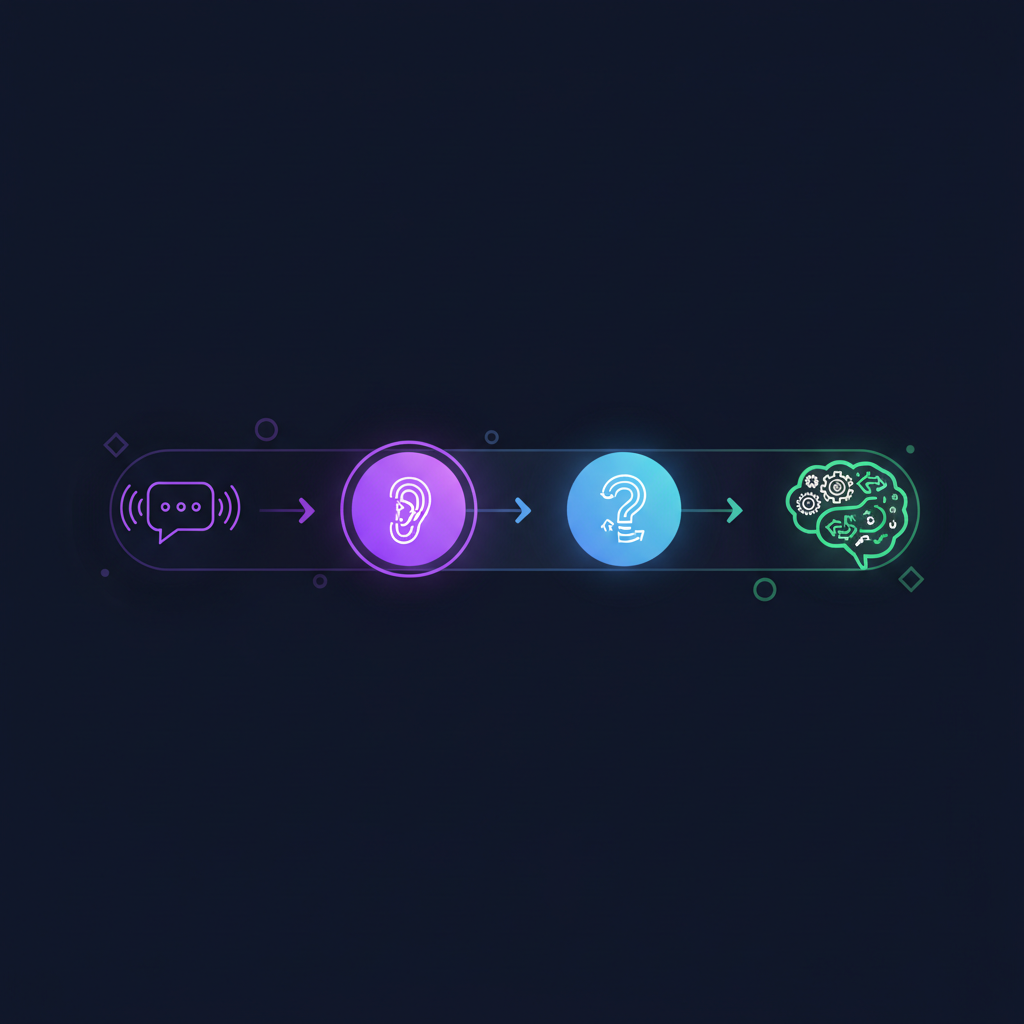
A structured agenda keeps discovery calls focused, ensures you cover critical ground, and signals professionalism. Share the agenda in your meeting invite so the prospect comes prepared.
Here's a proven 45-minute discovery agenda template:
1. Opening and Rapport (3–5 minutes)
Start with a brief, genuine connection moment. Reference something specific from your research—a recent company announcement, a LinkedIn post, or a mutual connection. Then set the agenda and confirm time.
Example: "Thanks for making time today. I saw your team just launched in EMEA—congrats. I thought we could spend the next 45 minutes understanding your current lead management process, the challenges you're facing, and whether there's a fit. If there is, we'll talk next steps. If not, I'll point you to resources that might help. Does that work?"
2. Context-Setting Questions (5–7 minutes)
Ask a few high-level situational questions to establish baseline understanding. If you've done your homework, keep this short.
Example questions:
- "Give me the 30-second overview of your role and what your team is responsible for."
- "How is your team structured? How many reps, what segments?"
- "What tools are you using today for [relevant process]?"
3. Problem and Implication Exploration (15–20 minutes)
This is the core of discovery. Use SPIN or Gap Selling questions to uncover pain, quantify impact, and explore consequences. Let the prospect talk—your job is to listen, probe, and connect dots. For guidance on how to truly hear what's being said, refer to our post on active listening skills.
Example flow:
- Problem: "What's not working as well as you'd like?"
- Implication: "How does that impact your ability to hit your number?"
- Quantification: "What's that costing you in real terms—revenue, time, or team morale?"
- Urgency: "What happens if this doesn't get solved this quarter?"
4. Decision Process and Stakeholder Mapping (8–10 minutes)
Shift to MEDDIC-style qualification. Understand who else is involved, how decisions get made, and what the timeline looks like.
Example questions:
- "Who else on your team cares about solving this?"
- "When you've bought tools like this before, who was involved in the decision?"
- "What does the approval process look like? Any budget cycles or freezes I should know about?"
- "Who's the ultimate decision-maker for this investment?"
5. Next Steps and Mutual Commitment (5–7 minutes)
Never end a discovery call without scheduling the next meeting and confirming mutual interest. Summarize what you heard, confirm the pain is real and urgent, and propose a logical next step (demo, technical deep-dive, stakeholder meeting).
Example close: "So if I'm hearing you right, the core issue is X, it's costing you Y, and you need to solve it by Z. Does that sound accurate? If so, I think the logical next step is a demo tailored to your workflows with [stakeholder names]. I have time Thursday at 2pm or Friday at 10am—which works better?"
If the prospect hesitates or says "send me some information," you likely haven't uncovered enough pain or urgency. For tactics on handling this, see our guide on how to handle the 'send me an email' objection.
The Discovery Question Bank: 50+ Questions by Category
Great discovery is powered by great questions. Below is a curated question bank organized by discovery objective. Tailor these to your industry, product, and buyer persona.
Situational Questions (Context-Setting)
- "Walk me through a day in the life of your team."
- "How is your team structured? Who reports to whom?"
- "What does your current tech stack look like for [relevant function]?"
- "How do you measure success today?"
- "What's changed in your business over the past 12 months?"
Problem Questions (Pain Discovery)
- "What's the biggest challenge your team faces right now?"
- "Where do things break down in your current process?"
- "What keeps you up at night related to [area]?"
- "If you could wave a magic wand and fix one thing, what would it be?"
- "What are your team's top three complaints about the current system?"
Implication Questions (Building Urgency)
- "What happens if you don't solve this?"
- "How does this problem impact other parts of the business?"
- "What's this costing you—in revenue, time, or opportunity cost?"
- "How does this affect your ability to hit quota or company goals?"
- "Who else in the organization feels the pain from this issue?"
Need-Payoff Questions (Value Co-Creation)
- "If we could solve this, what would that mean for your team?"
- "What would success look like six months from now?"
- "How would fixing this change your day-to-day?"
- "What would it be worth to eliminate this problem entirely?"
- "If you hit your goals, what does that unlock for you personally?"
MEDDIC Qualification Questions
- Metrics: "What KPIs are you measured on? What needs to improve?"
- Economic Buyer: "Who controls the budget for this? What are their priorities?"
- Decision Criteria: "What are your must-haves? What's a deal-breaker?"
- Decision Process: "What does the buying process look like here? Who needs to sign off?"
- Identify Pain: "What's the one problem that, if unsolved, is unacceptable?"
- Champion: "Who internally is most excited about fixing this? Who can help us navigate?"
Multithreading and Stakeholder Questions
- "Who else should we involve in this conversation?"
- "Who owns [related function]? How do they think about this problem?"
- "When you've made similar decisions, who had input?"
- "Who would block this if they weren't on board?"
- "Can you introduce me to [economic buyer/technical lead/end user]?"
For even more examples tailored to specific pain discovery, explore our collection of discovery call questions that uncover real pain.
Multithreading: Why Single-Threaded Deals Die
Multithreading means engaging multiple stakeholders within the buying organization, rather than relying on a single contact. It's one of the highest-leverage activities in enterprise sales, yet it's often neglected because reps fear "going around" their main contact.
The data is clear: deals with three or more active stakeholders engaged have significantly higher win rates and faster close times than single-threaded deals. Here's why:
Single points of failure: If your champion leaves, gets reassigned, or loses internal credibility, your deal dies.
Incomplete information: Your main contact may not have full visibility into budget, competing priorities, or the economic buyer's real concerns.
Competitive vulnerability: Your competitor is multithreading. If they reach the CFO or VP and you haven't, they control the narrative.
Stalled deals: When your contact says "we need to get internal buy-in," that's code for "I don't have the power or influence to move this forward alone."
How to Multithread During Discovery
Start by mapping the buying committee during your first discovery call:
- "Who else cares about solving this problem?"
- "When decisions like this get made, who's typically involved?"
- "Who would need to sign off on a purchase like this?"
- "Can you help me understand the org structure? Who owns [related area]?"
Then, ask for introductions:
- "It sounds like [technical lead] would have valuable input on integration requirements. Would you be open to me joining your next sync with them, or should I set up a separate 15-minute call?"
- "Since [economic buyer] ultimately approves this, it would be helpful to understand their priorities early. Can you introduce us?"
Frame multithreading as helping your champion succeed. You're not going around them—you're gathering the information and building the consensus they need to get internal approval.
Mapping the Buying Committee
Create a stakeholder map during discovery that includes:
- Name and title
- Role in the decision (economic buyer, technical evaluator, end user, influencer, blocker)
- Their primary pain or goal
- Their decision criteria
- Relationship to your champion (supporter, neutral, skeptic)
- Status (engaged, not yet contacted, resistant)
Update this map after every call and share it with your internal team. Use it to plan your next steps: Who do we need to reach next? Who's a blocker we need to address? Who can help us get to the economic buyer?
Qualifying Hard: When and How to Disqualify
Qualification is as much about knowing when to walk away as it is about advancing deals. Poor qualification inflates pipelines with dead-weight opportunities, wastes time on deals you'll never close, and prevents you from focusing on winnable business.
Elite sales teams disqualify ruthlessly and early. Here's how to do it with professionalism and respect.
Red Flags That Signal Disqualification
- No clear pain or urgency: The prospect is "just exploring" or "keeping options open" with no compelling event or timeline.
- No budget or access to budget: They can't articulate how they'd fund this, and they don't have access to the person who controls the money.
- No authority and no path to authority: Your contact isn't the decision-maker and won't or can't introduce you to the person who is.
- Misaligned expectations: They want capabilities you don't offer, pricing you can't meet, or timelines you can't support.
- Already decided on a competitor: They're using you for price leverage or to check a "three vendor" box in procurement.
- No champion: No one internally is willing to advocate for you or sell on your behalf when you're not in the room.
How to Disqualify Respectfully
When you identify a red flag, address it directly:
"Based on what you've shared, it sounds like [reason] might make this a tough fit right now. I want to be respectful of your time—does it make sense to pause here, or is there something I'm missing?"
If the prospect confirms the red flag, offer an alternative:
"Totally understand. It sounds like you're earlier in the process than where we typically engage. I'm happy to send over some resources that might help you build the internal business case. Feel free to reach back out in [timeframe] if things change."
Disqualifying well protects your reputation, builds trust (you're not wasting their time either), and keeps your pipeline honest. For more on handling situations where the fit isn't there, review our objection handling strategies.
BANT, MEDDIC, and Other Qualification Criteria
Different teams use different qualification frameworks. Here are the most common:
BANT (Budget, Authority, Need, Timeline):
- Budget: Can they afford this?
- Authority: Are you talking to the decision-maker?
- Need: Is there a real, urgent problem?
- Timeline: When do they need to decide?
MEDDIC (covered earlier): Adds metrics, decision process, and champion to the mix.
CHAMP (Challenges, Authority, Money, Prioritization): Focuses on pain first, authority second.
GPCT (Goals, Plans, Challenges, Timeline): Emphasizes the buyer's strategic goals and existing plans before diving into challenges.
Choose a framework that matches your sales motion and deal complexity, then train your team to use it consistently. The framework matters less than the discipline of using one.
Discovery Call Preparation: Research, Hypotheses, and Pre-Call Planning
Discovery calls succeed or fail before you dial. Preparation separates consultative sellers from product pushers.
Pre-Call Research Checklist
Spend 15–20 minutes researching before every discovery call:
- Company: Recent news, funding, leadership changes, product launches, earnings calls (for public companies).
- Industry: Market trends, competitive pressures, regulatory changes.
- Prospect: LinkedIn profile, recent posts, shared connections, career trajectory.
- Technology: Current tech stack (use tools like BuiltWith, LinkedIn Sales Navigator, or ZoomInfo).
- Competitors: Are they using a competitor? What do reviews say about pain points?
Develop Hypotheses
Based on your research and pattern recognition from similar accounts, develop 2–3 hypotheses about what their challenges might be. This lets you ask sharper, more relevant questions.
Example hypothesis: "Based on their recent expansion into EMEA and the fact they're using [legacy tool], I hypothesize they're struggling with timezone coverage and lead response time."
Then, test your hypothesis early in the call:
"I noticed you just expanded into EMEA. A lot of teams we work with in similar situations struggle with lead response times across timezones. Is that something you're seeing?"
Align Internally
If this is a strategic account or involves multiple people from your side (sales engineer, CSM, manager), align before the call:
- What are we trying to learn?
- Who's leading which part of the conversation?
- What's our qualification bar for moving this forward?
For a complete step-by-step framework, see our sales call preparation checklist.
Handling Objections and Resistance During Discovery
Objections don't only appear at the close—they surface during discovery, often disguised as deflections, vague answers, or resistance to your questions.
Common Discovery-Stage Objections
"I don't have time for this right now." Response: "Totally understand—I know you're busy. That's exactly why I want to make sure we're not wasting time on something that isn't a fit. If I can ask three quick questions, we'll know in the next five minutes whether it makes sense to continue. Fair?"
"We're already using [competitor]." Response: "Got it—what's working well with them? What's not?" (Then probe for gaps and switching costs. For deeper tactics, see our guide on competitor objection handling.)
"We don't have budget." Response: "I appreciate the honesty. Help me understand—is it that there's no budget allocated, or that the pain isn't urgent enough yet to justify reallocating budget?" (Often "no budget" means "not a priority yet.")
"Just send me some information." Response: "Happy to—what specifically would be most helpful? I want to make sure I send something relevant rather than generic." (Then probe for the real objection: lack of urgency, lack of authority, or polite brush-off.)
The key is to treat objections as information, not rejection. They reveal what the buyer is really thinking and give you a chance to address concerns early.
Next Steps: What Happens After Discovery
The discovery call is not the end—it's the beginning. What you do immediately after determines whether momentum continues or the deal stalls.
Immediate Post-Call Actions
1. Send a follow-up email within 2 hours. Summarize what you learned, confirm the pain and urgency, recap agreed-upon next steps, and include any resources you promised.
Example structure:
- "Great connecting today. Here's what I heard..."
- "Key challenges: [pain point 1], [pain point 2]"
- "Success metrics: [metric 1], [metric 2]"
- "Next steps: [demo/meeting] on [date] with [stakeholders]"
- "Attached: [resource]"
2. Update your CRM immediately. Log qualification data (MEDDIC fields, pain, stakeholders, timeline), next steps, and any red flags. If you don't document it now, you'll forget.
3. Debrief with your team. If this is a strategic deal, debrief with your manager or sales engineer. What did we learn? What's our confidence level? What risks do we need to address? For a structured approach, use our call debrief best practices.
4. Schedule the next meeting before you hang up. Never end discovery without a confirmed next step on the calendar. If the prospect resists, probe why—it's often a sign they're not truly qualified.
Continuing Discovery Through the Sales Cycle
Discovery doesn't end after the first call. Continue asking questions during demos, technical evaluations, and proposal discussions:
- "Now that you've seen the demo, what questions do you have?"
- "Who else needs to see this before we move forward?"
- "What concerns do you think [economic buyer] will have?"
- "What could cause this deal to stall or fall apart?"
As Salesforce guide to discovery notes, the best sellers treat every conversation as an opportunity to learn something new that strengthens their position or reveals risk.
Training Your Team on Discovery: Coaching, Role-Play, and Feedback
Discovery is a skill that improves with practice, coaching, and feedback. Most reps don't fail at discovery because they don't care—they fail because they've never been taught a systematic approach or received real-time coaching.
Role-Play Discovery Scenarios
Use role-play to practice discovery frameworks in a low-stakes environment. Create realistic scenarios based on your ICP, objections, and deal complexity. Have reps practice:
- Asking SPIN questions in sequence
- Multithreading and asking for introductions
- Handling common objections
- Disqualifying respectfully
Record role-play sessions and review them as a team. What worked? What felt awkward? What questions uncovered the most valuable information?
For teams looking to scale this, AI-powered role-play platforms like QUOTA Training let reps practice discovery scenarios on-demand with realistic voice simulation and instant feedback, removing the bottleneck of manager availability.
Review Real Discovery Calls
The fastest way to improve discovery is to review real calls. Use conversation intelligence tools to surface calls where reps did discovery well—or poorly—and turn them into coaching moments.
Look for:
- Talk-to-listen ratio: Great discovery calls are 60–70% prospect talking. If your rep is talking more than that, they're pitching, not discovering.
- Question quality: Are they asking open-ended, implication-focused questions, or just running through a checklist?
- Qualification rigor: Did they uncover MEDDIC? Did they probe for the economic buyer and decision process?
- Next steps: Did they secure a firm commitment and calendar invite before hanging up?
For a structured approach to call reviews, see our sales call review template.
Use a Discovery Call Scorecard
Create a scorecard that evaluates discovery calls on key dimensions:
- Pre-call research completed (yes/no)
- Agenda set and time confirmed (yes/no)
- Pain uncovered and quantified (1–5 scale)
- MEDDIC fields completed (checklist)
- Multithreading attempted (yes/no)
- Next steps scheduled (yes/no)
- Overall call quality (1–5 scale)
Use this scorecard during 1:1 coaching sessions and team call reviews. It creates a shared language for what "good" looks like and makes feedback objective rather than subjective.
Common Discovery Call Mistakes (and How to Avoid Them)
Even experienced reps fall into discovery traps. Here are the most common mistakes and how to fix them.
Mistake 1: Talking Too Much
The problem: You're so excited to share how your product solves their problem that you dominate the conversation.
The fix: Set a personal rule—prospect talks 60% minimum. If you're talking more than 40% of the time, you're pitching, not discovering. Use the mute button on video calls to force yourself to stop talking and listen.
Mistake 2: Asking Checklist Questions Without Listening
The problem: You're so focused on getting through your question list that you don't listen to answers or ask follow-up questions.
The fix: Treat your question bank as a guide, not a script. When a prospect says something interesting, probe deeper: "Tell me more about that." "What do you mean by [term]?" "How does that impact [area]?"
Mistake 3: Skipping the Decision Process
The problem: You focus on pain and solution fit but never uncover how decisions actually get made—who's involved, what the timeline is, what approvals are needed.
The fix: Make MEDDIC-style qualification non-negotiable. Don't leave a discovery call without understanding the decision process, even if it feels awkward to ask.
Mistake 4: Pitching Too Early
The problem: The prospect mentions a pain point, and you immediately jump to how your product solves it.
The fix: Resist the urge to pitch. When you hear pain, ask implication and need-payoff questions first. Build urgency and let the prospect articulate the value of solving before you ever mention your solution.
Mistake 5: Failing to Disqualify
The problem: You're so focused on hitting activity metrics or advancing deals that you keep pursuing opportunities with no real fit.
The fix: Protect your time and your pipeline. If the prospect doesn't have pain, budget, authority, or urgency, disqualify respectfully and move on. Your win rate will improve when you focus only on winnable deals.
Mistake 6: Not Securing Next Steps
The problem: The call ends with "I'll send you some info and we'll reconnect," but no specific date or commitment.
The fix: Never end a discovery call without a firm next step on the calendar. If the prospect won't commit, that's a red flag—probe why.
Tools and Technology to Improve Discovery
Modern sales teams use technology to prepare better, execute more consistently, and learn faster from every discovery call.
Conversation Intelligence Platforms
Tools like Gong, Chorus, and Clari analyze recorded discovery calls to surface insights:
- Which questions correlate with closed deals?
- How much is the prospect talking versus the rep?
- What objections are coming up most often?
- Which competitors are mentioned?
These platforms also let managers review calls asynchronously and provide targeted coaching. For a deep dive on deploying these tools, see our guide to AI conversation intelligence.
CRM and Sales Engagement Platforms
Your CRM (Salesforce, HubSpot, Pipedrive) should be the single source of truth for discovery data. Use custom fields to capture MEDDIC information, stakeholder maps, and qualification status.
Sales engagement platforms (Outreach, SalesLoft, Apollo) help you orchestrate multi-touch sequences that include discovery calls, follow-ups, and multithreading outreach.
AI Role-Play and Coaching Tools
AI-powered platforms like QUOTA Training let reps practice discovery scenarios with realistic voice simulation, getting reps more reps (practice repetitions) without requiring manager time. Reps can rehearse SPIN sequences, practice handling objections, and refine their talk-to-listen ratio in a safe environment before they get on live calls.
Research and Intelligence Tools
- LinkedIn Sales Navigator: Research prospects, identify mutual connections, and track account activity.
- ZoomInfo, Apollo, Clearbit: Enrich contact and company data, identify tech stack, and find decision-makers.
- BuiltWith, SimilarWeb: Understand the prospect's current technology and web presence.
- Owler, Crunchbase: Track funding, news, and competitive intelligence.
The right tools don't replace discovery skill—they amplify it by giving reps better information and faster feedback loops.
Measuring Discovery Call Effectiveness
You can't improve what you don't measure. Track these metrics to understand how well your team is executing discovery:
Leading Indicators (Activity and Execution)
- Discovery calls completed per rep per week
- Average discovery call duration (too short often means insufficient depth)
- Percentage of discovery calls with agenda sent in advance
- Percentage of discovery calls with next meeting scheduled
- MEDDIC completion rate (percentage of opportunities with all MEDDIC fields populated)
Lagging Indicators (Outcomes)
- Discovery-to-demo conversion rate
- Discovery-to-closed-won rate
- Average deal size for opportunities that went through formal discovery
- Sales cycle length for discovery-qualified deals versus non-qualified
- Win rate by rep, segmented by discovery quality score
Compare these metrics across reps to identify top performers and coaching opportunities. If a rep has a high activity level but low conversion from discovery to next stage, they likely need coaching on qualification rigor or question quality.
FAQ
What is a sales discovery call?
A sales discovery call is a structured conversation between a seller and a qualified prospect designed to uncover business challenges, decision criteria, stakeholders, budget, and timeline. Its primary goal is mutual qualification—determining whether there's a genuine fit and a path to a closed deal.
How long should a discovery call last?
Most effective discovery calls last 30–45 minutes for mid-market deals and 45–60 minutes for enterprise opportunities. The key is balancing depth of questioning with respect for the prospect's time while leaving room for follow-up questions and next-step scheduling.
What questions should I ask on a discovery call?
Effective discovery questions explore situation (current state), problem (pain points and impact), implication (consequences of inaction), and need-payoff (value of solving). Use frameworks like SPIN or MEDDIC to structure questions around metrics, economic buyer, decision criteria, decision process, identify pain, and champion.
How do I qualify a prospect during discovery?
Qualify prospects using frameworks like MEDDIC or BANT. Confirm they have measurable pain, budget or access to funds, authority or access to the economic buyer, a clear decision process, a realistic timeline, and that your solution genuinely addresses their critical business issue. Disqualify early if any essential element is missing.
What should I do after a discovery call?
Immediately send a follow-up email summarizing pain points discovered, agreed-upon success metrics, next steps with specific dates, and any resources promised. Update your CRM with qualification data, stakeholder map, and timeline. Schedule the next meeting before you hang up, and loop in any new stakeholders identified during multithreading.
What's the difference between a discovery call and a demo?
A discovery call is a diagnostic conversation focused on understanding the buyer's current state, problems, and decision process. A demo is a presentation of your solution tailored to the specific pain points uncovered during discovery. Discovery comes first and informs how you position the demo.
How do I handle a prospect who won't answer my questions?
If a prospect is evasive or resistant, it's often a sign they're not truly qualified or don't see enough value in continuing the conversation. Address it directly: "I'm sensing some hesitation—is this not the right time, or is there a concern I should address?" If they continue to deflect, consider disqualifying and moving on.
Should I pitch my product during discovery?
No. Discovery is about diagnosing before prescribing. Your job is to understand their world, not to pitch yours. Once you've uncovered pain, built urgency, and confirmed fit, then you transition to positioning your solution—typically in a follow-up demo or presentation.
How many discovery calls does it take to close a deal?
It depends on deal complexity and sales cycle. For SMB deals, one thorough discovery call may be enough. For enterprise deals, discovery often spans multiple conversations with different stakeholders. The key is to continue asking discovery questions throughout the sales cycle, not just in the first call.
What if the prospect says they need to think about it after discovery?
"I need to think about it" usually means you didn't uncover enough urgency, didn't reach the real decision-maker, or didn't build a compelling case for change. Probe: "Of course—what specifically do you need to think through? Is it timing, budget, or something about the fit?" Then address the real concern rather than accepting a vague delay.
Sources

Stefano Sechi
Co-founder, QUOTA Training
Stefano Sechi is co-founder of QUOTA Training. He works hands-on with B2B sales teams on cold calling, discovery and objection handling, and shaped much of the methodology behind QUOTA’s AI role-play scenarios.
Turn this into reps, not just reading
QUOTA Training lets your team practise these exact scenarios with an AI buyer that reacts like the real thing — then scores every call.
See it in action