SDR Talk Tracks: Build Scripts That Sound Natural and Book Meetings
Part of the SDR Playbook guide: The Complete SDR Playbook for 2026: Your End-to-End GuideSDR talk tracks fail when they sound robotic. Learn how to build flexible frameworks that help reps sound confident, natural, and book more meetings.

Key takeaways
- SDR talk tracks are flexible frameworks, not word-for-word scripts—they provide structure (opener, value prop, transition, objection responses) while leaving room for natural language and personalization.
- Talk tracks fail when reps memorize and recite verbatim—the goal is internalization through repetition, so the framework becomes muscle memory and reps can adapt tone, pacing, and phrasing to each conversation.
- Modular design is what makes talk tracks scalable—build interchangeable components (openers, value statements, objection pivots, close asks) that reps can mix based on persona, channel, and conversation flow.
- AI role-play accelerates talk track mastery faster than manager-led practice—reps can simulate hundreds of scenarios, receive instant feedback on tonality and structure, and iterate without waiting for manager availability.
- Coaching talk tracks requires call recording, pattern identification, and targeted practice—isolate the exact moment a rep sounds stiff or goes off-rails, then drill that specific transition until it's conversational.
If you've ever listened to an SDR read a script word-for-word on a cold call, you know the feeling: robotic, awkward, and utterly unconvincing. The prospect hangs up before the rep finishes the opener.
Yet the opposite—no structure at all—leads to rambling, missed value props, and blown objection handling. Reps wing it, stumble, and lose confidence.
SDR talk tracks sit in the middle. They're flexible messaging frameworks that guide reps through common prospecting scenarios—cold calls, voicemails, email follow-ups, objection responses—without forcing word-for-word recitation. When built and coached correctly, talk tracks help SDRs sound confident, natural, and consistent, while giving managers a repeatable system to onboard, coach, and scale the team.
This guide shows you how to build SDR talk tracks that work, how to coach reps to internalize them without sounding like robots, and how AI role-play platforms accelerate mastery at scale. It's part of The Complete SDR Playbook for 2026, our end-to-end resource for building high-performing SDR teams.
What is an SDR talk track (and why it's not a script)
An SDR talk track is a modular messaging framework that provides structure for common prospecting interactions—cold calls, voicemails, LinkedIn messages, objection handling—while allowing reps to adapt language, tone, and pacing to fit each conversation.
Talk track vs. script: the critical difference
| Script | Talk track |
|---|---|
| Word-for-word, rigid | Modular framework with key phrases and logic branches |
| Sounds robotic when recited | Sounds natural when internalized |
| Hard to personalize | Built for adaptation |
| Reps memorize verbatim | Reps internalize structure and improvise within guardrails |
A script says: "Hi [Name], this is [Your Name] from [Company]. We help [Industry] companies reduce [Pain] by [Value Prop]. Do you have two minutes?"
A talk track says:
- Opener: Name, company, one-sentence reason for the call (tied to their role or recent trigger).
- Permission: Acknowledge interruption, ask for brief time.
- Value statement: What we do, who we help, outcome we deliver (one sentence).
- Transition: Tie to their world with a question or pattern-interrupt.
The rep fills in the blanks with their own phrasing, adjusts tone based on the prospect's energy, and pivots when the conversation goes off-script.
Gong's research on sales scripts found that top performers deviate from scripts more often than average reps—but they stay within a consistent framework. Talk tracks provide that framework.
Why most SDR talk tracks fail (and how to fix them)
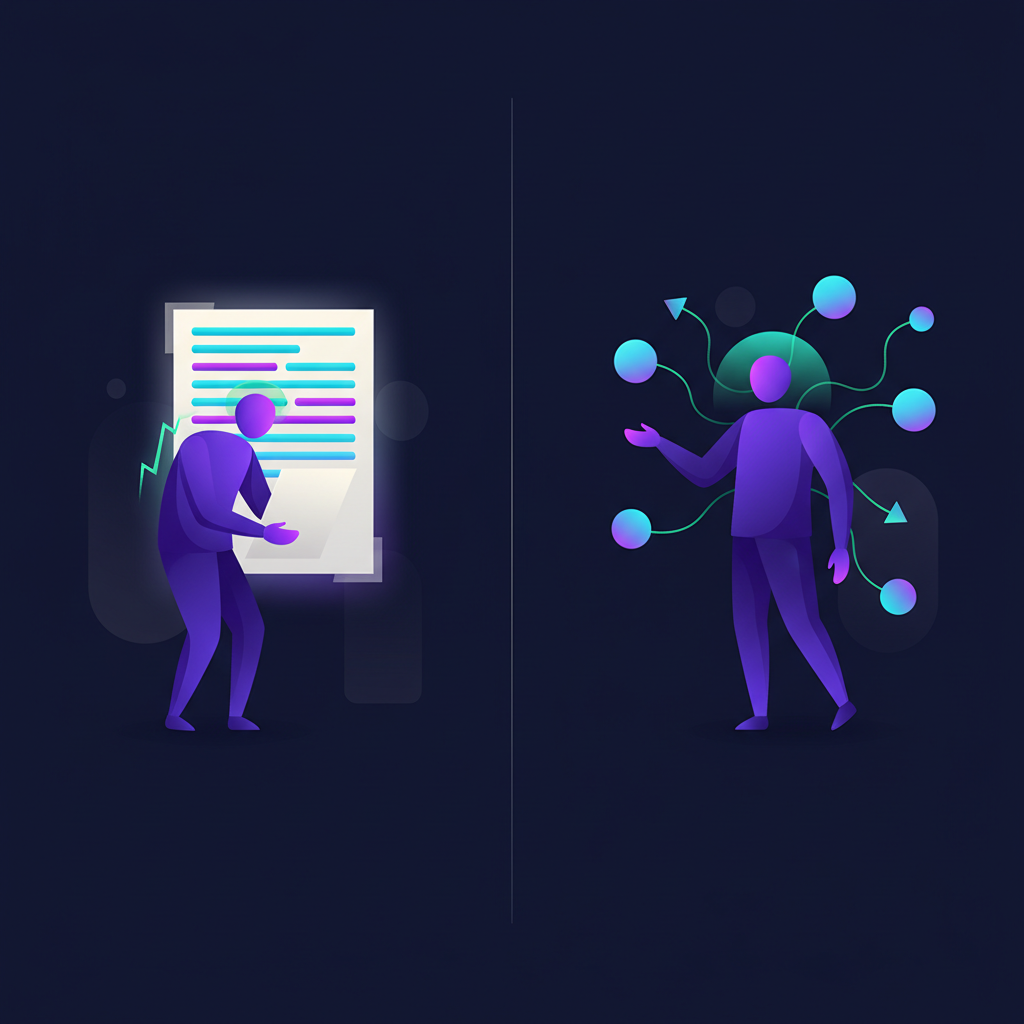
Most talk tracks fail for three reasons:
1. They're too rigid (and sound like scripts)
If your talk track is a paragraph of text reps are supposed to memorize, it will sound robotic. Prospects can hear when someone is reading.
Fix: Build modular components—openers, value props, objection pivots, close asks—that reps can mix and match. Each module should be 1-2 sentences, not a full paragraph.
2. They're generic (no personalization hooks)
A talk track that says "We help companies like yours" without any persona, industry, or trigger-based variation will sound like spam.
Fix: Build persona-specific talk tracks. Your opener for a VP of Sales should reference different pain points than your opener for a Director of Customer Success. Your SDR prospecting sequences should align talk tracks to persona, stage, and channel.
3. Reps aren't coached to internalize them
Handing a rep a talk track document and saying "use this" doesn't work. Reps need repetition—hundreds of reps—to internalize the structure so it becomes second nature.
Fix: Use role-play. A lot of it. We'll cover this in depth below, but the short version: reps need to practice talk tracks in realistic scenarios until the framework is muscle memory. AI role-play platforms (like QUOTA) let reps simulate hundreds of calls without manager time, accelerating mastery.
The anatomy of a high-performing SDR talk track
A strong SDR talk track has five modular components. Each one serves a specific purpose, and reps should be able to swap them based on context.
1. Opener (5-10 seconds)
Purpose: Identify yourself, establish credibility, and give a reason for the call that's tied to them, not you.
Structure:
- Your name and company.
- One-sentence reason for reaching out (persona-based or trigger-based).
Example (cold call): "Hi [Name], this is Alex from QUOTA. I'm reaching out because I noticed your team just posted three SDR roles—usually a sign you're scaling outbound and might be thinking about how to ramp those reps faster."
Example (follow-up call): "Hi [Name], Alex from QUOTA—we connected on LinkedIn last week after you downloaded our SDR onboarding guide. Wanted to see if you had a chance to look at it and whether ramping new reps faster is still top of mind."
The opener is not a pitch. It's a pattern-interrupt that shows you've done homework.
2. Permission / acknowledgment (5 seconds)
Purpose: Acknowledge the interruption, show respect for their time, and lower resistance.
Structure:
- Acknowledge you're interrupting.
- Ask for a small amount of time (2 minutes, not 15).
Example: "I know I'm catching you out of the blue—do you have two minutes, or is this a bad time?"
This micro-commitment increases the chance they stay on the line. It also sounds human.
3. Value statement (10-15 seconds)
Purpose: Explain what you do, who you help, and the outcome you deliver—in one sentence.
Structure:
- What: The category you play in.
- Who: The persona or segment you serve.
- Outcome: The business result you drive.
Example: "We're an AI role-play platform that helps B2B sales teams train SDRs and AEs to handle objections, run discovery, and close deals—without pulling managers off the floor. Teams typically cut ramp time by 30-40% and see measurable lift in conversion rates."
This is not a feature dump. It's a single, outcome-focused sentence that makes the prospect think, "That sounds relevant to me."
For more on crafting value props that land, see our guide on AI sales pitch analysis.
4. Transition / curiosity hook (5-10 seconds)
Purpose: Move from your pitch to their world. Ask a question, reference a pattern you see, or tie to a known pain point.
Structure:
- Tie your value prop to a pain point or goal relevant to their role.
- Ask an open-ended question that invites conversation.
Example: "Most sales leaders we talk to say their biggest bottleneck isn't hiring SDRs—it's getting them productive fast enough to hit their number. Is that something you're dealing with right now?"
This is where discovery begins. The goal is to get them talking, not to keep pitching.
5. Objection pivots (modular responses)
Purpose: Handle common objections without sounding defensive or pushy.
Structure: Build 3-5 modular responses for the most common objections:
- "Not interested."
- "Send me an email."
- "We're all set."
- "Call me next quarter."
- "I don't have time."
Each pivot should acknowledge, reframe, and ask a micro-commitment question.
Example (cold call—"Not interested"): "Totally fair—I'm calling out of the blue, so you don't have context yet. The reason I reached out is that most sales leaders hiring SDRs right now are trying to cut ramp time in half. If that's not a priority, I'll let you go—but if it is, I can share one quick idea in 60 seconds. Worth it?"
For deeper objection handling frameworks, see objection handling role-play and our existing cold call script templates.
How to build SDR talk tracks for different channels and personas
One talk track doesn't fit all scenarios. Build modular frameworks for each channel and persona.
Cold call talk tracks
Context: Prospect isn't expecting your call. You have 10-20 seconds to earn permission to continue.
Structure:
- Opener (name, company, trigger or pattern).
- Permission ask.
- Value statement.
- Transition question.
Tone: Confident but not aggressive. Conversational, not salesy.
Example opener: "Hi Sarah, this is Jamie from QUOTA. I'm reaching out because I saw your team just hired two new AEs—usually means you're scaling and might be thinking about how to get them ramping faster. Do you have two minutes, or is this a terrible time?"
Voicemail talk tracks
Context: You have 20-30 seconds. The goal is to create curiosity, not pitch.
Structure:
- Name, company, reason for calling (tied to them).
- One-sentence value prop.
- Specific next step (when you'll call back, or ask them to reply).
Example: "Hi Sarah, Jamie from QUOTA. I'm calling because I noticed you just posted three SDR roles, and I wanted to share one tactic we're seeing sales leaders use to cut SDR ramp time by 30-40%. I'll try you again tomorrow around 10 a.m., or feel free to grab time on my calendar—I'll send a link in an email. Talk soon."
LinkedIn message talk tracks
Context: Text-based, asynchronous. You need to earn a reply, not a meeting (yet).
Structure:
- Personalized opener (reference their profile, post, or company news).
- One-sentence value prop.
- Micro-ask (question, not pitch).
Example: "Hi Sarah—saw your post about scaling your SDR team from 5 to 15 this quarter. That's a big lift. Curious: what's your biggest bottleneck right now—hiring fast enough, or ramping them once they're in seat?"
Persona-specific talk tracks
Build separate frameworks for each key persona. A VP of Sales cares about quota attainment and pipeline predictability. A Sales Enablement leader cares about onboarding efficiency and content adoption. Your talk tracks should reflect that.
Example (VP of Sales): "We help sales leaders cut SDR ramp time in half so new hires hit quota faster and you can scale without missing your number."
Example (Sales Enablement): "We help enablement teams train reps at scale without pulling managers off the floor—AI role-play gives reps unlimited practice on objection handling, discovery, and pitch delivery."
How to coach SDRs to internalize talk tracks without sounding robotic

Handing a rep a talk track document is step one. Getting them to internalize it—so it sounds natural and confident—is the hard part.
Step 1: Role-play the framework (not the script)
Don't ask reps to memorize word-for-word. Instead, run role-plays where they practice the structure:
- Opener.
- Permission.
- Value statement.
- Transition.
Each time, they should use different phrasing. The goal is muscle memory on the framework, not verbatim recitation.
Step 2: Record real calls and identify sticking points
Listen to recorded calls and flag the exact moments where reps sound stiff, go off-rails, or miss a key component. Common patterns:
- They skip the permission ask and jump straight to pitching.
- They use jargon or buzzwords instead of plain language.
- They freeze when the prospect interrupts or objects.
Isolate those moments and drill them in role-play. For example, if a rep struggles with the transition from value prop to question, run 10 reps of just that transition until it's smooth.
Step 3: Use AI role-play to accelerate reps at scale
Manager-led role-play is valuable but doesn't scale. An SDR needs hundreds of reps to internalize a talk track, and most managers don't have time to run that many sessions.
AI role-play platforms solve this. Reps can simulate cold calls, objection scenarios, and discovery conversations on-demand, receive instant feedback on tonality, structure, and messaging, and iterate without waiting for manager availability.
At QUOTA, we see reps who complete 50+ AI role-play sessions in their first two weeks internalize talk tracks 2-3x faster than reps who only practice in manager-led sessions. The feedback loop is immediate, the scenarios are realistic, and reps can fail privately without fear of judgment.
For more on how AI accelerates this process, see our guide on SDR coaching without pulling reps off the phones.
Step 4: Coach for variation, not perfection
Top SDRs don't sound like robots because they vary their delivery within the framework. They adjust:
- Pacing: Slow down on the value prop, speed up on the transition.
- Tone: Match the prospect's energy (calm and measured vs. fast and enthusiastic).
- Language: Swap formal phrases for casual ones based on the prospect's style.
In coaching sessions, ask reps to deliver the same talk track three different ways:
- Formal and buttoned-up (enterprise buyer).
- Casual and conversational (startup founder).
- Fast and punchy (busy executive).
This trains adaptability.
Common SDR talk track mistakes (and how to fix them)
Mistake 1: Using jargon and buzzwords
Example: "We leverage AI-powered conversation intelligence to optimize sales performance."
Fix: Use plain language. "We use AI to help sales reps practice calls and get better at handling objections."
Mistake 2: Leading with features instead of outcomes
Example: "Our platform has unlimited role-play scenarios, real-time feedback, and gamification."
Fix: Lead with the outcome. "We help sales teams cut ramp time in half so new reps hit quota faster."
Mistake 3: Asking for too much too soon
Example: "Do you have 30 minutes next week to see a demo?"
Fix: Ask for a micro-commitment. "Do you have two minutes right now, or should I call back at a better time?"
Mistake 4: Freezing when the prospect interrupts
Prospects will interrupt. They'll object. They'll ask questions. Reps who freeze or go off-rails lose the call.
Fix: Build objection pivots into the talk track and drill them in role-play. Use objection handling role-play to simulate interruptions so reps learn to stay calm and pivot smoothly.
How to measure whether your SDR talk tracks are working
Track these metrics to know if your talk tracks are driving results:
1. Conversation rate (cold calls)
What it measures: Percentage of cold calls that result in a two-way conversation (not a hang-up or voicemail).
Benchmark: 10-15% is average; 20%+ is strong.
If conversation rate is low, your opener or permission ask likely needs work.
2. Meeting set rate
What it measures: Percentage of conversations that result in a booked meeting.
Benchmark: 15-25% of conversations.
If you're getting conversations but not meetings, your value statement or transition question needs refinement.
3. No-show rate
What it measures: Percentage of booked meetings where the prospect doesn't show up.
Benchmark: <20% is healthy; >30% means your close ask or follow-up messaging isn't clear.
If no-show rate is high, your talk track may be creating false urgency or unclear expectations.
4. Rep confidence (self-reported + manager observation)
Ask reps: "On a scale of 1-10, how confident do you feel using this talk track?"
Listen to calls and assess whether reps sound natural or robotic. If confidence is low or delivery is stiff, increase role-play volume.
For more on what to measure beyond activity, see our guide on sales coaching metrics.
How AI role-play accelerates SDR talk track mastery
Traditional role-play is manager-led, time-intensive, and hard to scale. AI role-play changes the game.
How it works
Reps log into the platform, select a scenario (cold call, objection handling, discovery), and engage in a simulated conversation with an AI prospect. The AI responds realistically—interrupting, objecting, asking questions—and adapts based on the rep's performance.
After each session, the rep receives instant feedback on:
- Structure: Did they hit all the key components (opener, value prop, transition)?
- Tonality: Did they sound confident, natural, and conversational?
- Objection handling: Did they pivot smoothly or freeze?
Reps can run unlimited sessions, fail privately, and iterate without waiting for manager time.
Why it's faster than manager-led role-play
A manager can run 3-5 role-plays per week with each rep. An AI platform lets reps run 10-20 sessions per day. The volume accelerates mastery.
At QUOTA, we see reps who complete 50+ AI role-play sessions in their first 30 days internalize talk tracks faster, handle objections more smoothly, and ramp to quota 30-40% faster than reps trained through traditional methods alone.
For a deeper look at how AI role-play works, see The Complete Guide to AI in Sales.
SDR talk track templates (by scenario)
Here are three ready-to-use talk track frameworks. Adapt the language to fit your product, persona, and style.
Cold call talk track (outbound to new prospect)
Opener: "Hi [Name], this is [Your Name] from [Company]. I'm reaching out because [trigger or pattern]. Do you have two minutes, or is this a bad time?"
Value statement: "We help [persona] [outcome] by [what you do]. Most [persona type] we work with see [specific result]."
Transition: "Curious—[open-ended question tied to pain or goal]?"
Objection pivot (if "not interested"): "Totally fair—I'm calling out of the blue. The reason I reached out is [specific reason tied to them]. If [pain/goal] isn't a priority, I'll let you go—but if it is, I can share one quick idea in 60 seconds. Worth it?"
Voicemail talk track
"Hi [Name], this is [Your Name] from [Company]. I'm calling because [trigger or pattern]. We help [persona] [outcome]—most see [result]. I'll try you again [specific day/time], or feel free to grab time on my calendar. I'll send a link in an email. Talk soon."
LinkedIn message talk track
"Hi [Name]—[personalized opener tied to their profile/post/company]. Curious: [open-ended question tied to pain or goal]? Happy to share what we're seeing work for [similar persona/company type]."
FAQ
What is an SDR talk track?
An SDR talk track is a flexible messaging framework that guides reps through common prospecting scenarios—cold calls, voicemails, email follow-ups, objection responses—without requiring word-for-word recitation. It balances structure with room for personalization.
How is a talk track different from a script?
A script is word-for-word and rigid; a talk track is a modular framework with key phrases, transitions, and logic branches. Talk tracks let reps adapt tone, pacing, and language to fit each conversation while staying on message.
Should SDRs memorize talk tracks?
SDRs should internalize the structure and key value statements, not memorize verbatim. Repetition through role-play—especially AI-powered simulations—builds muscle memory so the framework becomes second nature without sounding robotic.
How do you coach SDRs to sound natural using talk tracks?
Use role-play to practice variation within the framework. Record calls, identify where reps sound stiff, and coach them to replace jargon with conversational language. AI role-play platforms let reps practice hundreds of reps without manager time.
How many talk tracks should an SDR have?
Build 3-5 core frameworks: one for cold calls, one for voicemails, one for LinkedIn messages, one for follow-up calls, and one for objection handling. Within each, create persona-specific variations (e.g., VP of Sales vs. Director of Enablement).
How long does it take for an SDR to internalize a talk track?
With consistent role-play (10-20 reps per week), most SDRs internalize a talk track in 2-3 weeks. AI role-play accelerates this—reps who complete 50+ sessions in their first 30 days typically master the framework in half the time.
Final thought: talk tracks are frameworks, not crutches
The best SDR talk tracks don't sound like talk tracks. They sound like confident, natural conversations—because the rep has internalized the structure so deeply that it's invisible.
Building talk tracks is the easy part. Coaching reps to use them without sounding robotic is the hard part. And that's where role-play—especially AI-powered, on-demand role-play—becomes the lever that separates high-performing SDR teams from the rest.
If you're ready to see how AI role-play can help your SDRs internalize talk tracks faster, cut ramp time, and book more meetings, explore QUOTA's AI sales training platform or dive deeper into The Complete SDR Playbook for 2026.

Stefano Breglia
Co-founder, QUOTA Training
Stefano Breglia is co-founder of QUOTA Training. He focuses on sales methodology, deal progression and how AI simulation accelerates rep ramp time across the SDR, BDR, AE and AM roles.
Turn this into reps, not just reading
QUOTA Training lets your team practise these exact scenarios with an AI buyer that reacts like the real thing — then scores every call.
See it in action