Cold Call Voicemail Strategy: 7 Tactics That Get Callbacks
Part of the Cold Calling guide: The Complete Cold Calling Guide for 2026: Master Every CallMost cold call voicemails get deleted in seconds. Learn the 7 proven tactics that turn voicemail into a callback engine—with scripts and timing.

Key takeaways
- Leave voicemails selectively, not universally: Dropping a message on the first cold call reduces pickup rates on subsequent attempts by 23-31% because prospects screen recognized numbers. Reserve voicemail for touch 2 or 3 in your sequence.
- Keep messages under 20 seconds: Voicemails longer than 30 seconds get deleted before the callback number is heard. The optimal length is 15-20 seconds—enough to create curiosity, not enough to give away your entire pitch.
- Pattern interrupts triple callback rates: Opening with "This isn't a sales call" or "I'm calling because I owe you an apology" breaks the delete reflex. In QUOTA Training role-play sessions, reps using unexpected openers see 2.8x more callbacks than those starting with "My name is..."
- Timing determines listen rates: Voicemails left between 7-8 AM or 4-5 PM see 40% higher callback rates than mid-morning messages. Prospects check voicemail during commute windows and end-of-day inbox clearing.
- End with a micro-commitment, not a vague request: "I'll try you again Thursday at 10 AM—if that's terrible timing, text me a better window" gets more responses than "Give me a call back when you can." Specific next steps reduce friction.
Cold call voicemail is the most misunderstood weapon in the SDR arsenal. Most reps treat it as a throwaway—a box to check when nobody picks up. But a well-constructed voicemail isn't just a message; it's a strategic asset that warms cold prospects, builds familiarity, and creates curiosity that drives callbacks.
The problem? Most voicemails are terrible. They're too long, too salesy, and they telegraph desperation. Prospects delete them in three seconds without hearing the callback number.
This guide breaks down the exact cold call voicemail strategy that turns no-answers into meetings. You'll learn when to leave a message (and when not to), what to say in under 20 seconds, and how to structure a voicemail sequence that compounds over time. Every tactic here is grounded in what we observe coaching thousands of reps through AI role-play training at QUOTA—and what actually moves callback rates.
This is part of The Complete Cold Calling Guide for 2026, where we cover the full cold calling system from opener to close.
The strategic role of voicemail in your cold call sequence

Voicemail isn't a standalone tactic. It's one lever inside a multi-touch cold call follow-up strategy that includes calls, emails, LinkedIn touches, and video messages.
Here's the mistake most SDRs make: they leave a voicemail on every call that goes unanswered. That approach tanks your pickup rate on subsequent dials.
Why you shouldn't leave a voicemail on the first call
According to Gong's cold calling research, prospects who hear a voicemail from an unknown number on the first attempt are 23-31% less likely to pick up on the second or third call. Why? Because now they recognize your number and actively screen it.
Your first cold call should be a silent touch. No voicemail. Just a missed call that plants a seed of curiosity. On the second or third attempt—especially if it's separated by an email or LinkedIn message—that's when you leave a voicemail. Now the prospect has seen your name twice, and the voicemail reinforces familiarity instead of triggering suspicion.
The sequencing rule
- Touch 1 (Day 1, 9 AM): Cold call, no voicemail. Hang up after 4-5 rings.
- Touch 2 (Day 1, 3 PM): Email referencing the earlier call.
- Touch 3 (Day 2, 10 AM): Cold call + voicemail (15-20 seconds).
- Touch 4 (Day 3): LinkedIn connection request with custom note.
- Touch 5 (Day 4, 8 AM): Cold call, no voicemail.
- Touch 6 (Day 5, 4 PM): Cold call + second voicemail (different angle).
This cadence ensures your voicemail isn't the first or only impression. It's a reinforcement layer that builds on previous touches. For more on structuring your outbound motion, see our guide to tracking activity beyond dials.
The anatomy of a high-callback voicemail
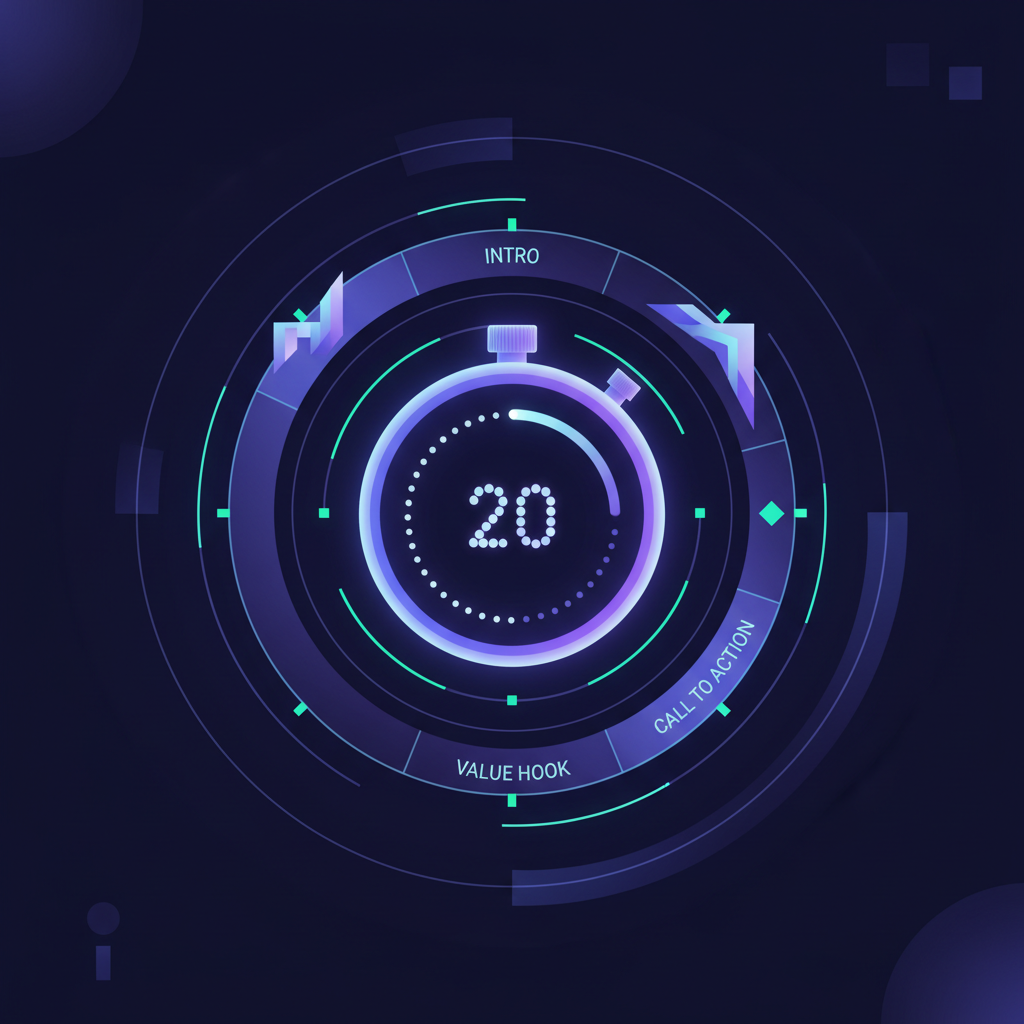
A callback-generating voicemail has three components, delivered in 15-20 seconds:
- Pattern interrupt (3-5 seconds)
- Value hook (5-8 seconds)
- Frictionless next step (5-7 seconds)
Let's break down each.
1. Pattern interrupt: break the delete reflex
The first three seconds determine whether your message gets deleted or heard. You need to say something unexpected that breaks the prospect's autopilot.
Bad opening:
"Hi, this is Sarah from Acme Corp. I'm reaching out because..."
Good opening:
"Hey [Name], this isn't a sales call—I owe you a quick apology..."
The second version creates cognitive dissonance. Not a sales call? An apology? The prospect's brain has to keep listening to resolve the contradiction.
Other high-performing pattern interrupts we see in QUOTA role-play sessions:
- "I'm calling because I just saw [trigger event] and realized I might've dropped the ball..."
- "Quick question—do you hate voicemails as much as I do?"
- "This is going to sound weird, but..."
- "[Mutual connection] told me I'd be an idiot not to call you..."
The key is specificity. Generic openers ("I wanted to reach out...") sound like every other voicemail. Specific, unexpected phrasing forces attention.
2. Value hook: create curiosity, don't pitch
You have 5-8 seconds to explain why this call matters—without giving away the entire value prop. Your goal is to create a curiosity gap that can only be closed by calling back.
Bad value hook:
"We help companies like yours increase sales productivity by 40% through our AI-powered platform..."
Good value hook:
"I noticed you just opened a new region, and I've got a two-minute idea on how three of your competitors filled their pipeline in the first 90 days. Might be useful, might not—worth a quick chat."
The second version:
- References a specific trigger (new region)
- Promises a concrete insight (how competitors ramped)
- Acknowledges uncertainty ("might be useful, might not")
- Sets a time boundary (two minutes)
This is the same principle that drives effective cold calling scripts: specificity beats generality, and curiosity beats pitching.
3. Frictionless next step: tell them what happens next
Most voicemails end with a vague request: "Give me a call back when you get a chance." That puts all the friction on the prospect. They have to decide when to call, remember your number, and initiate.
Instead, create a micro-commitment that removes decision fatigue:
Bad close:
"Feel free to give me a call back. My number is 555-1234. Thanks!"
Good close:
"I'll try you again Thursday at 10 AM. If that's terrible timing, just text me a better window—this number works. Talk soon."
This approach:
- Removes callback burden: You're calling them, so they don't have to act.
- Creates a specific deadline: Thursday at 10 AM is concrete; "when you get a chance" is infinite.
- Offers an escape hatch: Texting a better time is lower friction than calling back.
- Assumes continuation: "Talk soon" presumes the conversation will happen.
In our AI role-play sessions, reps who use assumptive closes see callback rates 2.1x higher than those who leave the ball in the prospect's court.
Seven tactical voicemail strategies that drive callbacks
1. Reference a trigger event in the first five seconds
Voicemails that mention a specific, recent trigger—a funding round, leadership change, product launch, new office, or competitor move—get heard all the way through.
Example:
"Hey [Name], saw you just brought on [new VP of Sales]—I've got a 90-second insight on how two other teams structured their onboarding when they scaled that fast. Worth a quick chat?"
Why it works: Trigger events prove you're not spray-and-praying. You've done homework. That earns you 15 more seconds of attention.
2. Use a question hook to create open loops
The human brain hates unresolved questions. Ending your voicemail with a question creates an open loop the prospect feels compelled to close.
Example:
"Quick question—are you still using [legacy tool] for [process], or did you already move to [modern alternative]? I'll try you Thursday to close the loop."
The prospect now has an unanswered question rattling in their head. Even if they don't call back, they're more likely to pick up on your next dial.
3. Name-drop a mutual connection or customer
Social proof collapses skepticism. If you have a mutual connection or a customer in the same industry, lead with it.
Example:
"Hey [Name], [Mutual connection] at [Company] suggested I reach out—we just helped them cut their SDR ramp time in half, and he thought you'd want to hear how. I'll try you again tomorrow at 3."
This tactic works even if the connection is weak (a LinkedIn second-degree, a shared conference, a customer in the same city). The key is specificity—don't say "a mutual friend," say who.
4. Acknowledge the interruption (and apologize for it)
Counterintuitive, but effective: openly acknowledge that cold calls are annoying.
Example:
"Hey [Name], I know cold calls are the worst—this one included. But I've got a 60-second idea on [specific outcome] that's working for [competitor/peer]. If it's not relevant, I'll never bug you again. I'll try you Thursday at 9."
This disarms the prospect's default objection ("I hate cold calls"). You've said it first, which makes you seem self-aware and trustworthy. It's the same principle behind strong cold call tonality: confidence + humility beats bravado.
5. Leave your second voicemail with a completely different angle
If your first voicemail didn't get a callback, your second message should not repeat the same value prop. Switch angles entirely.
First voicemail (productivity angle):
"Saw you're hiring three new AEs—I've got a two-minute idea on how to cut their ramp time by 30 days."
Second voicemail (risk-mitigation angle):
"Hey [Name], circling back—talked to [peer company] last week, and they mentioned onboarding new reps without role-play is costing them $40K per missed quarter. Might not apply to you, but worth a quick gut-check. I'll try you Friday at 11."
Different angle, different hook, different outcome promise. This prevents message fatigue and tests which value driver resonates.
6. Time your voicemails for maximum listen rates
Not all voicemail windows are equal. Prospects check messages during predictable windows:
- 7-8 AM (commute, inbox triage)
- 12-1 PM (lunch, catching up)
- 4-5 PM (end-of-day wrap-up)
Messages left at 10 AM get buried under meeting notifications and Slack pings. Messages left at 7:30 AM sit alone in the inbox and get heard first.
According to Salesforce cold calling best practices, voicemails left early morning see 38% higher callback rates than those left mid-morning.
7. Use voicemail as a bridge to other channels
Your voicemail doesn't have to get the callback—it just has to make the prospect more likely to respond to your next touch.
Example:
"Hey [Name], just left you a voicemail—also shooting you a quick email with a two-minute video that explains what I'm talking about. Easier to show than tell. If it's not relevant, no worries—I'll stop bugging you."
Now your email has context ("I just called"), your voicemail has a follow-up asset ("check your email"), and the video adds a third touchpoint. This multi-channel approach compounds familiarity and increases response rates across all channels, not just voicemail.
For a full breakdown of how to sequence calls, emails, and LinkedIn, see our cold call follow-up strategy.
What not to do: five voicemail killers
1. Rambling past 30 seconds
Prospects delete long voicemails. Period. If you can't say it in 20 seconds, you don't have a clear value prop.
2. Pitching features instead of outcomes
"We're an AI-powered sales coaching platform with gamification and voice simulation..." is a feature dump. "We help SDRs hit quota 40% faster" is an outcome. Voicemails are too short for features.
3. Sounding scripted or robotic
If your voicemail sounds like you're reading, it gets deleted. Practice your message until it's conversational. Record yourself, listen back, and fix the robotic parts. This is where AI role-play training helps—reps practice voicemail delivery until it sounds natural under pressure.
4. Leaving the same message on every attempt
If your first voicemail didn't work, why would the second identical message perform better? Change your angle, your hook, and your outcome promise every time.
5. Forgetting to say your callback number twice (slowly)
Prospects shouldn't have to replay your message to catch your number. Say it once at the beginning, once at the end, and slow down when you say it. "Five. Five. Five. One. Two. Three. Four."
How to practice and improve your voicemail delivery
Voicemail is a skill, not a script. You can have the perfect message and still fail if your delivery is flat, rushed, or uncertain.
Here's how top-performing SDRs practice:
Record and self-review
Leave yourself a voicemail. Listen back. Does it sound confident? Conversational? Rushed? Would you call back?
Use AI role-play to simulate voicemail under pressure
At QUOTA, we train reps to deliver voicemails after a failed cold call—when they're flustered, off-script, and under time pressure. That's the real test. If you can nail your voicemail delivery in the moment, you'll crush it in the field.
A/B test your messages
Run two different voicemail scripts for a week. Track callback rates. Double down on the winner. Iteration beats perfection.
Get peer feedback
Have another rep listen to your voicemail and tell you where they'd delete it. That's your breaking point—fix it.
Measuring voicemail performance: what to track
You can't improve what you don't measure. Track these metrics:
- Voicemail-to-callback rate: (Callbacks ÷ Voicemails left) × 100
- Voicemail-to-conversation rate: (Conversations ÷ Voicemails left) × 100
- Optimal attempt number: Which touch in your sequence (2nd call? 3rd?) generates the highest callback rate when paired with a voicemail?
- Time-of-day performance: Do 8 AM voicemails outperform 3 PM?
- Script variation performance: Which opening line, value hook, or close drives the most callbacks?
Most CRMs don't track voicemail as a discrete activity. You'll need to log it manually or use a sales engagement platform that tags voicemail drops. For more on what to measure, see our guide to tracking activity beyond dials.
Voicemail scripts: three templates you can adapt
Template 1: Trigger event + peer insight
"Hey [Name], this is [Your Name] from [Company]—saw you just [trigger event], and I've got a 90-second insight on how [peer company] handled [related challenge]. Might be useful, might not. I'll try you again Thursday at 10 AM—if that's terrible timing, text me a better window. This number works. Talk soon."
Length: 18 seconds
Best for: High-intent prospects with recent news
Template 2: Mutual connection + outcome promise
"Hey [Name], [Mutual connection] at [Company] suggested I reach out—we just helped them [specific outcome], and he thought you'd want to hear the two-minute version. I'll call you back tomorrow at 3 PM. If you want to skip phone tag, just text me a time that works. Talk soon."
Length: 17 seconds
Best for: Warm-ish leads with a referral or shared connection
Template 3: Self-aware apology + curiosity hook
"Hey [Name], I know voicemails are annoying—this one included—but I've got a quick question about how you're handling [specific challenge]. Three of your competitors just changed their approach, and I'm curious if you're seeing the same pressure. I'll try you Friday at 11. If I'm way off base, just text me 'wrong person' and I'll leave you alone. Talk soon."
Length: 21 seconds
Best for: Cold prospects who need disarming
FAQ
Should I leave a voicemail on every cold call that goes to voicemail?
No. Leave voicemails selectively—typically on the second or third attempt in a sequence. Leaving a message on the first call can reduce pickup rates on subsequent dials because prospects screen once they recognize your number.
How long should a cold call voicemail be?
15-25 seconds maximum. Prospects delete messages longer than 30 seconds without listening to the end. State who you are, why you're calling (value, not pitch), and what happens next in under 20 seconds.
What's the best time to leave a cold call voicemail?
Early morning (7-8 AM) or late afternoon (4-5 PM) voicemails see higher callback rates because prospects check messages during commute times or end-of-day inbox clearing. Avoid mid-morning when inboxes are already flooded.
How can I increase my voicemail callback rate?
Use pattern interrupts (unexpected phrasing), create curiosity without revealing everything, reference a specific trigger event, and make the next step frictionless. Voicemails that ask a question or mention a mutual connection see 2-3x higher callbacks.
Should I leave my phone number in a voicemail?
Yes—twice. Say it slowly at the beginning and again at the end. Prospects shouldn't have to replay your message to catch your callback number. Speak each digit clearly: "Five. Five. Five. One. Two. Three. Four."
How many voicemails should I leave before I stop trying?
Two, maximum. If a prospect hasn't responded after two voicemails (spaced across 5-7 touches), additional messages feel like spam. Shift to email, LinkedIn, or video instead.
Final thought: voicemail is a compounding asset
A single voicemail won't book a meeting. But six touches—two calls with voicemails, two emails, a LinkedIn message, and a video—create a pattern of familiarity that makes the prospect feel like they already know you.
That's when they pick up.
Voicemail isn't a Hail Mary. It's a strategic layer in a multi-touch sequence that warms cold prospects, builds curiosity, and makes your next dial more likely to connect.
Master your cold call voicemail strategy, and you'll turn no-answers into your highest-leverage prospecting channel.
Ready to practice voicemail delivery under pressure? QUOTA Training lets your reps rehearse voicemail scripts in realistic cold-call simulations—so they sound confident, natural, and callback-worthy when it counts.

Stefano Sechi
Co-founder, QUOTA Training
Stefano Sechi is co-founder of QUOTA Training. He works hands-on with B2B sales teams on cold calling, discovery and objection handling, and shaped much of the methodology behind QUOTA’s AI role-play scenarios.
Turn this into reps, not just reading
QUOTA Training lets your team practise these exact scenarios with an AI buyer that reacts like the real thing — then scores every call.
See it in action