What Is AI Role-Play for Sales Training? The Definitive Guide
Part of the AI & Sales guide: The Complete Guide to AI in Sales: Transform Your Revenue EngineAI role-play sales training lets reps practice objections, discovery, and cold calls against intelligent simulations. Learn how it works and why it outperforms traditional methods.

Key takeaways
- AI role-play sales training uses voice AI and natural language processing to simulate realistic buyer conversations, allowing reps to practice cold calls, objection handling, discovery, and closing scenarios on demand without requiring a human partner.
- Unlike traditional role-play, AI role-play scales infinitely—every rep can practice simultaneously 24/7, receives objective scoring based on talk-track adherence and conversational patterns, and gets instant feedback that accelerates skill development.
- AI role-play reduces ramp time by 30-40% because reps build muscle memory through high-volume repetition in a zero-risk environment, arriving at live calls with pre-tested language and confidence that would otherwise take months to develop.
- The technology adapts dynamically to rep responses, simulating different buyer personalities, objection types, and conversation paths so reps experience variability that mirrors real-world unpredictability.
- AI role-play integrates with CRM and conversation intelligence platforms to create personalised training scenarios based on each rep's actual deal history, common objections they face, and specific skill gaps identified in live call recordings.
What is AI role-play sales training?
AI role-play sales training is a technology-driven coaching method that uses artificial intelligence to simulate realistic sales conversations. Instead of practicing with a manager, peer, or static script, sales reps engage in dynamic, voice-based dialogues with an AI system that plays the role of a prospect, customer, or stakeholder.
The AI responds in real time to what the rep says, adapting its tone, objections, questions, and buying signals based on the rep's approach. It can simulate a skeptical CFO, a friendly mid-level manager, a gatekeeper blocking access, or a technical buyer asking product questions. The system evaluates the rep's performance—measuring talk-track adherence, tonality, objection-handling effectiveness, question quality, and conversational flow—then delivers instant, objective feedback.
This isn't a chatbot reading from a decision tree. Modern AI role-play platforms leverage large language models, speech recognition, and conversational AI to generate natural, unpredictable dialogue that mirrors how real buyers behave. The result is a practice environment that feels authentic, scales infinitely, and delivers coaching insights that would be impossible for a human manager to provide consistently across a growing team.
For sales leaders struggling to coach at scale, AI role-play sales training solves the fundamental bottleneck: manager time. For reps, it removes the fear and scheduling friction that make traditional role-play rare, replacing it with on-demand practice that builds confidence through repetition.
How AI role-play sales training works
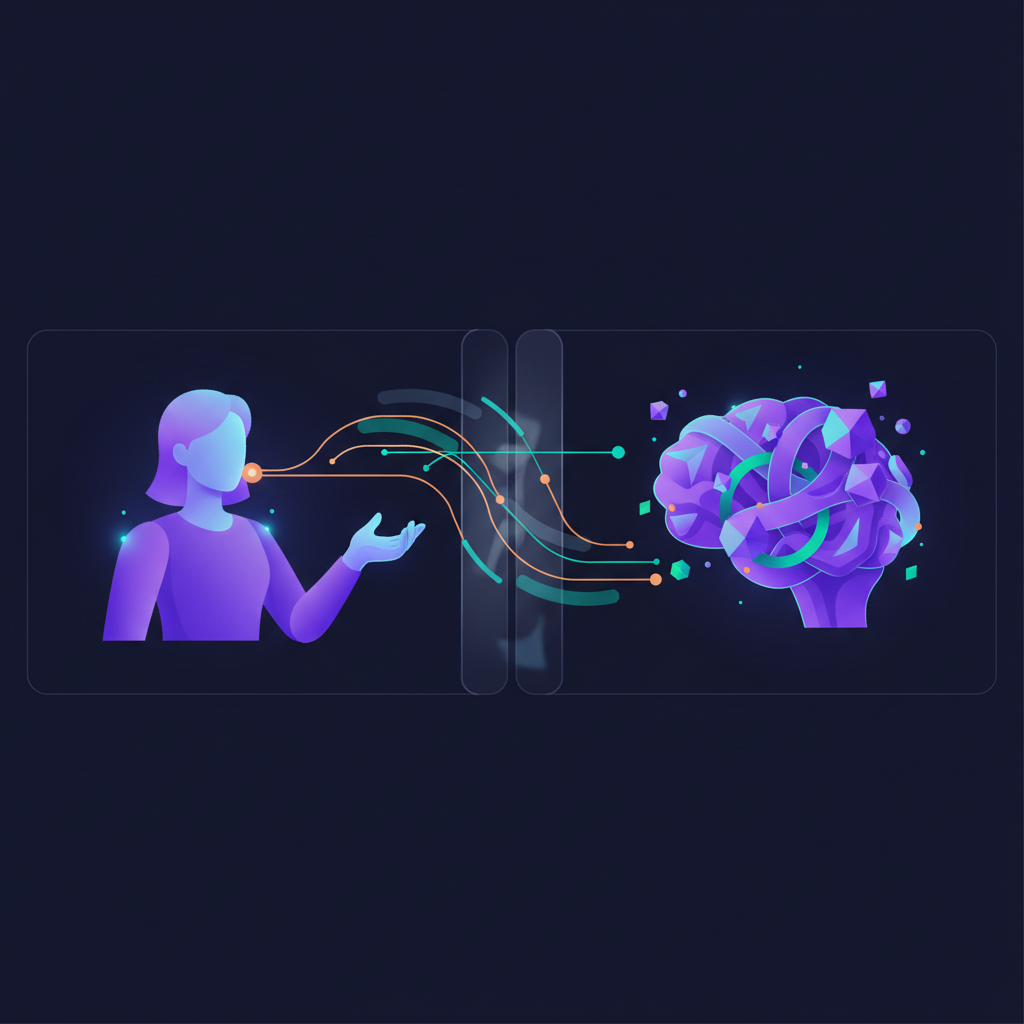
At its core, AI role-play sales training combines three technologies: natural language processing (NLP), speech synthesis, and machine learning models trained on thousands of sales conversations.
The conversation engine
When a rep enters a role-play session, they select a scenario—cold call, discovery call, objection handling, pricing negotiation, or multi-threading. The AI is given a persona: industry, role, pain points, budget authority, timeline, and personality traits (skeptical, analytical, relationship-focused, etc.).
The rep speaks naturally, as they would on a real call. The AI listens, transcribes, and interprets intent in real time. If the rep opens with a value proposition, the AI might respond with interest or skepticism depending on the persona. If the rep asks a discovery question, the AI answers with context-appropriate detail. If the rep fumbles or uses weak language, the AI reacts as a real buyer would—by pushing back, going silent, or ending the call.
This dynamic responsiveness is what separates AI role-play from scripted simulations. The conversation doesn't follow a fixed path. Every choice the rep makes influences where the dialogue goes next, just like a real sales call.
Real-time scoring and feedback
While the conversation unfolds, the AI evaluates dozens of performance indicators:
- Talk-track adherence: Did the rep use the company's recommended opening, value prop, or closing language?
- Objection handling: When the AI raised a concern (price, timing, competition), did the rep acknowledge, reframe, and ask a follow-up question?
- Discovery depth: Did the rep ask open-ended questions, probe for pain, and qualify budget and authority?
- Tonality and pacing: Was the rep's voice confident, empathetic, or rushed? Did they talk over the buyer or leave space for response?
- Outcome achievement: Did the rep secure the next step (meeting booked, demo scheduled, decision-maker introduced)?
At the end of the session, the rep receives a scorecard with specific, actionable feedback: "You interrupted the buyer twice in the first 90 seconds," or "You didn't acknowledge the budget objection before pivoting to ROI." The AI can replay key moments, highlight better phrasing, and suggest alternative approaches.
This level of granular, objective feedback is nearly impossible for a human manager to deliver consistently, especially across a team of 20, 50, or 100 reps. AI role-play makes coaching scalable and data-driven.
Adaptive difficulty and personalisation
Advanced AI role-play platforms adjust difficulty based on rep performance. A new SDR might face a friendly, cooperative buyer in early sessions. As they improve, the AI introduces harder scenarios: gatekeepers who hang up, prospects who multi-task, executives who challenge ROI, or champions who suddenly go dark.
The system can also personalise scenarios using data from the rep's actual pipeline. If a rep consistently struggles with objection handling scripts around budget, the AI generates more budget-focused role-plays. If a rep is preparing for a specific high-value call, the AI can simulate that exact buyer profile, industry, and objection set.
This is what AI sales training personalization delivers: every rep gets a training plan tailored to their gaps, not a one-size-fits-all curriculum.
Why AI role-play outperforms traditional training methods

Traditional sales training relies on three methods: classroom instruction, shadowing live calls, and peer-to-peer or manager-led role-play. Each has limitations that AI role-play eliminates.
Unlimited availability and scale
Traditional role-play requires coordination. A manager must carve out time, a peer must be available, and both must be in the right headspace to deliver useful feedback. In practice, this means role-play happens infrequently—maybe once a week, or only during onboarding.
AI role-play is available 24/7. A rep can practice at 6 a.m. before their first call block, at lunch, or at 9 p.m. when they're reviewing tomorrow's prospect list. Every rep on the team can practice simultaneously without competing for resources. This volume of practice is the single biggest driver of skill improvement.
According to Gartner research on sales enablement, reps need 30-50 practice repetitions to internalise a new talk track or objection response. Traditional role-play rarely delivers that volume. AI role-play makes it routine.
Objective, consistent feedback
When a manager role-plays with a rep, feedback is subjective and varies by the manager's mood, experience, and personal style. One manager might focus on tonality; another on structure. A rep working with three different managers gets three different coaching philosophies.
AI role-play delivers standardised, objective feedback based on measurable criteria. Every rep is evaluated against the same rubric. This consistency is critical for scaling sales coaching observation across distributed teams or multiple offices.
It also removes bias. The AI doesn't favour certain reps, doesn't get frustrated, and doesn't soften feedback to avoid conflict. It tells reps exactly where they fell short and what to fix.
Safe environment for failure
Reps avoid traditional role-play because it's uncomfortable. Practicing in front of peers or a manager feels like a performance review. Mistakes are embarrassing. The fear of looking incompetent discourages experimentation.
AI role-play removes that social risk. Reps can fail privately, try bold approaches, test new language, and iterate without judgment. This psychological safety accelerates learning. Reps who practice with AI are more willing to try the same techniques on live calls because they've already rehearsed the discomfort in a zero-stakes setting.
Faster ramp time for new hires
New reps typically take 3-6 months to become productive. Much of that time is spent shadowing calls, absorbing product knowledge, and waiting for live opportunities to practice. AI role-play compresses this timeline.
A new SDR can complete 50 cold call simulations in their first two weeks—more practice than they'd get in three months of live dialing. They arrive at their first real call with muscle memory for openings, objections, and cold call preparation that would otherwise take months to develop.
Harvard Business Review's framework for training salespeople emphasises deliberate practice as the key to skill acquisition. AI role-play operationalises that principle at scale.
Integration with real performance data
AI role-play platforms integrate with conversation intelligence tools and CRMs. They analyse a rep's live call recordings, identify patterns (e.g., "This rep struggles to multi-thread when a champion introduces a new stakeholder"), and automatically generate role-play scenarios to address those gaps.
This closed-loop system—observe live performance, diagnose gaps, prescribe targeted practice, measure improvement—is the foundation of modern, data-driven coaching. It's what separates high-performing teams from those still relying on gut-feel feedback.
What sales skills can you train with AI role-play?
AI role-play sales training is versatile. Here are the core skills it develops:
Cold calling and prospecting
Reps practice opening statements, handling gatekeepers, earning the right to ask questions, and booking meetings. The AI can simulate hang-ups, skeptical responses, or friendly curiosity, teaching reps to adapt in real time.
Objection handling
The AI raises common objections—price, timing, competition, authority—and evaluates how well the rep acknowledges, reframes, and asks follow-up questions. Reps who struggle with specific objections can drill them repeatedly until responses become automatic.
Discovery and qualification
Reps practice asking open-ended questions, probing for pain, validating budget and authority, and building a business case. The AI can play cagey buyers who withhold information, forcing reps to earn trust and dig deeper.
Closing and negotiation
Reps practice trial closes, handling final objections, summarising value, and securing commitments. The AI can simulate buyers who stall, ask for discounts, or introduce last-minute concerns.
Multi-threading and stakeholder management
Reps practice navigating conversations with multiple personas—champions, blockers, economic buyers, technical evaluators—learning to tailor messaging and build consensus.
Tonality and presence
The AI evaluates vocal delivery: confidence, pacing, empathy, and energy. Reps receive feedback on whether they sound rushed, monotone, or overly aggressive, then practice adjusting their tone.
For a deeper dive into how AI enhances coaching across these skills, see The Complete Guide to AI in Sales.
How to implement AI role-play in your sales training program
Introducing AI role-play requires intentional rollout. Here's a tactical framework:
Step 1: Define your use cases
Start narrow. Don't try to train every skill at once. Pick the highest-impact use case:
- Are new SDRs struggling with cold call confidence? Start there.
- Are AEs losing deals to price objections? Build role-plays around budget conversations.
- Is discovery quality inconsistent? Focus on qualification frameworks.
Step 2: Build scenario libraries
Work with your best reps and managers to document the most common buyer personas, objections, and conversation paths. Turn these into role-play scenarios. The more realistic the setup, the more valuable the practice.
Include edge cases: the buyer who ghosts mid-call, the champion who suddenly loses budget authority, the technical evaluator who derails discovery with product questions.
Step 3: Integrate with your coaching cadence
AI role-play shouldn't replace human coaching—it should amplify it. Use AI for high-volume skill practice and use manager time for strategic feedback, deal coaching, and career development.
For example: Reps complete three AI role-plays per week. Managers review scorecards during 1:1s, identify trends, and coach on nuance the AI can't address (reading the room, adapting to buyer emotion, etc.). This hybrid model is the core of The Complete Sales Coaching Guide.
Step 4: Gamify and incentivise practice
Reps won't practice unless it's fun or required. Gamification solves this. Create leaderboards for role-play volume, improvement velocity, or scenario completion. Tie practice milestones to onboarding gates or quota relief.
Platforms like QUOTA Training embed game mechanics—points, badges, streaks—that make practice addictive rather than obligatory.
Step 5: Measure impact on live performance
Track leading indicators: Are reps using trained talk tracks on live calls? Are objection-handling rates improving? Is discovery depth increasing? Are new hires ramping faster?
Connect AI role-play usage to lagging indicators: win rate, average deal size, sales cycle length. If reps who practice 5+ times per week close 20% more deals, you've proven ROI.
For more on measurement, see Salesforce's guide to sales training best practices.
Common objections to AI role-play (and how to address them)
"AI can't replace human intuition"
Correct. AI role-play isn't designed to replace human coaching—it's designed to scale the repetitive, high-volume practice that humans don't have time for. Managers should focus on strategy, deal coaching, and career development. AI handles the reps who need 50 reps to master a cold call opening.
"Reps will game the system"
Some will try. But AI role-play platforms detect gaming behaviours—scripted responses, pausing to Google answers, skipping scenarios. The best systems flag these patterns and adjust difficulty to keep reps honest.
"It's too expensive"
Compare the cost of AI role-play to the cost of extended ramp time, lost deals due to poor discovery, or manager hours spent on repetitive coaching. Most platforms deliver ROI within 90 days through faster onboarding and higher rep productivity.
"Our buyers are too complex for AI to simulate"
Start simple. Even if your deals involve 10 stakeholders and 18-month cycles, your reps still need to master cold calls, handle budget objections, and ask discovery questions. AI role-play trains those foundational skills. As the technology improves, scenario complexity will follow.
The future of AI role-play sales training
AI role-play is evolving rapidly. Emerging capabilities include:
- Multimodal training: Video-based role-play where the AI reads body language, facial expressions, and screen-sharing behaviour during demos.
- Emotion detection: AI that adjusts buyer persona based on rep tone—if the rep sounds nervous, the AI becomes more aggressive to simulate real buyer scepticism.
- Team-based simulations: Multi-rep role-plays where AEs and SEs practice together, or SDRs practice handoffs to AEs.
- Real-time coaching: AI whispers suggestions during live calls, like a GPS recalculating your route when you miss a turn.
The core insight remains: sales is a performance skill, and performance skills improve through deliberate, high-volume practice. AI role-play makes that practice scalable, measurable, and available to every rep, every day.
For teams serious about building a repeatable, data-driven coaching culture, AI role-play isn't optional—it's foundational.
FAQ
What is AI role-play for sales training?
AI role-play for sales training is a technology that simulates realistic buyer conversations using voice AI and natural language processing. Reps practice cold calls, discovery questions, objection handling, and closing scenarios against an AI opponent that responds dynamically, adapts to their approach, and provides instant feedback on performance.
How does AI role-play differ from traditional sales role-play?
Traditional role-play requires a human partner (manager or peer), is limited by scheduling and availability, and often lacks consistency. AI role-play is available 24/7, delivers standardised scenarios, provides objective scoring, and scales infinitely—every rep can practice simultaneously without competing for manager time.
Can AI role-play really improve sales performance?
Yes. AI role-play increases practice volume, reduces ramp time, and builds muscle memory for high-pressure situations. Reps who train with AI role-play demonstrate higher confidence, faster objection handling, and improved talk-track adherence because they've rehearsed scenarios dozens of times before facing real buyers.
What sales skills can you train with AI role-play?
AI role-play can train cold calling, objection handling, discovery questioning, budget conversations, closing techniques, multi-threading, tonality control, and qualification frameworks like MEDDIC or BANT. Any conversational skill that follows repeatable patterns can be simulated and scored.
Sources

Stefano Breglia
Co-founder, QUOTA Training
Stefano Breglia is co-founder of QUOTA Training. He focuses on sales methodology, deal progression and how AI simulation accelerates rep ramp time across the SDR, BDR, AE and AM roles.
Turn this into reps, not just reading
QUOTA Training lets your team practise these exact scenarios with an AI buyer that reacts like the real thing — then scores every call.
See it in action