AI Sales Training Scenarios: 12 Situations Every Rep Must Master
Part of the AI & Sales guide: The Complete Guide to AI in Sales: Transform Your Revenue EngineBuild AI sales training scenarios that prepare reps for real objections, gatekeepers, and pricing pushback. 12 must-have situations with exact prompts.

Key takeaways
- AI sales training scenarios must include specific buyer context (role, company size, current solution) and realistic objection triggers tied to that context—generic "budget" objections without situational detail produce reps who sound scripted, not adaptive.
- The 12 essential AI sales training scenarios cover gatekeeper bypass, early brush-offs, pricing anchoring, technical depth questions, authority navigation, competitive displacement, budget creation, multi-stakeholder alignment, deal stalls, feature requests, implementation concerns, and contract negotiation.
- Effective AI sales training scenarios require measurable success criteria beyond "book the meeting"—track whether reps asked discovery questions before pitching, acknowledged objections before rebutting, and matched tonality to buyer urgency level.
- Reps should practice each AI sales training scenario 3-5 times with persona variations (skeptical vs. curious, technical vs. business buyer) before the pattern becomes automatic; one-and-done role-play builds familiarity, not fluency.
- Build AI sales training scenarios by mining your conversation intelligence data for lost-deal patterns, then reverse-engineering each into a practice situation with the exact objection language, buyer context, and rep mistakes that killed the real deal.
Most sales teams build AI sales training scenarios the same way they built role-play decks in 2015: a list of objections with suggested responses. The result? Reps who can recite a script but freeze when a CFO says, "We already have a solution, and honestly, we're not looking to change right now—but I'll take your email if you want to send something."
That's not an objection. It's a situation—with context, subtext, and a decision-maker who's giving you 11 seconds to prove you're worth more time.
AI sales training scenarios that actually prepare reps for quota don't start with objections. They start with buyer situations: the role, the company stage, the current state, the political dynamics, and the specific language real buyers use when they're skeptical, curious, or simply busy.
This guide walks you through the 12 AI sales training scenarios every rep must master, how to build them so they mirror reality (not role-play theater), and how to sequence practice so reps internalize patterns instead of memorizing lines. If you're rolling out AI role-play and want reps who perform under pressure—not just in practice—this is your blueprint.
For a broader view of how AI transforms sales training, see our complete guide to AI in sales.
Why most AI sales training scenarios fail to prepare reps
The problem isn't the technology. It's the scenario design.
Most teams copy their old role-play scripts into an AI platform and call it "AI training." The AI plays a buyer who says, "We don't have budget." The rep responds with a scripted rebuttal. The AI says, "Okay, let's book a meeting." Everyone moves on.
That's not training. It's theater.
Here's what's missing:
Buyer context. Real objections don't appear in a vacuum. "We don't have budget" means something completely different when it comes from a Series A startup burning cash versus a Fortune 500 procurement manager with a locked annual plan. If your AI sales training scenarios don't specify the buyer's role, company size, current solution, and fiscal calendar, reps practice responses that sound generic—because they are.
Realistic pushback. In our role-play sessions at QUOTA, we see reps "win" scenarios where the AI caves after one rebuttal. That's not practice; it's validation. Effective AI sales training scenarios require the AI persona to push back 2-3 times, ask clarifying questions, and resist being "handled." If the buyer always folds, reps never learn to hold their ground without sounding defensive.
Measurable success criteria beyond "book the meeting." Booking a meeting is the outcome, not the skill. The skill is whether the rep asked a discovery question before pitching, acknowledged the objection before rebutting, or matched tonality to the buyer's urgency. If your AI sales training scenarios only score on whether the call ended with a "yes," you're training reps to push, not to sell.
According to Gartner research on AI in sales, organizations that define role-play success by behavior (not just outcome) see 34% faster skill adoption. That tracks with what we observe: reps who practice scenarios with clear behavior checkpoints internalize the pattern. Reps who practice "win the call" scenarios internalize the script.
The fix? Build AI sales training scenarios that replicate the situation, not just the objection. That starts with the 12 core scenarios every rep needs to master.
The 12 essential AI sales training scenarios every rep needs
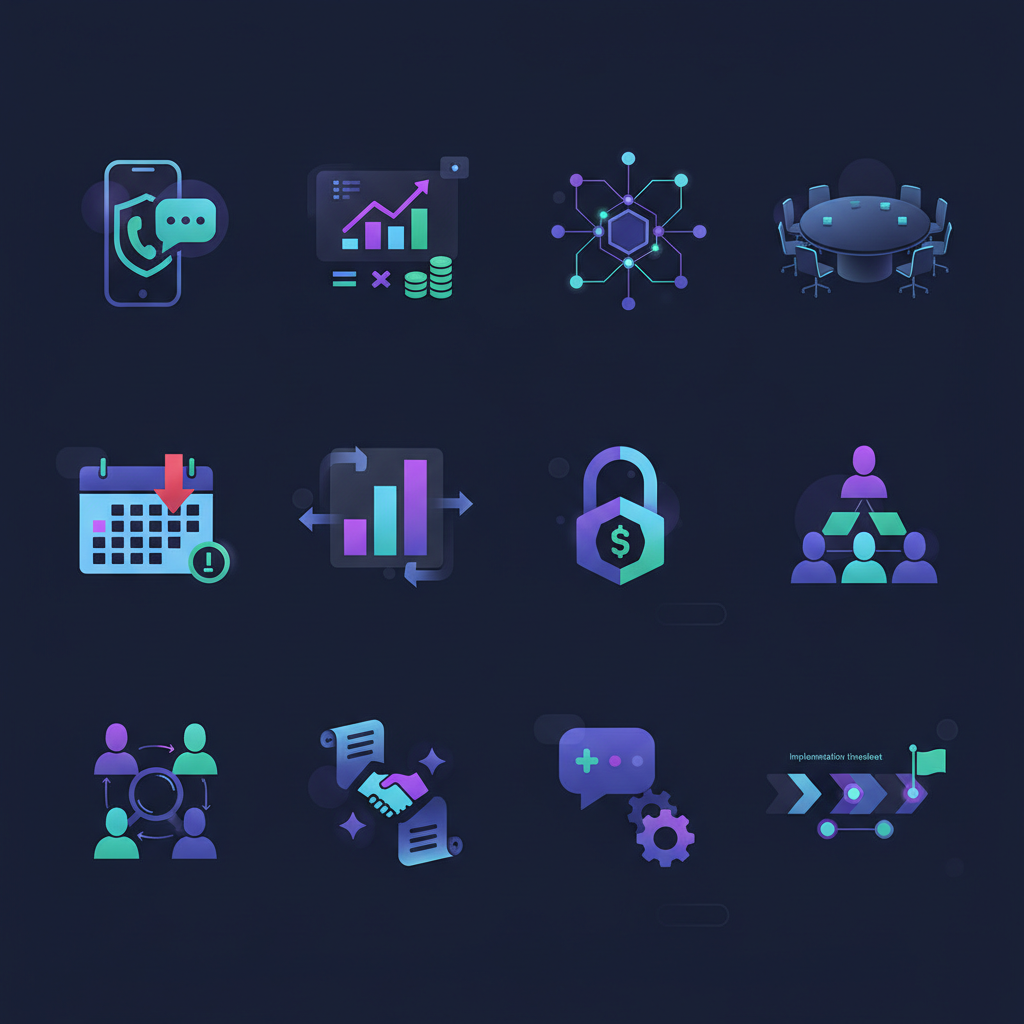
These aren't objections. They're situations—each with buyer context, realistic pushback, and a skill the rep must demonstrate to advance the deal.
1. Gatekeeper bypass (executive assistant, firm but polite)
Buyer context: Executive assistant to a VP of Sales at a 200-person SaaS company. She's heard every trick and screens aggressively.
Objection trigger: "He's not available, and honestly, we get a lot of these calls. Can you just send me an email?"
Skill to demonstrate: Respect her role, offer value (not a pitch), and create curiosity without sounding evasive. Reps who treat gatekeepers as obstacles fail. Reps who treat them as allies get through.
Success criteria: Gatekeeper agrees to check the VP's calendar or offers a specific time to call back—not a brush-off email address.
2. Early brush-off (busy, not interested, no clear pain)
Buyer context: Director of Sales Ops at a mid-market company. She's in back-to-back meetings and picked up by accident.
Objection trigger: "I'm slammed right now—honestly, we're not really looking at new tools. Can you try me in a few months?"
Skill to demonstrate: Acknowledge her time constraint, ask one sharp discovery question that reframes the conversation, and offer a micro-commitment (not a 30-minute demo).
Success criteria: She agrees to a 10-minute call next week, or she volunteers a pain point that opens the door.
3. Pricing anchor (sticker shock, "That's way more than we expected")
Buyer context: VP of Sales at a 50-person startup. They've been using a freemium tool and don't have a formal budget for your category.
Objection trigger: "Okay, that's a lot more than we were thinking. We're paying basically nothing right now."
Skill to demonstrate: Reframe cost as investment tied to a business outcome, isolate whether price or value is the real objection, and avoid discounting before discovery.
Success criteria: Buyer agrees to walk through ROI or admits the real objection is timing, not price.
4. Technical depth (product questions the rep can't answer on the spot)
Buyer context: Senior Engineer evaluating your platform. He's technical, skeptical, and expects specifics.
Objection trigger: "Does your API support webhooks for real-time event streaming, or is it polling-based? And what's your P99 latency?"
Skill to demonstrate: Admit what you don't know, commit to a specific follow-up timeline, and keep control of the process (don't let "I'll get back to you" become a dead end).
Success criteria: Rep books a technical deep-dive with an SE and confirms next steps, rather than losing momentum.
5. Authority navigation (talking to a user, not the decision-maker)
Buyer context: Sales Manager at a 500-person company. He loves your product but doesn't control budget. His VP makes the call.
Objection trigger: "This looks great, but I'd need to run it by my VP. She's the one who approves anything over $10K."
Skill to demonstrate: Build the internal champion, map the decision process, and earn the right to loop in the VP (rather than waiting for a "no" by proxy).
Success criteria: Rep gets the VP's name, role, priorities, and a warm intro—not a "I'll mention it to her."
6. Competitive displacement (happy with current vendor)
Buyer context: Head of Sales at a 300-person company using a competitor. The tool works fine; switching sounds like a hassle.
Objection trigger: "We're already using [Competitor]. It's not perfect, but it does the job. Why would we switch?"
Skill to demonstrate: Acknowledge the incumbent, ask what "not perfect" means, and position your solution around the gap—not a feature war.
Success criteria: Buyer admits a specific pain the current tool doesn't solve, or agrees to a side-by-side comparison.
7. Budget creation (no budget allocated for this category)
Buyer context: VP of Sales at a Series B company. They have budget for headcount, not tools—unless you can prove ROI that justifies reallocation.
Objection trigger: "We didn't budget for this. If we were going to do it, it would have to wait until next fiscal year."
Skill to demonstrate: Quantify the cost of waiting (lost revenue, wasted rep time), tie your solution to an existing budget line (enablement, headcount efficiency), and create urgency without sounding pushy.
Success criteria: Buyer agrees to build a business case or admits the real objection is priority, not budget.
8. Multi-stakeholder alignment (buying committee with conflicting priorities)
Buyer context: VP of Sales loves your platform. CFO is skeptical of ROI. CRO wants proof it won't disrupt the current process.
Objection trigger (from CFO): "I see the value for Sales, but I need to see a clear payback period. What's the ROI model?"
Skill to demonstrate: Tailor your pitch to each stakeholder's priorities, map the decision process, and build a champion who can sell internally when you're not in the room.
Success criteria: Rep earns individual buy-in from each stakeholder and gets a clear timeline for decision.
9. Deal stall (positive signals, but no forward motion)
Buyer context: Director of Sales Enablement. She's interested, attended the demo, said "let's move forward," then went dark for three weeks.
Objection trigger (when you finally reach her): "Yeah, sorry—it's been crazy. We're still interested, but I haven't had time to circle back with my team."
Skill to demonstrate: Diagnose the real reason for the stall (priority shift, internal blocker, budget freeze), re-establish urgency, and get a new commitment with a specific date.
Success criteria: Buyer admits the real blocker or commits to a concrete next step within 48 hours.
10. Feature request (buyer wants something you don't have)
Buyer context: VP of Sales at a 400-person company. Your platform checks most boxes, but they need a feature you don't offer yet.
Objection trigger: "This looks solid, but we really need [Feature X]. Do you have that on your roadmap?"
Skill to demonstrate: Acknowledge the gap, understand why the feature matters (often there's a workaround), and keep the deal alive without overpromising roadmap.
Success criteria: Buyer agrees to move forward with a workaround, or you surface the real priority behind the feature request.
11. Implementation concern (worried about disruption or adoption)
Buyer context: CRO at a 600-person company. They've been burned by a failed tool rollout and are gun-shy about change management.
Objection trigger: "How long does implementation take? And honestly, how do we make sure reps actually use it?"
Skill to demonstrate: Acknowledge the risk, walk through your onboarding process with specifics (not vague "we'll support you"), and share a customer story that mirrors their situation.
Success criteria: Buyer agrees to a pilot or asks for a detailed implementation plan—not a "we'll think about it."
12. Contract negotiation (legal or procurement pushback)
Buyer context: Procurement manager at a large enterprise. The deal is won, but Legal wants to redline half your contract.
Objection trigger: "We need to remove the auto-renewal clause, cap liability, and add a 30-day out. Otherwise, this won't get through Legal."
Skill to demonstrate: Know which terms are negotiable and which aren't, loop in your own Legal early, and keep the deal moving without giving away margin or creating risk.
Success criteria: Contract gets signed with acceptable terms, and the relationship stays intact.
These 12 AI sales training scenarios cover the situations that kill deals—or create them. For more on how to engineer AI personas that push back realistically, see our guide to AI sales prompt engineering.
How to build AI sales training scenarios that mirror reality

Generic scenarios produce generic reps. If you want AI sales training scenarios that prepare reps for quota, you need to build them from real deal data—not a brainstorming session.
Here's the process we use at QUOTA to design scenarios that mirror reality:
Step 1: Mine your conversation intelligence for lost-deal patterns
Start with your AI conversation intelligence platform. Filter for deals that stalled or lost in the past 90 days. Look for patterns:
- Which objections appeared most often?
- At what stage did deals stall?
- What did the rep say (or not say) that killed momentum?
Every lost deal is a scenario waiting to be built. If five deals died because the CFO asked for ROI and the rep couldn't quantify it, that's Scenario #7 (budget creation). If three deals stalled because the rep talked to a manager instead of the VP, that's Scenario #5 (authority navigation).
Step 2: Reverse-engineer the buyer context
For each pattern, document:
- Buyer role and company size. A VP at a 50-person startup behaves differently than a VP at a 500-person enterprise.
- Current state. Are they using a competitor, a manual process, or nothing?
- Pain points. What's broken? What's the cost of inaction?
- Objection triggers. What exact language did the buyer use?
This is the raw material for your AI sales training scenarios. The more specific the context, the more realistic the practice.
Step 3: Define success criteria (behavior, not just outcome)
"Book the meeting" is not a success criterion—it's a result. Success criteria measure whether the rep demonstrated the skill the scenario was designed to teach.
For Scenario #2 (early brush-off), success criteria might include:
- Rep acknowledged the time constraint within the first 10 seconds.
- Rep asked one discovery question before pitching.
- Rep offered a micro-commitment (10-minute call) instead of pushing for 30 minutes.
- Rep's tonality matched the buyer's urgency (didn't sound pushy or desperate).
If your AI platform can't score these behaviors, you're training reps to "win" practice calls that don't translate to real performance. For more on what to track, see our guide to AI sales training implementation.
Step 4: Build the AI persona with realistic pushback
This is where AI sales prompt engineering matters. Your prompt should include:
- Buyer context (role, company, current state, pain).
- Objection triggers and the exact language to use.
- Pushback rules: "If the rep pitches before asking a discovery question, interrupt and say, 'I'm not sure this is relevant to us.'"
- Tonality guidance: skeptical, curious, busy, polite but firm.
The AI should push back 2-3 times. If it caves after one rebuttal, reps never learn to hold their ground.
Step 5: Test with top performers, then roll out
Before you deploy AI sales training scenarios to the whole team, run them with your top 10% of reps. Watch for:
- Do they struggle? (Good—that means the scenario is hard enough.)
- Do they find the objections realistic?
- What skills do they use that average reps don't?
Use their feedback to calibrate difficulty and refine success criteria. Then roll out to the broader team as part of your objection handling practice or onboarding program.
How to sequence AI sales training scenarios for maximum skill retention
Throwing all 12 scenarios at a new rep on day one is like teaching someone to drive by putting them on a highway in traffic. Sequencing matters.
Here's the progression we recommend:
Week 1–2: Foundation scenarios (gatekeepers, early brush-offs). Start with Scenarios #1 and #2. These teach reps to handle rejection without sounding defensive and to ask discovery questions before pitching. Reps should practice each scenario 3-5 times with persona variations (polite gatekeeper vs. curt gatekeeper, busy buyer vs. curious buyer).
Week 3–4: Objection fundamentals (pricing, authority, competition). Move to Scenarios #3, #5, and #6. These teach reps to isolate objections, navigate politics, and differentiate without bashing competitors. By now, reps should be comfortable with pushback and ready for multi-turn conversations.
Week 5–6: Complex scenarios (multi-stakeholder, deal stalls, budget creation). Introduce Scenarios #7, #8, and #9. These require reps to map decision processes, build champions, and diagnose stalls. They're harder because success depends on asking the right questions, not delivering the right pitch.
Week 7–8: Advanced scenarios (technical depth, feature requests, contract negotiation). Finish with Scenarios #4, #10, #11, and #12. These teach reps to handle curveballs, admit what they don't know, and keep deals alive when the answer isn't in the script.
This sequence mirrors real deal progression: reps encounter gatekeepers and brush-offs first, objections mid-cycle, and complex dynamics late-stage. For more on how to structure onboarding around practice, see our guide to cutting SDR ramp time.
One critical rule: Reps should not move to the next scenario until they've passed the current one 3 times in a row. Passing once is luck. Passing three times is fluency.
Common mistakes when designing AI sales training scenarios
Even teams that invest in AI role-play often sabotage their own results by designing scenarios that feel like practice, not reality. Here are the mistakes we see most often:
Mistake #1: Building scenarios around your pitch, not buyer situations. If your scenario starts with "The buyer asks about our product," you've already lost. Real deals start with buyer context and pain, not product interest. Design scenarios around situations (gatekeeper screen, budget freeze, competitive eval), not pitch opportunities.
Mistake #2: Letting the AI cave too easily. If your AI persona says "Okay, sounds good, let's book a meeting" after one rebuttal, reps learn to push, not to sell. Effective AI sales training scenarios require 2-3 pushback loops before the buyer agrees to move forward.
Mistake #3: Scoring only on outcome, not behavior. "Did the rep book the meeting?" is a lazy success metric. It tells you nothing about whether the rep asked discovery questions, matched tonality, or built trust. Score the behaviors that predict long-term win rate, not just short-term conversion.
Mistake #4: Using the same persona for every rep. A skeptical CFO should behave differently than a curious VP of Sales. If your AI persona doesn't adapt based on role, company size, and context, reps practice against a caricature, not a buyer.
Mistake #5: Skipping the debrief. Practice without feedback is just repetition. After each AI sales training scenario, reps should review what they did well, what they'd change, and what pattern they're building. For more on structuring feedback at scale, see our guide to sales coaching scalability.
According to Salesforce sales training research, reps who receive immediate, behavior-specific feedback after role-play retain skills 2.3x longer than reps who only get outcome-based scores. That matches what we see: feedback on behavior builds habits. Feedback on outcome builds anxiety.
How QUOTA Training builds AI sales training scenarios that prepare reps for quota
At QUOTA, we don't build AI sales training scenarios in a vacuum. We build them from your conversation intelligence data, your lost deals, and your top performers' playbooks.
Here's how it works:
- We analyze your deal data to identify the objections, stalls, and buyer dynamics that kill your pipeline.
- We reverse-engineer those patterns into AI sales training scenarios with specific buyer context, realistic pushback, and measurable success criteria.
- We train AI personas to mirror your buyers—by role, industry, company size, and tonality—so reps practice against the situations they'll face tomorrow, not generic objections.
- We score behavior, not just outcome—whether the rep asked discovery questions, acknowledged objections, matched tonality, and built trust.
- We integrate practice into workflow—reps practice scenarios as part of onboarding, weekly coaching, or pre-call prep, not as a separate "training event."
The result? Reps who sound confident because they've handled the situation 10 times before—not because they memorized a script.
Want to see how QUOTA builds AI sales training scenarios tailored to your team? Explore our platform or book a demo.
FAQ
What are AI sales training scenarios?
AI sales training scenarios are simulated sales situations where reps practice handling objections, gatekeepers, pricing questions, and discovery calls against an AI persona. Each scenario replicates a real buying situation with specific buyer context, pain points, and pushback patterns.
How many AI sales training scenarios should reps practice?
Reps should master 12 core scenarios covering gatekeepers, early objections, pricing pushback, technical questions, multi-stakeholder dynamics, and deal stalls. Each scenario should be practiced 3-5 times with variations before moving to the next.
What makes an effective AI sales training scenario?
Effective AI sales training scenarios include specific buyer context (role, company size, current state), clear pain points, realistic objections tied to that context, and measurable success criteria. The AI persona should push back authentically, not cave immediately.
How do you build AI sales training scenarios for your team?
Start by analyzing lost deals and common objections from conversation intelligence data. Turn each pattern into a scenario with buyer context, objection triggers, and success criteria. Use AI prompt engineering to create personas that mirror real buyer behavior, then test scenarios with top performers before rolling out.
How long does it take for reps to master AI sales training scenarios?
Most reps need 6-8 weeks to master the 12 core scenarios, practicing each 3-5 times with variations. Reps should not move to the next scenario until they've passed the current one three times in a row—passing once is luck, passing three times is fluency.
Can AI sales training scenarios replace live role-play?
AI sales training scenarios complement live role-play by providing reps with unlimited, on-demand practice against realistic buyer personas. Live role-play is still valuable for coaching nuance and team calibration, but AI scenarios allow reps to build fluency through repetition without requiring manager time for every session.

Stefano Sechi
Co-founder, QUOTA Training
Stefano Sechi is co-founder of QUOTA Training. He works hands-on with B2B sales teams on cold calling, discovery and objection handling, and shaped much of the methodology behind QUOTA’s AI role-play scenarios.
Turn this into reps, not just reading
QUOTA Training lets your team practise these exact scenarios with an AI buyer that reacts like the real thing — then scores every call.
See it in action