Cold Call Preparation Checklist: 9 Steps to Win Every Dial
Part of the Cold Calling guide: The Complete Cold Calling Guide for 2026: Master Every CallMost reps wing it. Elite cold callers prepare. This cold call preparation checklist gives you 9 tactical steps to research, script, and stack the deck before you dial.

Key takeaways
- Cold call preparation separates top performers from average reps: In QUOTA role-play sessions, reps who spend 3–5 minutes researching and tailoring their approach before dialing book meetings at nearly double the rate of those who wing it.
- The first 15 seconds are scripted, the rest is structured improvisation: Write your opener word-for-word so it's confident and tight, but keep discovery questions and transitions as flexible talk-track bullets to stay conversational.
- Trigger-based context beats generic outreach every time: Calls anchored to a specific hiring post, funding round, tech adoption, or leadership change earn curiosity; "just checking in" calls get hung up on in seconds.
- Pre-call objection prep cuts stumble time by 70%: Reps who script one-sentence responses to their three likeliest objections ("no time," "send info," "we're happy") sound instant and unshakeable instead of flustered.
- Batch your research to protect dial volume: Research five accounts in one 15-minute block, then dial all five back-to-back—context-switching kills momentum and makes every call feel like starting cold.
Most SDRs treat cold call preparation like a suggestion. They skim a LinkedIn profile for ten seconds, maybe glance at the company website, then dial and hope for the best. The result? Generic openers, zero relevance, and a 2% connect-to-meeting conversion rate.
Elite cold callers do the opposite. They treat every dial like a mini campaign: they research the account, tailor the message, script the opener, anticipate objections, and prime their energy before they ever hit "call." The payoff is measurable—reps who prepare systematically book 40–60% more meetings per connect than those who don't.
This cold call preparation checklist gives you nine tactical, sequenced steps to stack the deck before every conversation. None of this is theory—it's what we observe working (and failing) in thousands of AI role-play sessions on the QUOTA platform, where reps practice these exact moves under pressure until they're automatic.
Let's walk through the system.
Research the account and contact in under 90 seconds
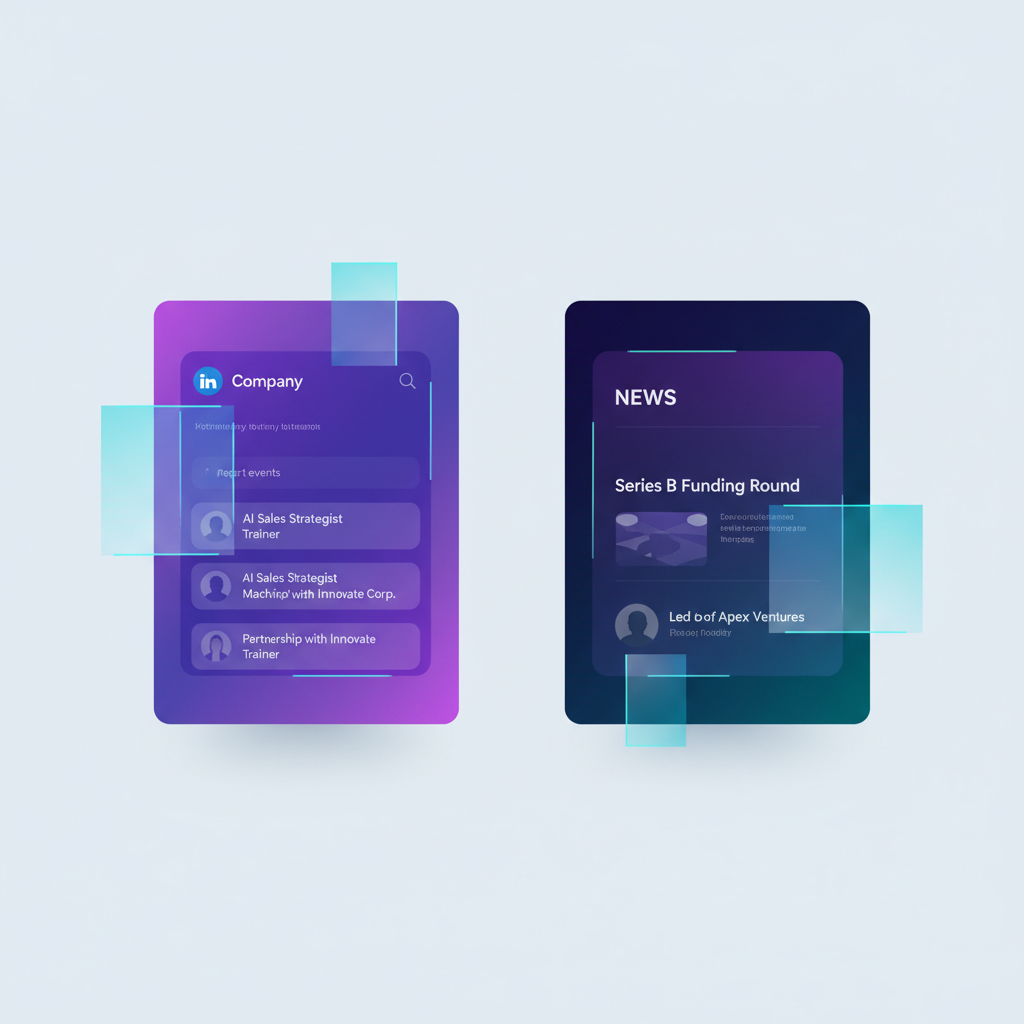
You don't need to become a company expert. You need one relevant, specific detail that lets you open with context instead of a generic pitch.
Start with the company. Check their website or LinkedIn page and answer three questions:
- What do they actually do? (In one sentence—so you don't sound clueless.)
- Who do they serve? (Industry, company size, geography—helps you tailor pain points.)
- What's new? (Funding, leadership change, office expansion, product launch—anything that signals priority or budget movement.)
Then move to the contact. Use LinkedIn Sales Navigator or your CRM enrichment tool and note:
- Title and tenure: A VP who's been there six months is in "prove it" mode and more open to new tools than a lifer.
- Previous role: If they came from a company that uses your category, they already believe in the solution.
- Recent activity: Liked a post about a pain point you solve? Commented on a competitor? That's your opener.
Set a timer. If you can't find a strong trigger in 90 seconds, move on—you'll use a pattern-interrupt opener instead of a relevance-based one. The goal is signal, not perfection.
For more on building the cold calling fundamentals that make preparation pay off, see our complete guide.
Identify your hook: Why this person, why now?
Generic cold calls die in the first ten seconds because the prospect hears nothing that applies to them. Your hook is the answer to the silent question every buyer asks: "Why are you calling me, specifically, right now?"
Strong hooks fall into four categories:
- Trigger event: "I saw you just opened a Dallas office—usually when teams expand that fast, [pain point] becomes a bottleneck."
- Persona-based pain: "Most VPs of Sales Ops we work with tell us [specific struggle]—is that on your radar?"
- Peer reference: "I've been working with three other Series B SaaS companies in your space, and they all faced [challenge]. Curious if you're seeing the same?"
- Pattern interrupt: "I know you don't know me, and this is out of the blue, so I'll be direct: [one-sentence value prop]. Worth 90 seconds?"
Write your hook as a single sentence. Say it out loud. If it sounds like a template you'd send to 500 people, rewrite it. Specificity earns time; vagueness gets you dismissed.
Script your opening 15 seconds word-for-word
This is non-negotiable. The opening of a cold call is the highest-stakes moment in the entire conversation—your tone, pacing, and word choice in the first breath determine whether the prospect stays on the line or shuts you down.
You cannot improvise this part and expect consistency.
Your cold call opening statement should follow this structure:
- Name + company (confident, not apologetic): "Hey [First Name], this is [Your Name] with [Company]."
- Permission + honesty: "I know I'm calling out of the blue—do you have 30 seconds?"
- Hook + value: "[Trigger or pain], and we help [outcome]. Worth a quick conversation?"
Write it. Rehearse it ten times out loud. Record yourself. Does it sound like you believe what you're saying, or like you're reading a script? Adjust pacing and emphasis until it feels natural at speed.
Reps who script their opener sound 3x more confident than those who wing it, because they're not burning cognitive load searching for words—they're fully present, reading the prospect's tone and adjusting in real time.
For eight proven opener frameworks you can adapt, check out our cold call script templates.
Prepare 3–5 discovery questions (but don't script the order)
You're not running an interrogation. You're having a conversation that happens to follow a structure. The mistake most reps make is either asking zero questions (they pitch immediately) or rigidly following a list regardless of what the prospect says.
Instead, prepare 3–5 core questions tied to the pain points your solution solves, but hold them loosely. Think of them as tools in a belt—you pull the right one based on what the prospect reveals.
Good discovery questions for cold calls are short, open-ended, and tied to business impact:
- "What's your current process for [relevant workflow]?"
- "How is [pain point] affecting your team right now?"
- "If you could wave a magic wand and fix one thing about [area], what would it be?"
- "What's driving the urgency around this for you?"
Write these as bullets, not sentences. You want to stay conversational, not robotic. If the prospect volunteers information that answers question three, skip to question four. Flexibility beats rigid adherence to a script.
And remember: on a cold call, you're not trying to fully qualify the deal—you're trying to earn enough curiosity to book a real discovery meeting. Two or three good questions are plenty.
Anticipate objections and script one-sentence responses
Every cold call hits objections. The three you'll hear most often are:
- "I don't have time right now."
- "Just send me some information."
- "We're all set / already have something."
If you don't prepare responses in advance, you'll stumble. Hesitation signals uncertainty, and uncertainty kills trust.
Write a one-sentence reply to each of your top three objections, then say them out loud until they feel instant. Here's the structure:
- Acknowledge + redirect: "Totally understand—most people I talk to say the same thing at first. That's actually why I'm calling: [micro-value statement]. Worth 90 seconds?"
Examples:
-
"I don't have time."
"I get it—that's exactly why I kept this short. The reason I called is that [specific outcome], and it usually takes one conversation to know if it's relevant. Does Thursday at 10 work?" -
"Send me info."
"Happy to—but honestly, most of what I'd send won't be relevant until I know [key qualifier]. Let me ask you two quick questions so I send the right thing. Fair?" -
"We're all set."
"That's great—what are you using today?" (Then pivot based on their answer.)
For a full library of word-for-word responses, see our guide to objection handling scripts.
The goal isn't to "overcome" objections like you're in a battle—it's to acknowledge them calmly and offer a low-friction next step. Reps who prepare these responses sound unshakeable; reps who don't sound rattled.
Confirm contact data and time zone
Nothing kills momentum like dialing a dead number, reaching the wrong person, or calling at 6 p.m. in their time zone when you thought it was 3 p.m.
Before you dial:
- Verify the phone number in your CRM or via a data enrichment tool. If it's a main line, prepare a gatekeeper strategy.
- Check the time zone. If you're calling someone in London from New York, 11 a.m. your time is 4 p.m. theirs—end of day, low patience.
- Confirm the name pronunciation if there's any doubt. Butchering someone's name in the first two seconds torches rapport.
This takes 15 seconds. Do it.
Set your environment and eliminate distractions
Your environment shapes your energy, and your energy shapes the call.
Before you start a dialing block:
- Close all non-essential tabs and apps. Every ping is a micro-distraction that pulls you out of flow.
- Use a headset with a mute button you can hit instantly if a dog barks or a colleague walks by.
- Stand up or sit with good posture. Slouching compresses your diaphragm and makes your voice sound flat and low-energy.
- Have water nearby. Dry mouth kills vocal clarity after the third call in a row.
If you're dialing from home, tell your household you're going into "call mode" for the next hour. A single interruption mid-pitch can derail a deal.
Elite reps treat their call environment like athletes treat a locker room: controlled, intentional, and optimized for performance.
Prime your mindset and body language

Cold calling is as much psychology as technique. If you're anxious, distracted, or low-energy, the prospect hears it in your voice within three seconds—and they mirror it back.
Before you dial, spend 60 seconds priming:
- Breathe deeply (4-count inhale, 6-count exhale) to drop your heart rate and center your focus.
- Smile before you speak. It sounds like woo, but Gong's conversation intelligence data shows that reps who smile during cold calls are perceived as 23% more trustworthy. Your vocal tone literally changes.
- Recall a recent win. Visualize a call that went well, a meeting you booked, a deal you closed. Confidence is contagious; doubt is too.
- Use a power pose if you're standing: shoulders back, chest open, chin level. It triggers a physiological shift that makes you sound more assertive.
This isn't motivational fluff—it's preparation. If you want to sound confident, you need to feel confident before you dial, and that requires intentional priming.
For a deeper dive into the psychology of presence on calls, read our guide to cold call confidence techniques.
Batch your prep, then dial in rapid succession
Here's the mistake that kills most reps' productivity: they research one prospect, dial, get voicemail, then research the next prospect, dial, get voicemail, and repeat. Every transition burns 90 seconds of context-switching overhead, and by call five they're mentally exhausted.
Instead, batch your research and batch your dials.
Spend 15 minutes researching five accounts back-to-back. Write your hooks, script your openers, load your objection responses. Then close the research tabs and dial all five in rapid succession.
Why this works:
- You stay in "call mode" instead of toggling between research brain and conversation brain.
- Rejection doesn't compound. If call two is a hang-up, you immediately move to call three—no time to spiral.
- You build momentum. By call three, your opener is smooth, your tone is calibrated, and you're in flow.
Top SDRs protect their dial blocks like sacred time. No Slack, no email, no meetings. Just research, prep, and dial.
Review and iterate after every block
Cold call preparation isn't a one-time checklist—it's a feedback loop. After every 10–15 dials, spend five minutes reviewing:
- What openers earned curiosity vs. immediate pushback?
- Which objections surprised you, and how did you handle them?
- What questions uncovered real pain vs. dead-end answers?
- Where did you stumble, hesitate, or sound uncertain?
Write down one thing to tighten for the next block. Maybe your hook was too long. Maybe you need a better response to "we're all set." Maybe your pacing in the opener felt rushed.
This is where AI role-play platforms like QUOTA give you an unfair advantage: you can simulate these exact scenarios, test different approaches, get instant feedback on pacing and word choice, and iterate before you burn real prospects. Reps who role-play their cold call prep outperform those who learn on live dials by a wide margin, because they've already made the mistakes in private.
The best cold callers are relentless iterators. They treat every block as a lab, every call as a data point, and every week as a chance to get 5% tighter.
FAQ
How long should cold call preparation take per prospect?
For a net-new prospect, allocate 3–5 minutes: 90 seconds on company/role research, 60 seconds tailoring your opener, 60 seconds confirming contact data, and 30 seconds priming your mindset. Block-research in batches to cut per-dial prep to under 2 minutes once you know the account.
What's the most important step in cold call preparation?
Identifying a specific, relevant trigger or business context. Generic "just checking in" calls die fast; calls anchored to a hiring spike, funding round, or tech-stack change earn curiosity and time.
Should I script my entire cold call word-for-word?
Script your opening 15 seconds and your core value statement verbatim so they're tight and confident. Keep the rest as talk-track bullets—over-scripting kills conversational agility when the prospect responds unpredictably.
How do I prepare for objections before the call?
List the three likeliest objections for that persona (typically "no time," "send me info," or "we're all set"), then write a one-sentence response for each. Rehearse them out loud so your reply feels instant and natural, not panicked.
Can I use the same preparation checklist for every call?
The structure stays the same, but the content must flex by persona, industry, and deal size. An enterprise CIO needs deeper research and a consultative approach; a small-business owner needs speed and clarity. Adapt the depth of each step to match the opportunity size.

Stefano Breglia
Co-founder, QUOTA Training
Stefano Breglia is co-founder of QUOTA Training. He focuses on sales methodology, deal progression and how AI simulation accelerates rep ramp time across the SDR, BDR, AE and AM roles.
Turn this into reps, not just reading
QUOTA Training lets your team practise these exact scenarios with an AI buyer that reacts like the real thing — then scores every call.
See it in action