SDR Battlecards: Build a System That Wins Every Objection
Part of the SDR Playbook guide: The Complete SDR Playbook for 2026: Your End-to-End GuideSDR battlecards equip your team with instant, proven responses to every objection. Learn how to build, deploy, and maintain a battlecard system that converts.

Key takeaways
- SDR battlecards must include four elements to work: the exact objection trigger, context clues that signal when to use it, a response framework, and word-for-word talk tracks your reps can adapt—not generic advice.
- The most effective battlecards address the top 8-12 objections and competitive scenarios your team actually encounters, built from real call data and win/loss analysis, not hypothetical situations.
- Battlecard adoption depends on accessibility: embed them in your CRM, Slack, or a single searchable document reps can access in under 10 seconds mid-call, and train reps with live practice using objection handling role-play.
- Update battlecards quarterly and immediately when competitive messaging shifts or a response stops converting—assign a specific owner to each card to prevent them from becoming stale sales collateral no one trusts.
SDR battlecards are the difference between a rep freezing when a prospect says "We're already working with [competitor]" and confidently pivoting to book the meeting anyway. Yet most teams either skip battlecards entirely or build unusable decks filled with generic advice that reps never reference.
This guide shows you how to build an SDR battlecard system that actually gets used—covering what to include, how to structure each card, where to store them, and how to keep them current. By the end, you'll have a repeatable process for turning your team's tribal knowledge into a competitive advantage.
This is part of The Complete SDR Playbook for 2026, which covers the full stack of tools, processes, and training systems high-performing SDR teams use to hit quota consistently.
What are SDR battlecards (and why most teams get them wrong)
SDR battlecards are quick-reference documents that provide reps with proven responses to common objections, competitive questions, and difficult scenarios they encounter during prospecting. Think of them as cheat sheets—but only if those cheat sheets are built from real data and tested under pressure.
The problem: most battlecard initiatives fail because they're built by product marketing in a vacuum, filled with corporate messaging no rep would ever say out loud, and distributed as 40-slide PDFs buried in a shared drive.
In our AI role-play sessions at QUOTA, we see the pattern clearly: reps who have access to well-structured battlecards recover from objections 60-70% faster than those winging it. But only if those battlecards meet three criteria:
-
They're specific. "Handle pricing objections confidently" is useless. "When a prospect says 'That's more than [Competitor X],' respond with: 'I hear that a lot—can I ask what you're comparing? Most teams tell us they were looking at [Competitor's] base plan, which doesn't include [key feature]. Are you factoring that in?'" is a battlecard.
-
They're accessible. If a rep has to leave their CRM or search through a folder to find the card, they won't use it. Period.
-
They're maintained. Battlecards go stale fast. A competitor changes messaging, your product ships a new feature, or a response stops working—and suddenly your "proven" talk track is actively hurting conversions.
According to Gartner's research on sales enablement, organizations with structured enablement content see 49% higher win rates on forecasted deals. Battlecards are the most tactical, high-leverage piece of that content stack for SDRs.
What makes a great SDR battlecard
Every battlecard should answer four questions for your rep:
1. What's the exact trigger?
Don't write "pricing objection." Write the verbatim objection: "You're too expensive" or "We don't have budget right now" or "Your competitor is half the price."
Reps need to pattern-match in real time. The more specific the trigger phrase, the faster they'll recognize when to pull the card.
2. What's the context?
Not every "too expensive" objection is the same. Include context clues:
- Timing: Early in the call vs. after you've shared pricing
- Tone: Genuine concern vs. brush-off
- Buyer type: Economic buyer vs. end user
- Deal stage: First touch vs. third follow-up
Example: "Use this card when a prospect mentions price before you've uncovered pain. If they've already told you their current solution is costing them $X in lost revenue, use [Value Justification Card] instead."
3. What's the framework?
Give reps a mental model, not just a script. Frameworks help reps adapt on the fly when the conversation doesn't follow the script exactly.
For pricing objections, a simple framework:
- Acknowledge (don't defend)
- Isolate (is this the only concern?)
- Reframe (shift from cost to value or comparison)
- Advance (ask for the meeting or next step)
This is the same structure we teach in SDR objection handling training—battlecards just make it instantly accessible.
4. What's the exact talk track?
Now give them the words. Write it the way a human actually speaks—contractions, pauses, natural phrasing.
Bad: "I understand your concern regarding budget constraints. Perhaps we could explore a phased implementation approach."
Good: "I hear you—budget's tight everywhere right now. Can I ask, if we could show you a way to get [outcome] without a big upfront investment, would it make sense to at least see how we'd approach it?"
Include 2-3 variations so reps can pick the one that fits their style. In our AI role-play scenarios, we've found reps perform better when they can choose from options rather than memorizing a single script.
The 8 battlecards every SDR team needs
Start here. These cover the objections and scenarios that show up in 80% of outbound conversations:
- "We're already working with [Competitor]" – Competitive displacement
- "We don't have budget" – Budget objection (early-stage)
- "Just send me some information" – Brush-off / information request
- "We're not interested" – Blanket dismissal
- "Call me back next quarter" – Timing objection
- "I'm too busy right now" – Availability objection
- "Why are you better than [Competitor]?" – Direct competitive question
- "We tried something like this before and it didn't work" – Past failure objection
Each of these deserves its own card with the four-part structure above. Don't try to cram multiple objections into one card—reps need to find the right answer fast.
Once you've built and tested these eight, add cards for your specific market: industry-specific objections, technical questions, security/compliance concerns, or integration questions.
How to build your first battlecard deck
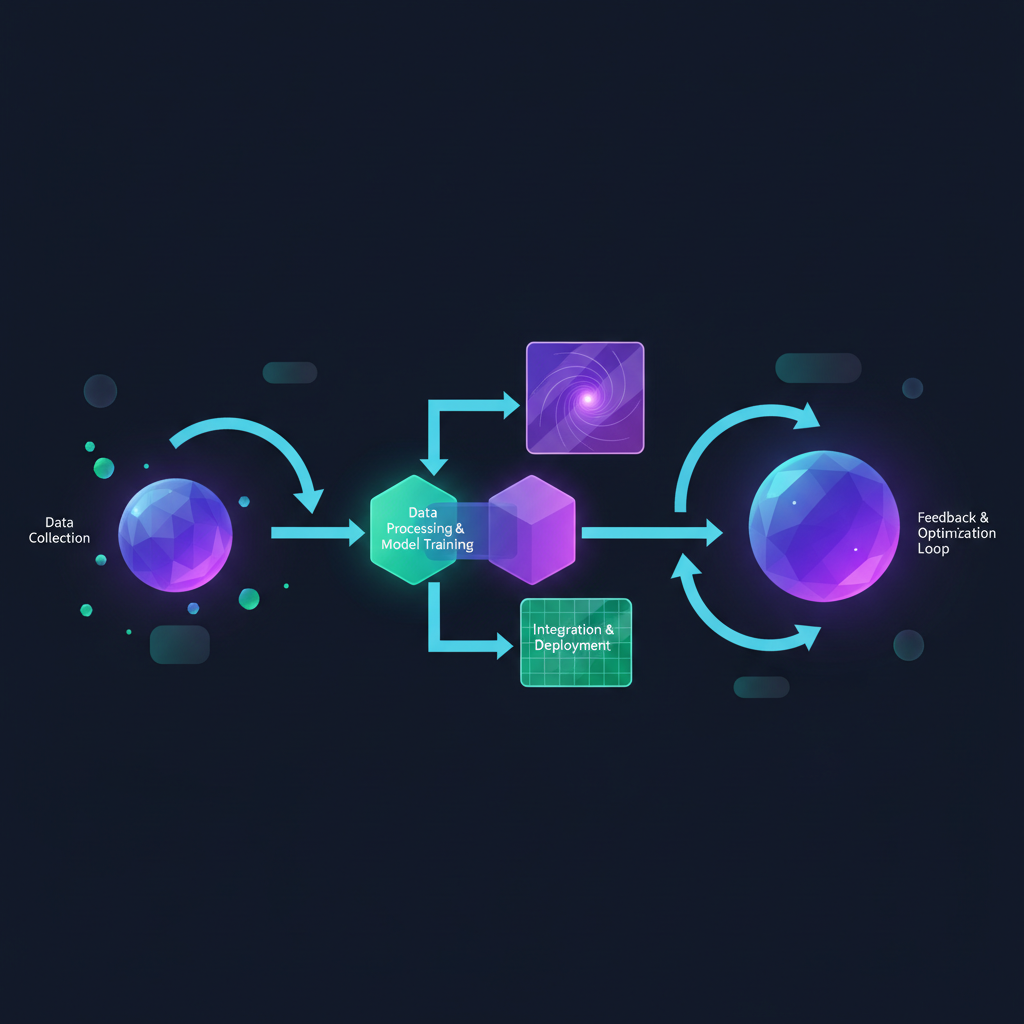
Here's the step-by-step process we recommend:
Step 1: Mine your call data
Don't guess at objections. Pull them from:
- Call recordings: Listen to 20-30 recent calls (wins and losses). Note every objection verbatim.
- CRM loss reasons: What do reps log when deals stall?
- Rep surveys: Ask your top performers, "What are the three objections you hear most?" and "Which one do you wish you had a better answer for?"
If you're using conversation intelligence tools, filter for keywords like "too expensive," "not interested," "already using," and "no budget." Export those snippets.
Step 2: Identify patterns and prioritize
Group similar objections. "We don't have budget," "That's too expensive," and "We can't afford that right now" are all variations of the same core objection.
Rank by frequency and impact. Build cards for the objections that:
- Appear in >20% of calls
- Cause reps to stumble (listen for long pauses, filler words, or weak responses)
- Correlate with lost deals
Start with your top 8-12. You can always add more later.
Step 3: Capture your best responses
Find the reps who handle each objection well. Listen to how they actually respond—not how they think they respond.
Pull the exact language. If your top SDR says, "Yeah, I get it—most of our customers said the same thing before they saw what this actually does. Can I just show you one quick thing?" write that down word-for-word.
Interview them: "Walk me through what you're thinking when you hear that objection. What are you listening for? What's your goal in the next 30 seconds?"
This is how you extract the framework behind the words.
Step 4: Write the cards
Use a consistent template for every card. Here's the format we recommend:
Objection: [Exact phrase]
Context: [When/why this comes up]
Framework: [4-step approach]
Talk tracks:
- Option A: [Natural, conversational response]
- Option B: [Slightly different angle]
Follow-up question: [What to ask next to advance]
What NOT to say: [Common mistakes]
That last section—what NOT to say—is gold. It prevents reps from making the mistakes you've already seen kill deals.
Step 5: Test with role-play
Before you roll out the deck, test it. Run objection handling role-play sessions where reps practice using the cards.
At QUOTA, we build these exact scenarios into our AI role-play platform—reps face the objection, reference the battlecard, and get instant feedback on whether their response landed. This is how you find out if the talk track actually works or if it sounds robotic.
Iterate based on what you hear. If reps are tweaking the language every time, update the card to match how they naturally say it.
Step 6: Deploy and embed
Here's where most teams fail: they build great battlecards, then email a PDF and wonder why no one uses them.
Make them accessible:
- CRM integration: Embed cards directly in Salesforce, HubSpot, or whatever CRM your reps live in. Use a tool like Guru, Seismic, or even a custom Salesforce page.
- Slack pinned message: Create a #battlecards channel with each card as a separate searchable message.
- Single living doc: Google Doc or Notion page with a table of contents. Reps can Cmd+F to find what they need in seconds.
The rule: if a rep can't access the card in under 10 seconds, they won't use it.
Step 7: Train reps to use them
Don't just drop the cards and walk away. Run a 30-minute training session:
- Walk through the structure of a card
- Demo how to access them during a call
- Role-play 2-3 common objections using the cards
- Set the expectation: "Use these for the first two weeks, then tell us what's working and what's not"
Reinforce usage in your weekly coaching sessions. When you review calls and hear an objection, ask: "Did you reference the battlecard? How would you use it differently next time?"
This is part of building SDR quota attainment levers—small process improvements that compound into big performance gains.
How to keep battlecards current (so reps actually trust them)
Battlecards decay fast. Here's how to prevent that:
Assign owners
Every battlecard needs an owner—usually an enablement lead, sales manager, or a top-performing SDR. Their job: review the card quarterly and update it immediately if something changes.
Set a review cadence
Quarterly reviews:
- Are reps still hearing this objection?
- Is the response still converting?
- Has competitive messaging shifted?
- Do we have new product features that change the answer?
Create a feedback loop
Add a Slack reaction or simple form: "Did this battlecard help you? 👍 / 👎"
When a rep reports a card didn't work, investigate. Listen to the call. Was it the card's fault, or did the rep misapply it?
Retire dead cards
If an objection disappears or a response stops working, archive the card. A deck with 30 cards—half of which are outdated—is worse than a deck with 10 current ones.
Common SDR battlecard mistakes (and how to avoid them)
Mistake 1: Writing for executives, not SDRs
Your CEO's preferred positioning is not what an SDR should say on a cold call. Battlecards must use the language reps actually speak.
Fix: Pull talk tracks from real calls, not slide decks.
Mistake 2: Making them too long
If a battlecard is more than half a page, reps won't read it mid-call.
Fix: One objection, one card. Be ruthlessly concise.
Mistake 3: Skipping the "what NOT to say" section
Reps learn as much from mistakes as from best practices.
Fix: Include 1-2 common responses that sound good but backfire. Example: "Don't say 'We're the best'—it triggers skepticism. Instead, share a specific customer outcome."
Mistake 4: Building them once and forgetting them
Stale battlecards erode trust. Reps stop using them because "they don't work anymore."
Fix: Assign owners and set quarterly reviews. Make updates visible—post in Slack when a card changes so reps know it's current.
Mistake 5: Not connecting them to training
Handing a rep a battlecard without practice is like giving them a playbook and expecting them to win the game without ever practicing the plays.
Fix: Use AI role-play scenarios to drill the cards until responses become automatic.
How AI role-play makes battlecards stick
Here's what we see at QUOTA: reps who read a battlecard retain about 20% of it. Reps who practice using it in a realistic scenario retain 80%+.
AI role-play lets you:
- Simulate the exact objection from the battlecard in a live conversation
- Force reps to adapt the talk track to their own voice (not just recite it)
- Give instant feedback on whether their response hit the framework
- Repeat until automatic so they don't freeze when it happens for real
This is the missing link between "here's the card" and "reps actually use it under pressure." Salesforce on sales enablement best practices highlights practice and reinforcement as the top drivers of content adoption—battlecards are no exception.
Measuring battlecard effectiveness
Track these metrics to know if your battlecards are working:
Usage rate
How many reps are actually accessing the cards? If usage is low, it's an accessibility or trust problem.
Objection recovery rate
When a rep encounters a battlecard-covered objection, how often do they successfully advance the conversation? Compare calls where they used the card vs. winged it.
Time to recovery
How long does it take a rep to respond effectively after hearing the objection? Battlecards should cut this time in half.
Win rate by objection type
Are deals that hit "competitor" objections converting at a higher rate after you deployed the competitive battlecard? Segment your pipeline data to find out.
If you're not seeing improvement in these areas, your battlecards need work—either the content, the accessibility, or the training.
FAQ
What are SDR battlecards?
SDR battlecards are quick-reference documents that provide reps with proven responses to common objections, competitive questions, and tough scenarios. They typically include the objection, context clues, a response framework, and word-for-word talk tracks.
How many battlecards should an SDR team have?
Start with 8-12 battlecards covering your most frequent objections and competitive scenarios. Add more as patterns emerge from call data, but prioritize quality and usability over quantity—reps won't use a 50-card deck.
Where should SDR battlecards live?
Battlecards should live where reps actually work: embedded in your CRM, pinned in Slack, or in a single searchable doc. Avoid PDFs buried in shared drives. The best battlecard is the one your rep can find in under 10 seconds mid-call.
How often should you update SDR battlecards?
Review battlecards quarterly and update immediately when you spot a pattern shift—new competitor messaging, product changes, or a response that stops working. Assign an owner (usually enablement or a top SDR) to maintain each card.
Should battlecards include exact scripts or just frameworks?
Both. Give reps a framework so they understand the logic, then provide 2-3 word-for-word talk tracks they can adapt to their style. Frameworks without scripts leave reps guessing; scripts without frameworks make them sound robotic.
How do you get reps to actually use battlecards?
Make them accessible (embed in CRM or Slack), train reps with live role-play so they practice using them, and create a feedback loop so reps trust the content stays current. Usage comes from accessibility + confidence + proof it works.

Stefano Breglia
Co-founder, QUOTA Training
Stefano Breglia is co-founder of QUOTA Training. He focuses on sales methodology, deal progression and how AI simulation accelerates rep ramp time across the SDR, BDR, AE and AM roles.
Turn this into reps, not just reading
QUOTA Training lets your team practise these exact scenarios with an AI buyer that reacts like the real thing — then scores every call.
See it in action