Sales Coaching Certification: Do You Need One to Lead a Team?
Part of the Sales Coaching guide: The Complete Sales Coaching Guide: Build a Program That DeliversSales coaching certification programs promise credibility—but do they actually make you a better coach? We break down what matters, what doesn't, and how to build real coaching skill.
Key takeaways
- Sales coaching certification is not required for most sales management roles; companies prioritize your track record as a rep and your ability to diagnose performance gaps over credentials.
- Certification programs teach structured frameworks (like GROW or Sandler methodology) and provide vocabulary for feedback, but they cannot replace live coaching reps through real deals.
- The strongest coaching skill comes from repetition—running 50+ coaching sessions builds pattern recognition that no 12-week course can replicate.
- AI-powered role-play platforms like QUOTA Training let you scale practice and feedback without hiring external coaches, making certification less critical for building rep competency.
- Invest in certification when you're transitioning from IC to manager, need a specific methodology (MEDDIC, Challenger), or want to differentiate yourself in a competitive hiring market—but never as a substitute for hands-on coaching experience.
You've just been promoted to sales manager. Congratulations. Now HR is asking if you want to enroll in a sales coaching certification program. Your LinkedIn feed is full of people adding "Certified Sales Coach" to their titles. And you're wondering: do I actually need this?
The short answer: probably not. The longer answer depends on where you are in your leadership journey, what your team needs, and whether you're confusing credibility with competence.
Sales coaching certification programs promise to turn you into a better coach. Some deliver on that promise. Most don't. And almost none of them teach the skill that matters most: the ability to watch a rep struggle on a call, diagnose the root cause in real time, and deliver feedback that changes behavior by the next dial.
This article breaks down what sales coaching certification actually teaches, when it adds value, when it's a waste of time and money, and how to build world-class coaching skills whether or not you ever get certified.
What sales coaching certification actually teaches you

Most sales coaching certification programs fall into one of three buckets: methodology-specific training (Sandler, Challenger, MEDDIC), general coaching frameworks (ICF, CPSL), or vendor-led programs tied to a sales enablement platform.
Here's what they typically cover:
Structured coaching frameworks. Programs teach models like GROW (Goal, Reality, Options, Will), the Socratic method, or situational leadership. These give you a repeatable structure for 1:1 conversations. The value? You learn how to run a coaching session, not just wing it. The limitation? Frameworks are starting points, not scripts. Real coaching requires adapting on the fly based on what the rep actually says.
Feedback delivery techniques. You'll practice giving constructive feedback without triggering defensiveness. This includes the "sandwich method" (praise-critique-praise), SBI (Situation-Behavior-Impact), and other models designed to make hard conversations easier. Useful if you've never had formal training in this. Less useful if you've already managed people and learned through trial and error.
Methodology-specific playbooks. If you enroll in a Sandler or Challenger certification, you're learning their sales methodology first, coaching second. These programs teach you how to recognize when a rep is off-script, how to reinforce the methodology's principles, and how to coach reps through specific scenarios (e.g., handling budget objections in a Challenger framework). The ROI here depends entirely on whether your company uses that methodology. If your team runs MEDDIC and you get certified in Sandler, you've just paid for knowledge you can't apply.
Role-play and observation practice. Better programs include live role-play where you coach a simulated rep. You get feedback on your feedback. This is the most valuable part of any certification—but it's also the hardest to scale. Most programs give you 3–5 hours of live practice. Compare that to the 100+ hours you'll spend coaching reps in your first year as a manager. Certification gives you a head start, not mastery.
Metrics and accountability systems. Some programs teach you what to measure (activity, conversion rates, pipeline velocity) and how to hold reps accountable without micromanaging. If you're new to sales leadership, this is helpful. If you've been carrying a quota for three years, you already know this.
The common thread? Sales coaching certification teaches you vocabulary and structure. It doesn't teach you judgment. And judgment—knowing when to push, when to listen, when to let a rep fail so they learn—only comes from coaching real people through real deals.
For a deeper dive into building a complete sales coaching program that goes beyond frameworks, we've covered the end-to-end system elsewhere.
When sales coaching certification adds real value
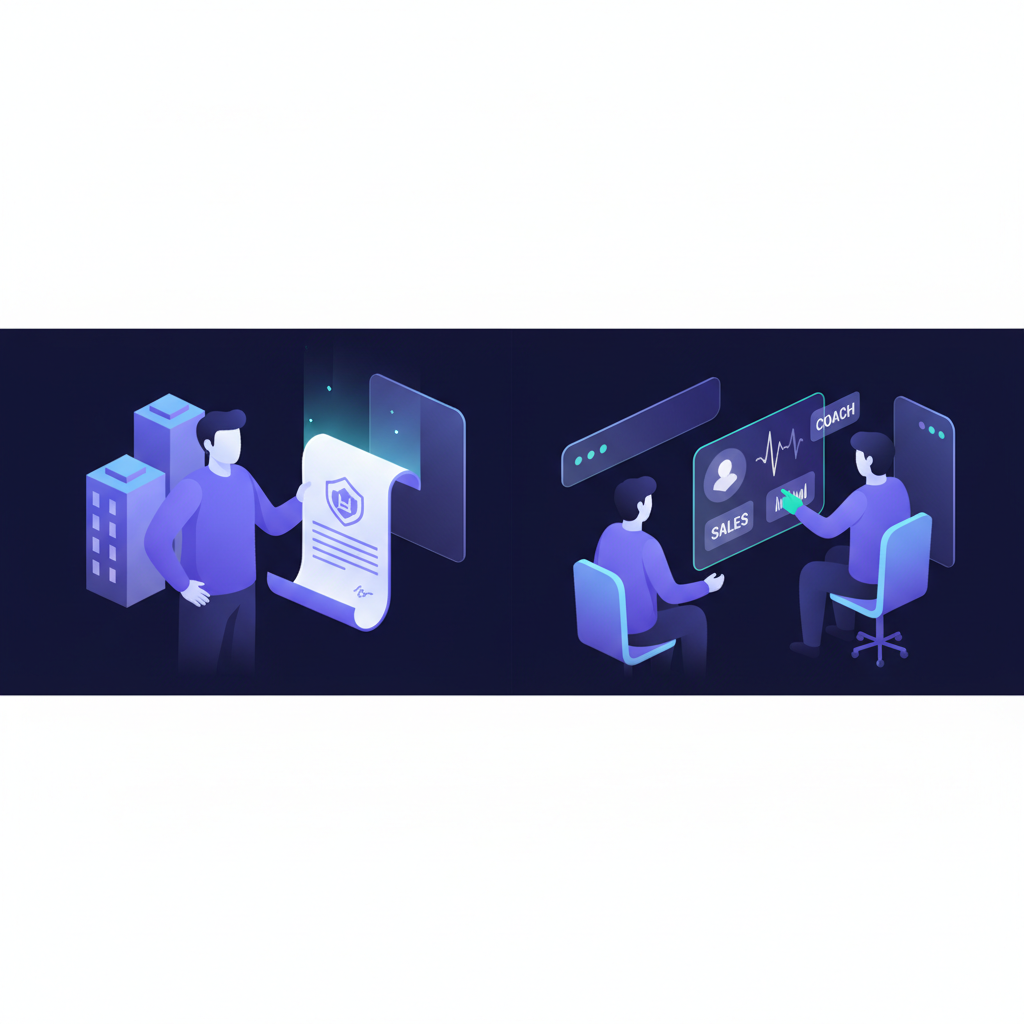
There are four scenarios where getting certified actually moves the needle:
1. You're transitioning from IC to manager for the first time
If you've never coached anyone, certification gives you a crash course in the basics. You'll learn how to structure a 1:1, how to give feedback without sounding like a jerk, and how to avoid common traps (like solving problems for reps instead of coaching them to solve problems themselves). The confidence boost alone can be worth the investment.
But here's the catch: you'll still make mistakes. Certification won't prevent you from over-coaching your top performer or under-coaching the rep who needs the most help. It just shortens your learning curve by a few weeks.
2. Your company uses a specific methodology and you need fluency
If your organization is all-in on Challenger, MEDDIC, or Sandler, getting certified in that methodology makes you a better coach within that system. You'll speak the same language as your reps, recognize when they're executing correctly, and coach to the framework's principles instead of your own instincts.
This is especially valuable if you're joining a new company mid-career. Certification signals that you're bought in. It also gives you a shared vocabulary with the enablement team, which makes collaboration easier.
3. You're competing for a leadership role and need differentiation
In a tight hiring market, "Certified Sales Coach" on your resume can be the tiebreaker. It's a signal that you've invested in your development, that you take coaching seriously, and that you're not winging it. Does it guarantee you're a better coach than the uncertified candidate? No. But hiring managers often use credentials as a proxy for commitment.
If you're eyeing a VP or Director role and the other candidates have certifications, get one. If you're the only candidate with a track record of developing reps who get promoted, skip it.
4. You want access to a peer network and ongoing resources
The best certification programs aren't just courses—they're communities. You get access to a cohort of other sales leaders, ongoing workshops, and a library of resources. If you're at a small company without a strong enablement function, this can be a lifeline. You're not figuring it out alone.
Programs like Gartner's research on sales coaching emphasize that peer learning is one of the highest-ROI activities for sales leaders. Certification is one way to access that network.
When sales coaching certification is a waste of time
Now for the uncomfortable truth: most sales coaching certifications are expensive theater. Here's when to skip them:
You already have 2+ years of coaching experience
If you've run 100+ coaching sessions, reviewed hundreds of calls, and developed reps who've hit quota, you don't need a certificate. You need better systems. Certification won't teach you how to scale your coaching practice to 20 reps or how to coach asynchronously with AI tools. It'll just validate what you already know.
Invest that time and money in tools, not credentials. Platforms like QUOTA Training let you scale feedback and practice without adding headcount. That's a better ROI than a 12-week course.
Your company doesn't have a coaching culture
Certification can't fix a broken culture. If your VP doesn't value coaching, if your reps are measured purely on activity, if there's no time built into the week for 1:1s, getting certified won't change that. You'll just be a certified coach with no mandate to coach.
Fix the culture first. Then invest in your skills.
The program is generic and not sales-specific
Beware of general "leadership coaching" or "executive coaching" certifications that aren't tailored to B2B sales. These programs teach you how to coach someone through a career transition or a confidence issue—useful skills, but not what you need when a rep is stuck at 40% of quota because they can't handle pricing objections.
Sales coaching is a specialized discipline. If the program doesn't include role-play, call review, and deal-specific scenarios, it's not worth your time.
You're using certification as a substitute for doing the work
This is the most common trap. You think, "Once I'm certified, I'll be a great coach." But certification is input, not output. The only way to get good at coaching is to coach. A lot. If you're avoiding live coaching sessions because you "don't feel ready yet," certification won't fix that. It'll just give you another excuse to delay.
Start running effective 1:1 meetings today. Get certified later if you need to.
What actually makes you a great sales coach (with or without certification)
Here's what separates great coaches from mediocre ones, regardless of credentials:
Pattern recognition. Great coaches have seen hundreds of calls. They can hear a rep's tonality shift and know the deal is slipping. They can spot a weak discovery question before the buyer disengages. This skill comes from volume, not coursework. The fastest way to build it? Review calls obsessively. Use AI-powered coaching feedback tools to accelerate your learning curve.
Diagnostic precision. Mediocre coaches say, "You need to be more confident." Great coaches say, "You're asking closed-ended questions in discovery, which makes buyers feel interrogated. Let's rewrite three of your questions as open-ended and practice them." Precision requires deep knowledge of the sales process and the ability to isolate root causes. Certification can teach frameworks for diagnosis. Repetition teaches you how to apply them under pressure.
Behavioral change, not just feedback. Feedback is easy. Changing behavior is hard. Great coaches don't just tell reps what to fix—they create conditions for practice, accountability, and reinforcement. That means role-play (live or AI-powered), call shadowing, and follow-up. If you're not tracking whether your feedback actually changed what the rep does on the next call, you're not coaching—you're just talking.
QUOTA Training's AI role-play scenarios let reps practice the exact behavior you're coaching between your 1:1s. That's how feedback becomes skill. Learn more about AI sales role-play scenarios and how they integrate into your coaching workflow.
Asking better questions than you give answers. The best coaches use effective coaching questions to help reps solve their own problems. Instead of saying, "Here's how to handle that objection," they ask, "What do you think the buyer was really concerned about?" This builds critical thinking. It also scales better—you're teaching reps to self-correct, not dependency.
Accountability without micromanagement. Great coaches set clear expectations, track leading indicators, and follow up relentlessly—but they don't hover. They build accountability systems that make performance visible without making reps feel surveilled. This is part art, part science. Certification programs teach the science (metrics, dashboards). The art comes from understanding your team's personalities and motivations.
How to build coaching skills faster than any certification program
If you want to become a world-class coach in 6 months instead of 2 years, here's the playbook:
1. Coach live, starting today. Schedule weekly 1:1s with every rep. Review one call per session. Give one piece of actionable feedback. Track whether they implement it. Repeat. You'll learn more in 10 weeks of this than in any certification program.
2. Record yourself coaching. Listen back to your own 1:1s. Are you talking more than the rep? Are you solving their problems or helping them think? Are your questions open-ended? Self-review is brutal but effective. Most coaches never do this. That's why most coaches plateau.
3. Use AI to scale feedback and practice. You can't be in every call. You can't role-play with every rep every day. AI tools can. Platforms like QUOTA Training give reps unlimited practice with realistic buyer scenarios, voice simulation, and instant feedback. This frees you to focus on strategy and high-leverage coaching moments, not repetitive skill drills.
4. Study the best. Find a sales leader whose team consistently outperforms. Ask to shadow their 1:1s. Take notes. Steal their questions, their frameworks, their follow-up cadence. Apprenticeship beats certification every time.
5. Teach what you're learning. Run a weekly coaching workshop for your team. Each week, pick one skill (handling budget objections, multi-threading, discovery pacing) and teach it. Teaching forces clarity. It also builds your credibility as a coach. According to Salesforce's sales management resources, managers who teach regularly report higher team engagement and faster ramp times.
6. Measure coaching outcomes, not coaching activity. Don't track how many 1:1s you ran. Track whether the reps you coached improved. Did their conversion rates go up? Did their average deal size increase? Did they get promoted? If your coaching isn't moving these numbers, it doesn't matter how many certifications you have.
The role of AI in replacing (or enhancing) certification
Here's the uncomfortable question: if AI can deliver personalized feedback at scale, simulate realistic buyer conversations, and track rep improvement over time, do you even need a human coaching certification anymore?
The answer is nuanced. AI can't replace the strategic thinking, empathy, and judgment that great coaches bring. But it can replace the repetitive, low-leverage parts of coaching—like running the same objection-handling drill for the fifth time or reviewing a cold call to point out tonality issues.
What this means for you as a coach: your value shifts from delivering feedback to interpreting it and connecting it to broader performance patterns. AI tells the rep, "You interrupted the buyer twice in the first 90 seconds." You tell the rep, "You're interrupting because you're nervous about silence. Let's work on your comfort with pauses."
Certification programs haven't caught up to this shift yet. Most still teach coaching as if it's 2015—manual call review, paper scorecards, in-person role-play. The future of coaching is hybrid: AI handles the reps, you handle the exceptions and the strategy.
If you're building a coaching program from scratch, start with AI-powered tools first, then layer in human coaching where it's highest-impact. That's how you scale without burning out. We've written extensively about scaling your coaching practice in a hybrid model.
FAQ
Do I need a sales coaching certification to become a sales manager?
No. Most companies do not require formal sales coaching certification for management roles. What matters more is your track record as a rep, your ability to diagnose performance gaps, and your skill in delivering actionable feedback. Certification can supplement experience but rarely replaces it.
What sales coaching certifications are most respected?
Programs affiliated with established frameworks—like Sandler, Challenger, or MEDDIC—carry more weight than generic coaching credentials. Industry-specific certifications (SaaS, enterprise) are also valued. However, hiring managers prioritize coaching outcomes and rep performance data over certificates.
How long does it take to get a sales coaching certification?
Most programs range from 8 weeks to 6 months, depending on format (self-paced vs. cohort-based). Expect 3–10 hours per week of coursework, plus practice sessions. The real learning curve happens in your first 90 days coaching live reps.
Can AI sales coaching tools replace formal certification?
AI tools like QUOTA Training provide scalable practice and feedback mechanisms, but they don't replace the strategic thinking a certification program teaches. The best approach combines AI-powered role-play for rep skill-building with frameworks from coaching methodologies to guide your 1:1s and team development.

Stefano Breglia
Co-founder, QUOTA Training
Stefano Breglia is co-founder of QUOTA Training. He focuses on sales methodology, deal progression and how AI simulation accelerates rep ramp time across the SDR, BDR, AE and AM roles.
Turn this into reps, not just reading
QUOTA Training lets your team practise these exact scenarios with an AI buyer that reacts like the real thing — then scores every call.
See it in action