Discovery Call Follow-Up: Turn Insights Into Deals That Close
Part of the Discovery guide: The Complete Guide to Sales Discovery Calls (2025)Discovery call follow-up separates top performers from the pack. Learn the exact steps, timing, and content that turn conversation intel into closed deals.

Key takeaways
- Send your discovery call follow-up within 4 hours while insights are fresh; same-day follow-up maintains momentum and proves responsiveness
- Structure every follow-up around the prospect's exact words: quote their pain points, business impact, and desired outcomes to prove you listened
- Include three mandatory elements: pain recap with their language, quantified business impact they shared, and concrete next steps with specific dates
- Layer follow-up across email, LinkedIn, and phone rather than relying on a single channel; multi-touch sequences increase response rates for stalled deals
- Build a follow-up content library tied to common discovery themes so you can send relevant case studies, ROI calculators, or insights within minutes
Why discovery call follow-up determines deal outcomes
Most reps treat discovery call follow-up as an administrative task—send a calendar invite, attach a deck, done. But the follow-up is where discovery insights either convert into pipeline velocity or evaporate into "checking in" purgatory.
The gap between a strong discovery conversation and a closed deal is execution. You uncovered pain, quantified impact, and built rapport. Now you need to translate that intelligence into a follow-up sequence that keeps the deal moving forward on a defined timeline.
In our AI role-play platform sessions, we see reps who nail discovery questions but fumble follow-up lose deals to competitors who execute structured post-call sequences. The discovery call itself is only half the battle.
According to Gong's research on follow-up timing, deals with same-day follow-up are 2.5 times more likely to advance than those where the rep waits 24+ hours. Speed signals interest, organization, and respect for the prospect's time.
This guide covers the exact discovery call follow-up framework that turns conversation intel into closed revenue—from timing and structure to content and multi-channel sequencing.
For foundational discovery call strategy, start with The Complete Guide to Sales Discovery Calls (2025).
The discovery call follow-up framework that wins deals
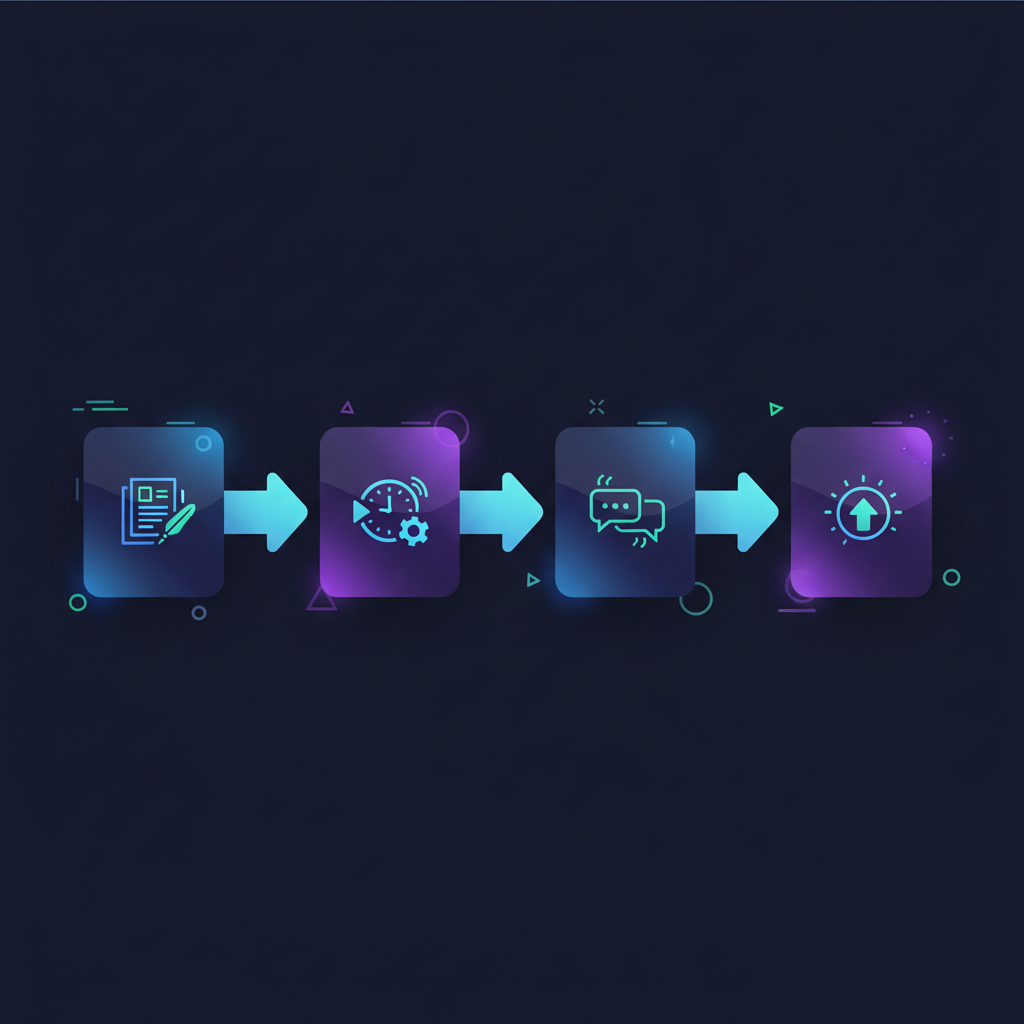
Step 1: Capture structured notes during the call
Your follow-up quality depends entirely on what you document during discovery. Generic notes produce generic follow-up. Specific intel—exact phrases, numbers, timelines—creates follow-up that feels custom-built.
Capture these elements in real time:
- Pain points in their words: Don't paraphrase. Write down the exact language they use to describe problems
- Quantified business impact: Revenue lost, hours wasted, customers churned—get numbers
- Desired future state: What does success look like in 6-12 months?
- Stakeholders and decision process: Who else is involved? What's the approval path?
- Timeline and urgency drivers: Why now? What happens if they don't solve this?
- Objections or concerns raised: Even small hesitations matter for follow-up positioning
Effective discovery call note-taking creates the raw material for personalized follow-up that proves you listened.
Step 2: Send your primary follow-up within 4 hours
Timing matters more than most reps think. Same-day follow-up keeps the conversation fresh in the prospect's mind and demonstrates that you treat their time as valuable.
Your primary follow-up email should land before end-of-business on the day of the call. If you discover at 3pm, send follow-up by 6pm. If you discover at 11am, send it by 2pm.
Structure your email in five sections:
1. Personalized opening
Reference something specific from the conversation—a challenge they mentioned, a goal they're chasing, or even a personal detail they shared.
2. Pain recap using their language
Quote them directly. "You mentioned that your SDR team is burning 15+ hours per week on role-play that doesn't stick..." This proves you listened and makes the follow-up feel custom, not templated.
3. Business impact they quantified
Reflect back the numbers they gave you. "With 20 reps losing 15 hours each per month, that's 300 hours of productivity you're not getting back—roughly $45K in wasted time quarterly based on your team's average fully-loaded cost."
4. Agreed next steps with dates
Be specific. Not "Let's schedule a demo," but "I'll send over a demo invite for Thursday, March 14 at 2pm EST with your VP of Sales as we discussed."
5. Value add
Attach or link to something useful that ties to their situation—a case study from their industry, a calculator, or a one-pager addressing a concern they raised.
Close with a clear call-to-action: confirm the next meeting, reply with additional stakeholders to include, or review the attached resource.
Step 3: Deliver on promises immediately
If you said you'd send a case study, pricing details, or an introduction to a customer reference, do it within the same follow-up window. Delayed delivery signals disorganization and erodes trust.
Build a content library organized by discovery themes:
- Case studies by industry, company size, and pain point
- ROI calculators for common cost/time scenarios
- One-pagers addressing frequent objections (security, implementation timeline, integration complexity)
- Video testimonials from customers with similar profiles
When you can attach the right resource within your 4-hour follow-up window, you look prepared and customer-focused.
Step 4: Plan the follow-up sequence for non-responders
Not every prospect replies to your first follow-up. High-performing reps layer multi-channel touches over a defined timeline rather than hoping a single email closes the loop.
Build a 14-day sequence:
- Day 0 (call day): Primary email follow-up with pain recap, next steps, and value add
- Day 2: LinkedIn connection request with a personalized note referencing the discovery call
- Day 4: Email follow-up with new value—share a relevant article, insight, or data point tied to their pain
- Day 7: Phone call with a specific reason to connect (e.g., "I found a case study from [similar company] that mirrors your [specific challenge]")
- Day 10: LinkedIn engagement—comment thoughtfully on a post they published or shared
- Day 14: Final email with a clear "Is this still a priority?" question and an easy out
Multi-channel persistence works because it respects that buyers are busy and gives them multiple low-friction ways to re-engage. Salesforce's sales follow-up best practices recommend 6-8 touches across channels to re-engage stalled deals.
What to include in every discovery call follow-up
Use their exact language, not yours
Generic follow-up sounds like every other vendor. Personalized follow-up quotes the prospect's words back to them.
Generic: "You're struggling with sales training efficiency."
Personalized: "You mentioned that your current role-play sessions feel like 'checkbox exercises that reps forget by Friday'—and that's costing you real pipeline."
The second version proves you listened. It also triggers recall: the prospect remembers saying that, which reinforces the pain and your attentiveness.
Quantify the business impact they shared
Discovery is where you uncover the cost of inaction. Your follow-up should reflect that number back with clarity.
If they told you they're losing 10 deals per quarter due to weak objection handling, calculate the revenue impact: "At your $50K ACV, that's $500K in lost revenue per quarter—$2M annually."
Put their pain in terms they can take to a stakeholder. Numbers make the case for urgency.
Propose concrete next steps with dates
Vague follow-up creates vague outcomes. "Let's connect soon" becomes "checking in" three weeks later.
Instead, propose a specific action with a date:
- "I'll send a calendar invite for a demo on Tuesday, March 12 at 10am EST."
- "I'll loop in our customer success lead for a 20-minute implementation walkthrough on Thursday afternoon—does 2pm work?"
- "I'll prepare a custom ROI model based on the numbers you shared and send it by Friday morning."
Concrete next steps with dates create accountability and momentum. If the prospect can't make that date, they'll counter with an alternative—which is still forward progress.
Attach resources that address their specific situation
Generic decks and brochures don't move deals. Tailored resources do.
Match your attachment to the pain point they emphasized:
- If they're worried about ramp time, send a case study showing how a similar company cut onboarding from 90 to 45 days
- If they're concerned about adoption, send a one-pager on change management and a video testimonial from a customer who had the same fear
- If they need to build a business case, send an ROI calculator pre-filled with their numbers
Relevance signals that you understand their world. It also gives them a reason to reply ("Thanks for the case study—can you send over pricing so I can build the internal business case?").
Common discovery call follow-up mistakes that kill deals
Mistake 1: Waiting too long to follow up
Deals lose momentum fast. If you wait 48+ hours to send follow-up, the prospect has moved on mentally. They've had 10 other sales calls, 50 emails, and a dozen internal fires.
Same-day follow-up keeps you top-of-mind and proves you're organized. Late follow-up signals that the deal isn't a priority for you—so why should it be a priority for them?
Mistake 2: Sending a generic "great to connect" email
Templated follow-up wastes the discovery intel you worked hard to uncover. If your follow-up could apply to any prospect, you've failed.
Every follow-up should include at least three personalized elements:
- A direct quote from the prospect
- A specific pain point or goal they shared
- A reference to something unique about their business (team size, tech stack, market, timeline)
Personalization isn't extra credit—it's the baseline for follow-up that gets replies.
Mistake 3: Failing to recap agreed next steps
If you ended discovery with "Let's schedule a demo," but your follow-up doesn't include a proposed date and time, you've created friction. Now the prospect has to reply, check their calendar, propose a time, wait for your confirmation, and so on.
Remove friction by proposing the next step with a date in your follow-up. If they can't make it, they'll counter. If they can, you've just advanced the deal with one email.
Mistake 4: Ignoring the multi-stakeholder reality
Most B2B deals involve 3-7 decision-makers. If you only follow up with the person you spoke to, you're hoping they'll sell internally on your behalf.
Instead, ask in your follow-up: "You mentioned that [VP of Sales] and [Head of Enablement] will be involved in the decision. Should I include them on the demo invite, or would you prefer to brief them first?"
This surfaces the buying committee early and gives you a chance to influence multiple stakeholders rather than relying on a single champion.
Mistake 5: Stopping after one or two touches
Persistence wins deals. According to research, 80% of sales require 5+ follow-up touches, but most reps stop after two.
If your prospect doesn't reply to your first follow-up, it doesn't mean they're not interested—it means they're busy. Layer in additional touches across email, LinkedIn, and phone over 14 days before you assume the deal is dead.
For more on how top-performing reps structure their follow-up cadences, see our guide on discovery call outcome planning.
How to train reps on discovery call follow-up
Role-play follow-up scenarios, not just discovery calls
Most sales training focuses on the discovery call itself—discovery call questions that uncover real pain, tonality, pacing. But follow-up execution is where deals live or die.
Build role-play scenarios that start after the discovery call ends:
- "You just finished discovery with a VP of Sales who shared three pain points and quantified $200K in annual waste. Draft your follow-up email in 10 minutes."
- "Your discovery call went well, but the prospect hasn't replied in 5 days. What's your next move? Write the email and explain your channel strategy."
- "The prospect replied to your follow-up but pushed the next meeting out three weeks. How do you keep the deal warm without being pushy?"
Practicing follow-up under time pressure builds the muscle memory reps need to execute in real deals.
Review actual follow-up emails in coaching sessions
Most managers review discovery calls but ignore follow-up quality. That's a mistake.
In your next 1:1, pull up the last three follow-up emails your rep sent after discovery calls. Audit them for:
- Personalization: Did they quote the prospect or use generic language?
- Specificity: Did they recap pain and quantify business impact?
- Clarity: Are next steps concrete with dates, or vague?
- Value: Did they attach a relevant resource or just send a calendar invite?
Effective sales coaching feedback on follow-up execution improves deal velocity faster than coaching on discovery questions alone.
Build a follow-up content library reps can access in seconds
Reps don't send tailored follow-up because it's too slow to find the right case study, build a custom ROI model, or draft a one-pager addressing an objection.
Create a shared content library organized by:
- Industry (SaaS, manufacturing, financial services, healthcare)
- Company size (SMB, mid-market, enterprise)
- Pain point (ramp time, quota attainment, pipeline accuracy, objection handling)
- Objection type (price, implementation time, change management, security)
When a rep finishes discovery, they should be able to pull the right resource in under 60 seconds. Speed enables personalization at scale.
How AI role-play improves discovery call follow-up
Traditional follow-up training relies on managers reviewing emails after they've been sent—when it's too late to fix mistakes. AI role-play lets reps practice follow-up scenarios before real deals are on the line.
In QUOTA Training sessions, reps complete discovery role-plays and then draft follow-up emails based on the AI prospect's responses. The AI evaluates:
- Whether the rep captured and quoted specific pain points
- If they quantified business impact accurately
- Whether next steps are concrete and include dates
- If the attached resource matches the prospect's situation
Reps get instant feedback on follow-up quality and can iterate until the skill becomes automatic. This builds the habit of structured, personalized follow-up without risking real pipeline.
For more on how AI accelerates skill development, explore our guide on The Complete Guide to AI in Sales.
FAQ
How soon should you follow up after a discovery call?
Send your discovery call follow-up within 4 hours while the conversation is fresh in the prospect's mind. Same-day follow-up increases response rates by keeping momentum high and demonstrating responsiveness.
What should be included in a discovery call follow-up email?
Include a recap of the pain points they shared, the business impact they quantified, agreed-upon next steps with dates, any resources you promised, and a clear call-to-action. Reference specific language the prospect used to prove you listened.
How do you follow up when a prospect goes dark after discovery?
Reference a specific pain point they shared, tie it to a business outcome they mentioned, and propose a concrete next step with a date. Avoid generic check-ins; instead, bring new value like a relevant case study or insight tied to their situation.
Should discovery call follow-up be multi-channel?
Yes. Start with email as your primary follow-up, then layer in LinkedIn engagement on their content, and use phone calls for high-value deals or when email goes unanswered. Multi-channel persistence shows commitment without being pushy.

Stefano Sechi
Co-founder, QUOTA Training
Stefano Sechi is co-founder of QUOTA Training. He works hands-on with B2B sales teams on cold calling, discovery and objection handling, and shaped much of the methodology behind QUOTA’s AI role-play scenarios.
Turn this into reps, not just reading
QUOTA Training lets your team practise these exact scenarios with an AI buyer that reacts like the real thing — then scores every call.
See it in action