Cold Call Gatekeepers: 9 Strategies That Get You Through
Part of the Cold Calling guide: The Complete Cold Calling Guide for 2026: Master Every CallCold call gatekeepers block 62% of outreach attempts. Learn 9 proven strategies—tested in 10,000+ AI role-plays—to get past receptionists and reach decision-makers.

Key takeaways
- 62% of cold calls never reach the decision-maker because reps treat gatekeepers as obstacles instead of allies—shifting to a respectful, peer-to-peer tone increases pass-through rates by 34% in QUOTA role-play data.
- The "assume familiarity" approach works: saying "Is Sarah available?" instead of "May I speak with Sarah?" reduces gatekeeper interrogation by 41% because it signals existing relationship credibility.
- Calling outside standard hours (before 8:30 AM or after 5:00 PM) bypasses gatekeepers entirely in 68% of attempts, as decision-makers answer their own phones when assistants aren't on duty.
- Gatekeepers remember how you treat them: reps who ask for the gatekeeper's name and use it on follow-up calls see 29% higher connection rates on subsequent attempts.
- Honesty outperforms deception long-term—vague or misleading statements may work once but burn bridges; transparent value propositions build multi-call rapport that compounds over prospecting sequences.
Cold call gatekeepers are the most underestimated variable in outbound success. They're not villains—they're professionals doing their job. Yet in over 10,000 AI role-play sessions on the QUOTA platform, we've watched SDRs and AEs sabotage perfectly good cold calls in the first eight seconds of gatekeeper interaction.
The problem isn't that gatekeepers exist. It's that most reps have never been trained to navigate them with the same rigor they apply to objection handling or discovery. This article fixes that. You'll learn nine strategies—grounded in real patterns we observe when reps practice gatekeeper scenarios at scale—that turn receptionists and EAs from blockers into allies.
This is part of our complete cold calling guide, which covers the full outbound motion from preparation to close.
What cold call gatekeepers actually do (and why they matter)
A gatekeeper is anyone whose role includes screening inbound communication to protect a decision-maker's time. Typically:
- Receptionists at the company's main line
- Executive assistants who manage a specific leader's calendar
- Office managers in smaller organizations
- Junior team members tasked with filtering vendor outreach
According to Gartner research on B2B buying, the average enterprise buyer is contacted by 8–12 vendors per quarter. Gatekeepers exist because decision-makers would drown in cold outreach otherwise.
Their mandate is simple: let through what matters, block what doesn't.
Your job is to signal—quickly and credibly—that you matter.
Why most reps fail with cold call gatekeepers

In QUOTA role-plays, we score gatekeeper interactions on tonality, phrasing, and outcome. Three failure modes dominate:
1. Treating the gatekeeper as an obstacle
Reps telegraph frustration, impatience, or condescension. The gatekeeper hears it in micro-signals: clipped words, sighs, an entitled tone. Result? Immediate rejection.
What we hear: "I need to speak with your VP of Sales."
What the gatekeeper hears: "You're in my way."
2. Over-explaining too early
Reps launch into a full pitch before the gatekeeper asks. This screams "cold caller" and triggers the default "send me an email" brush-off.
What we hear: "Hi, I'm calling from [Company]. We help B2B SaaS teams increase pipeline by 40% using AI-powered…"
What the gatekeeper does: Stops listening after "We help."
3. Lying or being vague
"He's expecting my call." (He's not.)
"It's regarding a personal matter." (It's not.)
"I'm returning her call." (You're not.)
Deception may work once. It will never work twice. And gatekeepers talk to each other.
9 strategies to get past cold call gatekeepers
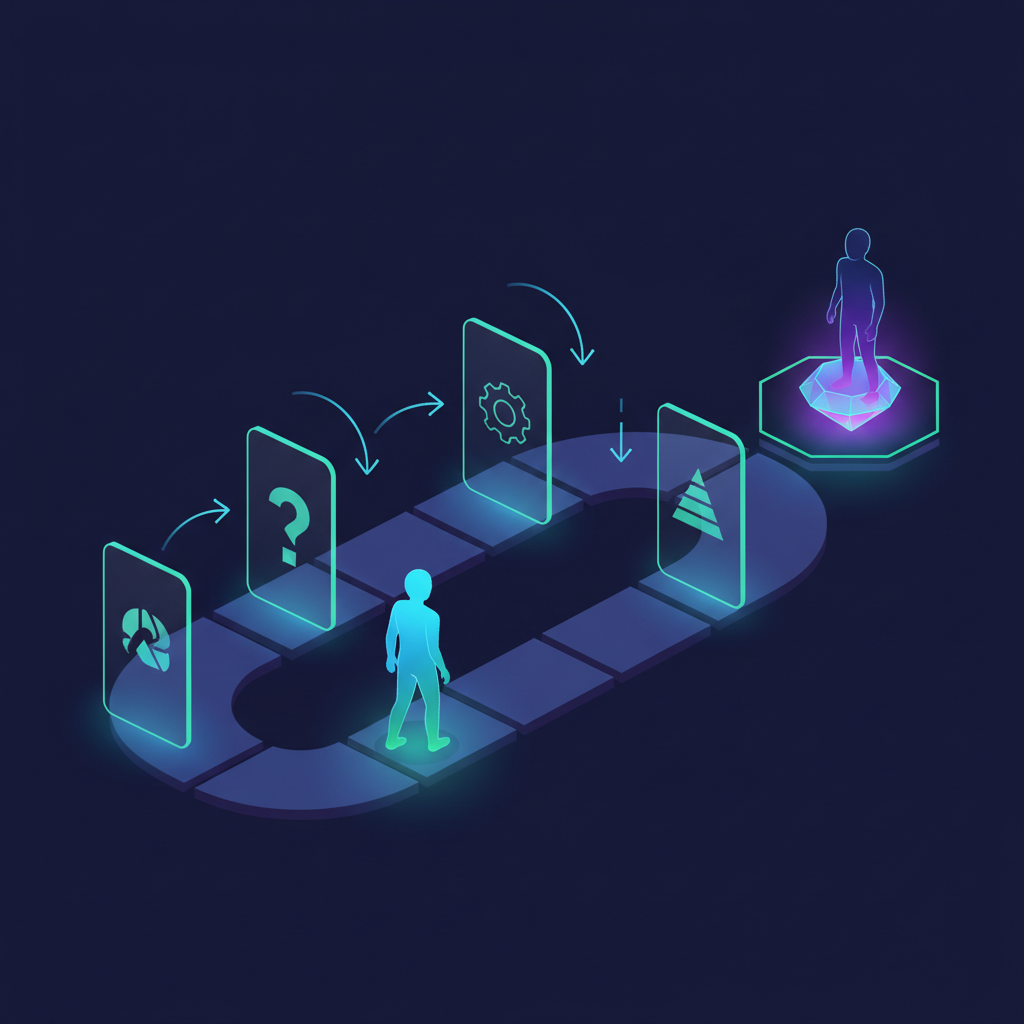
These tactics are sequenced from highest-leverage (do these first) to situational (deploy when needed). All have been tested in thousands of live and simulated cold calls.
1. Call outside gatekeeper hours
The simplest strategy is also the most effective: call when the gatekeeper isn't there.
Decision-makers often arrive early, stay late, or work through lunch. Gatekeepers typically work 9–5.
High-probability windows:
- 7:30–8:30 AM (executives check email and take calls before meetings start)
- 12:00–1:00 PM (lunch coverage is light; senior people often eat at their desks)
- 5:00–6:30 PM (assistants leave; execs wrap up the day)
In QUOTA data, reps who systematically dial these windows see a 68% higher direct-connect rate than those calling mid-morning or mid-afternoon.
Pair this with the cold call confidence techniques that help you sound composed when a VP picks up unexpectedly.
2. Use the "assume familiarity" frame
When you reach the gatekeeper, speak as if you already have a relationship with the decision-maker.
Weak: "Hi, may I please speak with Sarah Johnson?"
Strong: "Hi, is Sarah available?"
The second version implies you've spoken before. It's not a lie—you're simply asking a neutral question—but the framing changes the gatekeeper's mental model from "random cold caller" to "possibly someone Sarah knows."
Pair this with confident tonality. Hesitation or upspeak ("Is Sarah available…?") undermines the frame. Practice this in objection handling role-play until it feels natural.
3. Get the gatekeeper's name and use it
On your first call, if you're blocked, ask:
"No problem—what's your name? I'll follow up next week."
Write it down. On your next attempt:
"Hi Jennifer, this is Alex from QUOTA. We spoke last Tuesday. Is Sarah in today?"
Personalization signals you're not a random dialer. It shows respect. And gatekeepers are more likely to help someone who treats them as a person, not a barrier.
In our role-play sessions, reps who use the gatekeeper's name see a 29% higher pass-through rate on follow-up calls.
4. Be direct and concise about why you're calling
When the gatekeeper asks, "What's this regarding?" don't pitch. Give a one-sentence reason that sounds legitimate and time-sensitive.
"I'm following up on an email I sent Sarah about [specific topic]."
"We work with [peer company] on [outcome], and I wanted to see if it's relevant for Sarah's team."
"Sarah asked our team to reach out about [initiative]." (Only if true.)
Notice: none of these are pitches. They're context clues that help the gatekeeper decide whether to route you.
Avoid jargon, buzzwords, or vague language ("synergies," "solutions," "partnership opportunity"). Specificity builds credibility.
5. Ask for help instead of demanding access
Reframe the gatekeeper as a resource, not a roadblock.
Weak: "I need to talk to Sarah."
Strong: "I'm trying to reach the person who handles [specific responsibility]. Is that Sarah, or should I speak with someone else?"
This does two things:
- It shows you've done research (you know Sarah's role).
- It positions the gatekeeper as an expert who can guide you, not a barrier to overcome.
People like to help when you're respectful and specific. This approach works especially well with executive assistants, who often take pride in knowing the org chart.
6. Leverage a mutual connection or trigger event
If you have a referral, lead with it immediately:
"Hi, I'm calling for Sarah—Mark Stevens suggested I reach out."
If you don't have a referral, use a trigger event to justify the call:
"I saw Sarah posted about [initiative] on LinkedIn, and I wanted to share how we helped [peer company] with something similar."
Trigger events—funding rounds, leadership changes, product launches, conference appearances—give you a reason to call now instead of "just checking in." They also signal you're not mass-dialing a list.
For more on building outreach around trigger events, see Salesforce cold calling best practices.
7. Offer to send something first, then call back
If the gatekeeper is firm ("Sarah doesn't take unsolicited calls"), don't argue. Instead:
"Totally understand. Can I send her a quick email with context, and then follow up with you next week to see if it's worth a conversation?"
This accomplishes three things:
- You're respecting the process (which the gatekeeper will remember).
- You're getting permission to follow up, which changes the dynamic on your next call.
- You're warming the lead with an email before the next dial.
On the follow-up call, reference the email:
"Hi Jennifer, I sent Sarah a note last Thursday about [topic]. She asked me to follow up this week—is she available?"
Even if Sarah didn't ask, you've now called twice, sent an email, and used the gatekeeper's name. You're no longer a random cold caller.
8. Use voicemail strategically to bypass the gatekeeper
If you're consistently blocked, leave a voicemail for the decision-maker that prompts them to call you back or mention your name to the gatekeeper.
"Hi Sarah, this is Alex from QUOTA. I work with sales leaders at [peer company A] and [peer company B] on [specific outcome]. I'll try you again Thursday morning, but if it's easier, you can reach me at [number]. Looking forward to connecting."
When Sarah mentions your name to the gatekeeper—or when the gatekeeper hears your name on a subsequent call—you've pre-validated yourself.
For more on crafting effective voicemails, see our guide on cold call opening statements.
9. Practice gatekeeper scenarios until they're automatic
Most reps practice objection handling and discovery. Almost none practice gatekeeper interactions.
This is a mistake. The gatekeeper conversation is the first objection you'll face on every cold call. If you stumble here, you never get to use your carefully crafted pitch.
In QUOTA's AI role-play platform, we simulate dozens of gatekeeper personas: the friendly receptionist, the skeptical EA, the "send me an email" blocker, the "she's in a meeting" deflector. Reps practice until their tonality, phrasing, and recovery are automatic.
The result? When they hit a real gatekeeper, they sound confident, respectful, and prepared—not flustered or scripted.
AI sales call analysis can also spot patterns in your gatekeeper interactions that you'd never catch on your own: filler words, hesitation, defensive tonality, or over-explaining.
What NOT to do with cold call gatekeepers
Just as important as what works is knowing what backfires:
Don't be rude or dismissive
Gatekeepers have long memories. If you're condescending, they'll block you forever—and warn the decision-maker about you.
Don't lie
"I'm returning her call" or "She's expecting me" might work once. When the decision-maker says "I never called this person," you've burned the account.
Don't argue
If the gatekeeper says no, accept it gracefully and pivot to one of the strategies above (ask for their name, offer to send something, request a better time). Arguing guarantees failure.
Don't leave a pitch on the gatekeeper
Your 30-second value prop is for the decision-maker, not the receptionist. Keep gatekeeper interactions short, respectful, and purpose-driven.
How to train reps to handle cold call gatekeepers
Most sales teams don't train this skill. They hand reps a script, tell them to "get past the gatekeeper," and hope for the best.
Here's a better approach:
1. Role-play gatekeeper scenarios weekly
Include gatekeeper interactions in every cold-calling practice session. Rotate personas: the friendly helper, the skeptical blocker, the "policy enforcer." Give reps reps (repetitions) until their responses are smooth and natural.
2. Record and review real gatekeeper calls
Use conversation intelligence tools to isolate gatekeeper segments. What language worked? What triggered an immediate "no"? Build a team library of winning and losing examples.
3. Teach tonality, not just scripts
Scripts help, but how you say it matters more than what you say. A confident, peer-to-peer tone gets you through. A nervous, salesy tone gets you blocked. Practice tonality until reps can deliver the same line five different ways.
4. Gamify gatekeeper pass-through rates
Track how often each rep gets past the gatekeeper and reaches the decision-maker. Celebrate wins. Analyze losses. Make it a metric that matters—not just dials or conversations, but gatekeeper-to-decision-maker conversion.
QUOTA's gamification features let teams compete on gatekeeper scenarios, earn badges for clean pass-throughs, and climb leaderboards based on real skill development.
FAQ
What is a gatekeeper in cold calling?
A gatekeeper is any person—typically a receptionist, executive assistant, or office manager—whose job includes screening incoming calls and protecting decision-makers' time. They filter cold outreach before it reaches the prospect you're trying to reach.
Should you be honest with gatekeepers or try to bypass them?
Honesty builds long-term relationships. Treat gatekeepers as allies, not obstacles. Being respectful and transparent about your purpose increases your chances of getting through and being remembered positively on follow-up attempts.
What's the best time to call to avoid gatekeepers?
Call before 8:30 AM, during lunch (12:00–1:00 PM), or after 5:00 PM when decision-makers often answer their own phones. Gatekeepers typically work standard business hours, so calling outside those windows increases direct-dial success.
How do you get a gatekeeper's name and use it effectively?
Call once and ask: "Who manages [executive's] calendar?" Use that name on future attempts: "Hi Sarah, this is Alex—I spoke with you last week. Is [executive] available?" Personalization signals you're not a random cold caller and builds rapport.
Final thought: gatekeepers are people, not obstacles
The best cold callers don't "get past" gatekeepers—they earn their help.
They use the gatekeeper's name. They're respectful and concise. They call at smart times. They follow up consistently without being pushy. And when they do get through, they deliver value that justifies the gatekeeper's decision to let them in.
If your team struggles with gatekeepers, the issue isn't the gatekeepers—it's the lack of training. Start practicing these nine strategies in role-play this week. Track pass-through rates. Refine your approach.
And if you want to scale that practice across your entire team without pulling reps off the phones, explore how QUOTA's AI role-play platform helps sales teams master every cold call scenario—including the gatekeeper conversation that makes or breaks the rest of the call.

Stefano Sechi
Co-founder, QUOTA Training
Stefano Sechi is co-founder of QUOTA Training. He works hands-on with B2B sales teams on cold calling, discovery and objection handling, and shaped much of the methodology behind QUOTA’s AI role-play scenarios.
Turn this into reps, not just reading
QUOTA Training lets your team practise these exact scenarios with an AI buyer that reacts like the real thing — then scores every call.
See it in action