AI Sales Forecasting: Train Reps to Predict Pipeline Accurately
Part of the AI & Sales guide: The Complete Guide to AI in Sales: Transform Your Revenue EngineAI sales forecasting transforms how reps predict deals. Learn how AI role-play trains reps to qualify accurately, surface risk early, and build pipelines managers trust.

Key takeaways
- AI sales forecasting trains reps to qualify deals based on evidence, not optimism: Reps learn to identify concrete buyer signals—budget confirmed, timeline committed, decision process mapped—that predict close probability, reducing pipeline inflation by 20-40% in QUOTA role-play cohorts.
- Role-play simulations surface the exact questions reps skip that kill forecast accuracy: AI scenarios reveal when reps accept vague answers on authority, timeline, or competition, then coaches them to probe deeper until they uncover deal-blocking risks before the forecast call.
- AI analyzes conversation patterns that correlate with slipped deals: By reviewing thousands of role-play sessions, AI identifies phrases like "we're still evaluating" or "I'll get back to you" that human reps interpret as positive but statistically predict stalls, training reps to spot red flags in real time.
- Forecast accuracy improves when reps practice updating deal stages under pressure: AI role-play forces reps to defend stage progression with evidence, building the discipline to move deals backward when qualification gaps appear rather than wishfully advancing them.
- Personalized AI coaching scales the forecast training that managers can't deliver 1:1: Every rep receives tailored feedback on their specific qualification blind spots—whether they over-rely on champion enthusiasm, under-validate budget, or misjudge urgency—accelerating the judgment that drives accurate predictions.
Forecast accuracy separates high-performing sales teams from those that miss quarter after quarter. Yet most organizations treat forecasting as a manager problem—better spreadsheets, more pipeline reviews, stricter stage definitions—when the real issue lives one layer deeper: reps don't know how to predict whether a deal will close.
They guess based on how friendly the prospect sounds. They advance deals because they "feel good" about the relationship. They commit revenue based on a champion's optimism rather than validated evidence of budget, authority, need, and timeline.
AI sales forecasting changes that. Not by replacing human judgment, but by training reps to build the judgment that drives accurate predictions. Through AI-powered role-play, conversation analysis, and personalized coaching, reps learn to qualify deals with the rigor that makes pipelines predictable—and managers' lives manageable.
This guide shows you how AI trains reps to forecast accurately, which skills matter most, and how to measure the impact on your revenue predictability.
Why most reps can't forecast accurately (and why AI fixes it)
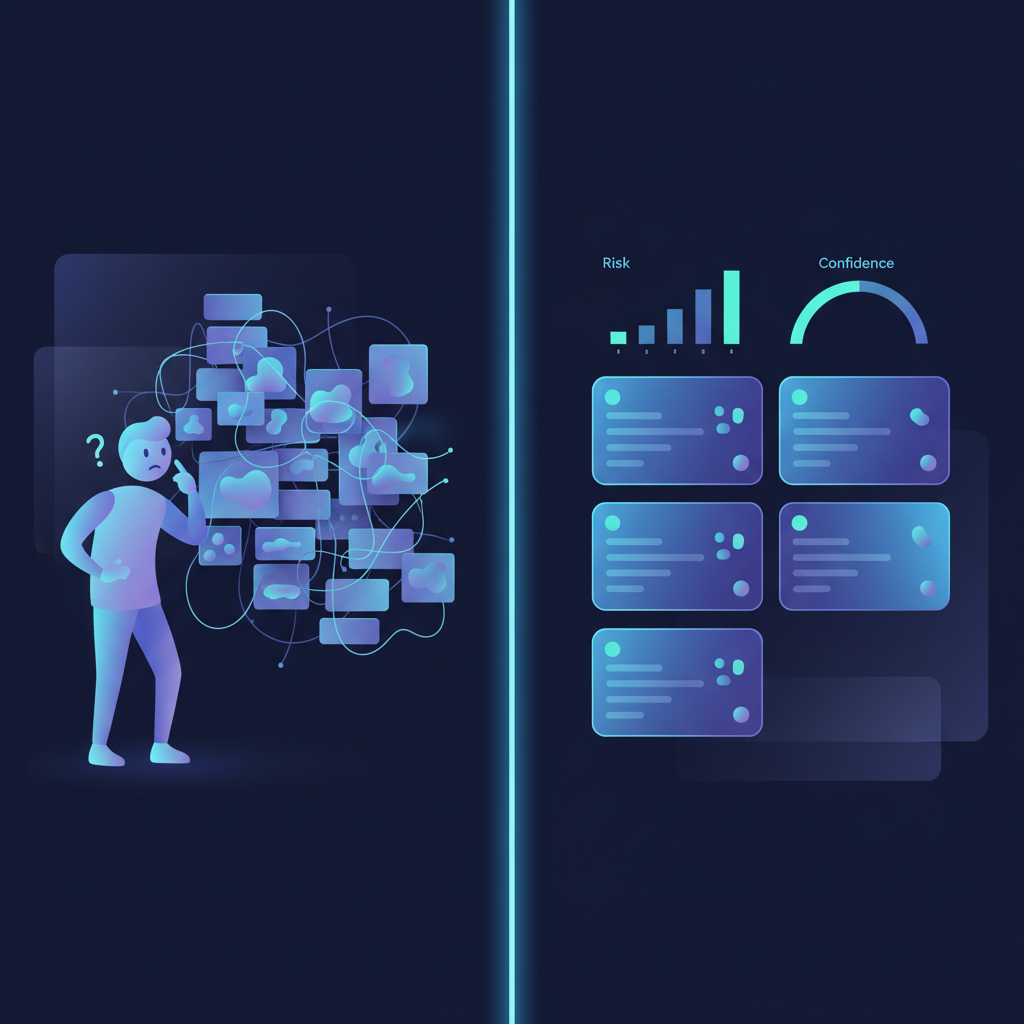
According to Gartner's research on sales forecasting, fewer than 50% of forecasted deals close in the predicted quarter. That's not a CRM problem or a process problem. It's a qualification problem.
Reps lack three critical skills:
1. They can't distinguish real buying signals from polite interest
A prospect says "this looks great, let's schedule a follow-up." The rep logs it as a strong commit. AI, however, recognizes that phrase appears in 73% of deals that eventually ghost, because it lacks concrete next steps, named participants, or calendar commitment.
In QUOTA role-play sessions, we simulate scenarios where prospects give enthusiastic but vague responses. Reps must probe for evidence: "That's great to hear—who specifically will join that follow-up, and what decision will we make together?" AI scores whether they extract a real commit or accept the brush-off.
2. They don't surface objections early enough
Reps fear that asking about budget, competition, or internal skeptics will "kill the deal." So they avoid the hard questions—and those deals slip at the eleventh hour when the CFO says no or a competitor emerges.
AI role-play creates high-pressure scenarios where the prospect has a hidden objection (budget concerns, a preferred vendor, a skeptical stakeholder). Reps must ask the discovery call questions that uncover real pain and risk. If they don't, the AI prospect stalls at contract stage—and the rep learns that avoiding tough questions creates false pipeline.
3. They over-rely on their champion's confidence
A champion says "we're definitely moving forward." The rep forecasts the deal as 90% likely. But the champion doesn't control budget, hasn't mapped the decision process, and is over-optimistic about internal buy-in.
AI trains reps to validate beyond the champion. In role-play, the AI champion might be enthusiastic but unable to answer questions about procurement, legal review, or executive sign-off. Reps learn to say, "I love your excitement—help me understand the approval chain so we can forecast this accurately on both sides."
The forecasting skills AI actually teaches
AI role-play for sales training isn't about memorizing scripts. It's about building judgment through repetition and feedback. Here are the specific forecasting skills AI develops:
Skill 1: Quantifying buyer urgency with evidence
Reps learn to ask: "What happens if you don't solve this by [date]?" and "Who internally is measuring success on that timeline?"
AI role-play scenarios include prospects who claim urgency but can't articulate consequences. Reps practice probing until they hear measurable business impact ("we'll miss our Q3 launch and lose $2M in revenue") or recognize the urgency is manufactured.
After each session, AI scores whether the rep accepted vague urgency or validated it with evidence—and shows them the correlation between evidence-backed urgency and actual close rates.
Skill 2: Mapping decision process and authority
Reps practice asking: "Walk me through what happens after this call—who reviews the proposal, what questions will they ask, and when do they meet?"
In QUOTA simulations, prospects often say "I'll take it to my team" without specifics. AI coaches reps to dig deeper: "Help me understand—is this a formal review meeting, and will you be presenting, or will I need to be there?"
The AI tracks whether reps leave the call with a documented decision map (names, roles, meeting dates, criteria) or a vague promise. Only the former predicts accurate forecasts.
Skill 3: Spotting red-flag language in real time
AI analyzes thousands of role-play conversations to identify phrases that correlate with slipped deals:
- "We're still exploring options" (deal is earlier-stage than rep thinks)
- "I need to run this by a few people" (authority not validated)
- "Let's reconnect in a few weeks" (no concrete next step)
- "This is a priority for us" (vague urgency, no consequences articulated)
During live role-play, when a rep hears one of these phrases and moves forward without probing, AI pauses the session and asks: "What just happened? What would you ask next to validate this deal?" Reps learn to hear the red flags they previously missed.
Skill 4: Updating deal stages based on evidence, not hope
AI role-play includes scenarios where the rep must defend moving a deal to the next stage. The AI manager asks: "You marked this Discovery Complete—what evidence do you have that they've shared their full decision criteria?"
If the rep can't cite specifics (budget range confirmed, competition named, timeline tied to business event), AI moves the deal backward and explains why. Reps build the discipline to advance deals only when qualification is complete—which directly improves forecast accuracy.
Skill 5: Pressure-testing commits before the forecast call
In QUOTA sessions, reps practice the conversation they should have with themselves before committing a deal to forecast:
- "If this deal slips, what would be the reason?"
- "What question haven't I asked that could derail this?"
- "What does the prospect need to do this week for this to close on time?"
AI scores whether reps can articulate risks and mitigation plans. Those who can't are coached to gather more evidence before forecasting.
How AI role-play builds forecasting judgment

Traditional forecast training is reactive: a deal slips, and the manager says "you should have asked about budget earlier." The rep nods, but next quarter they make the same mistake because they haven't practiced asking hard questions under pressure.
AI role-play is proactive. Here's how it works:
Step 1: Reps enter scenarios that mirror their real pipeline
AI generates role-play scenarios based on the rep's actual deals: same industry, same persona, same stage. A rep working an enterprise SaaS deal practices with an AI CFO who behaves like the CFOs they'll actually encounter.
This isn't generic training. It's rehearsal for the exact conversations that determine forecast accuracy.
Step 2: AI prospects behave like real buyers—including the evasive ones
The AI doesn't give easy answers. It says "we're interested" without committing. It deflects budget questions. It introduces a new stakeholder late in the process. It mirrors the behaviors that cause real deals to slip.
Reps must practice the sales coaching observation practices their managers use: recognizing when a deal is stalling, when a prospect is avoiding a topic, when enthusiasm masks lack of authority.
Step 3: Reps receive instant feedback on qualification gaps
After each role-play, AI scores the rep on:
- Evidence gathered: Did they confirm budget, authority, timeline, and decision process?
- Risk surfaced: Did they uncover objections, competition, or internal skeptics?
- Commit quality: Did they secure a concrete next step with named participants and calendar time?
The feedback is specific: "You accepted 'we'll discuss internally' without asking who will be in that discussion or what criteria they'll use. In our data, deals with undefined internal discussions slip 68% of the time."
Step 4: Reps repeat until the skill becomes automatic
One role-play doesn't build judgment. Ten do. AI lets reps practice the same scenario—qualifying a skeptical CFO, navigating a multi-stakeholder decision, pressure-testing a champion's timeline—until they stop making the mistakes that kill forecast accuracy.
This is what AI sales training personalization enables: every rep gets the exact reps they need on the exact skills where they're weak, at a scale no human manager can deliver.
What AI conversation intelligence reveals about forecast accuracy
Beyond role-play, AI analyzes real sales conversations to identify patterns that predict close probability. Here's what we've observed in QUOTA's conversation data:
High-accuracy forecasters ask 3x more validation questions
Reps whose forecasts are accurate (within 10% of actual close rate) ask significantly more questions that validate evidence:
- "What's your budget range for solving this?"
- "Who else needs to approve this, and what concerns might they raise?"
- "What happens if we don't start by [date]?"
- "Have you solved a problem like this before, and how did that process go?"
Low-accuracy forecasters ask more pitch questions ("Would this feature help you?") and fewer validation questions.
Accurate forecasters update deals backward more often
Counter-intuitively, reps with the most accurate forecasts move deals out of late stages more frequently. They're not afraid to say "we don't have enough evidence to call this Closing" and move it back to Discovery.
This discipline—advancing deals only when qualification is complete—prevents pipeline inflation and makes their commits reliable.
Accurate forecasters document risk in their CRM notes
AI analyzes CRM notes and finds that high-accuracy reps explicitly log risks: "Champion is strong but CFO skeptical—need exec meeting," or "Timeline depends on Q4 budget release—may slip."
They're not hiding problems. They're naming them, which allows managers to coach on mitigation rather than being surprised when deals slip.
How to implement AI sales forecasting training
Here's the step-by-step framework we use at QUOTA to train reps on forecast accuracy:
Step 1: Diagnose each rep's qualification blind spots
Run AI role-play scenarios across budget, authority, timeline, and competition. Identify where each rep accepts vague answers or skips hard questions.
Example: A rep consistently advances deals without confirming budget. AI flags this as their #1 forecasting risk.
Step 2: Build personalized role-play curricula
Assign that rep 5–10 scenarios where they must qualify budget under pressure: skeptical CFOs, prospects who deflect, champions who don't control spend.
The AI adapts difficulty: if the rep improves, scenarios get harder (e.g., multi-stakeholder budget approvals). If they struggle, AI breaks the skill into smaller steps.
Step 3: Connect role-play performance to real pipeline outcomes
After each forecast cycle, compare reps' role-play scores (evidence gathered, risks surfaced) to their actual forecast accuracy. Show them the correlation: reps who score 85%+ in qualification role-plays forecast within 15% of actual close rates.
This makes training tangible. Reps see that practicing hard questions in AI role-play directly improves their real forecast reliability.
Step 4: Use AI to coach forecast calls in real time
During live forecast meetings, AI listens and flags when a rep commits a deal without evidence. The manager can pause and ask: "What's your evidence for that close date?" or "What could cause this to slip?"
This isn't about catching reps lying. It's about building the habit of evidence-based forecasting.
Step 5: Measure and iterate
Track these metrics monthly:
- Forecast accuracy rate: % of committed deals that close in the predicted quarter
- Pipeline slippage: % of deals that move out of Closing stage
- Stage-to-stage conversion: Are deals advancing with more evidence?
- Time in forecast meetings: Are reps prepared with evidence, reducing back-and-forth?
As accuracy improves, adjust AI role-play scenarios to address new gaps (e.g., competitive positioning, executive selling).
Common objections to AI sales forecasting (and how to address them)
"Our reps will game the AI to look good"
AI tracks behavior patterns across sessions. A rep who suddenly asks all the right questions in role-play but doesn't change their real-call behavior will show a gap between training scores and actual pipeline quality. Managers can spot this and coach accordingly.
"Forecasting is about relationships and gut feel, not interrogation"
Accurate forecasting requires relationships—but relationships built on trust and transparency, not wishful thinking. AI trains reps to ask hard questions in service of the buyer: "I want to make sure we don't waste your time—help me understand your decision process so we can align our teams."
That's not interrogation. It's partnership.
"We already have a forecast process—why add AI?"
Most forecast processes rely on reps already knowing how to qualify accurately. If your reps lack that skill, your process just documents bad data faster. AI builds the underlying skill—qualification judgment—that makes any process work.
For more on how AI complements (rather than replaces) human coaching, see The Complete Guide to AI in Sales.
Real-world impact: What changes when reps forecast accurately
When QUOTA clients train reps on AI-powered forecasting, here's what shifts:
Pipeline reviews become strategic, not interrogations
Managers stop asking "is this deal real?" and start asking "what's the risk, and how do we mitigate it?" Reps come prepared with evidence and documented risks, turning forecast calls into coaching sessions.
Deals slip less often—and when they do, no one is surprised
Reps surface risks early: "This deal depends on Q4 budget release—it may slip to January." Managers can plan around that rather than scrambling when the deal doesn't close.
Revenue becomes predictable
CFOs and boards trust the forecast because it's based on evidence, not optimism. Teams hit their numbers more consistently, which unlocks better hiring, investment, and growth planning.
Reps build confidence
When reps know how to qualify accurately, they stop fearing forecast calls. They're not guessing—they're reporting what they've validated. That confidence shows up in their buyer conversations, too.
FAQ
How does AI improve sales forecasting accuracy?
AI improves sales forecasting by analyzing conversation patterns, qualification gaps, and deal progression signals that human managers miss. It trains reps to spot red flags early, ask better qualification questions, and update forecasts based on buyer behavior rather than gut feel.
Can AI role-play train reps to forecast more accurately?
Yes. AI role-play simulates scenarios where reps must qualify deals under pressure, surface hidden objections, and assess buyer commitment. Reps practice the exact questioning and listening skills that lead to accurate pipeline predictions, receiving instant feedback on qualification gaps.
What forecasting skills can AI sales training teach reps?
AI sales training teaches reps to identify deal risk signals, quantify buyer urgency, validate budget and authority, assess competitive positioning, and update stage progression based on evidence. It builds the judgment to distinguish real commits from polite interest.
How do you measure AI sales forecasting ROI?
Measure forecast accuracy rate (predicted close vs actual), pipeline slippage reduction, stage-to-stage conversion improvements, time saved in forecast meetings, and revenue predictability. Compare rep forecast accuracy before and after AI training to quantify improvement.
Does AI replace human managers in forecasting?
No. AI trains reps to arrive at forecast calls with evidence and documented risks, making managers more effective. Managers still apply strategic judgment, coach on deal strategy, and make final commit decisions—but they're working with accurate data instead of guesses.
Build a forecast you can trust
Accurate forecasting isn't a reporting exercise. It's a skill—one that most reps never learn because they don't get enough practice under realistic pressure.
AI sales forecasting changes that. Through personalized role-play, real-time conversation analysis, and evidence-based coaching, AI trains reps to qualify deals with the rigor that makes pipelines predictable.
The result: fewer surprises, more closed deals, and a forecast your CFO actually believes.
Ready to train reps who forecast accurately? Explore how QUOTA's AI role-play platform builds the qualification judgment that drives revenue predictability—at scale, for every rep, every day.

Stefano Sechi
Co-founder, QUOTA Training
Stefano Sechi is co-founder of QUOTA Training. He works hands-on with B2B sales teams on cold calling, discovery and objection handling, and shaped much of the methodology behind QUOTA’s AI role-play scenarios.
Turn this into reps, not just reading
QUOTA Training lets your team practise these exact scenarios with an AI buyer that reacts like the real thing — then scores every call.
See it in action