Sales Stall Objection: Turn 'Call Me Next Quarter' Into Action
Part of the Objection Handling guide: The Complete Guide to Sales Objection HandlingThe sales stall objection—'call me next quarter'—kills pipeline velocity. Learn tactical frameworks to diagnose the real reason and convert stalls into steps forward.

Key takeaways
- The sales stall objection—"call me next quarter," "let's revisit this later," or "not right now"—is distinct from a hard no; it preserves optionality for the prospect while killing your pipeline velocity and forecast accuracy.
- Stalls mask one of four root causes: no compelling event, budget/authority gaps, competitive evaluation in progress, or genuine disinterest disguised as politeness—your job is to diagnose which.
- Use the STALL framework (Status, Timing, Authority, Leverage, Loss) to ask diagnostic questions that surface the real blocker and create a mutual action plan or disqualify cleanly.
- Converting a stall requires anchoring the conversation to a specific business outcome and date, not your sales cycle—prospects delay when they see no cost to waiting.
- Practice stall scenarios through role-play to build the muscle memory for calm, consultative responses that earn credibility rather than triggering defensiveness.
The sales stall objection is the silent killer of pipeline health. Unlike a hard "no" or even a price objection, a stall gives you just enough hope to keep the deal in your forecast while quietly eroding your win rate and stretching your sales cycle into oblivion.
When a prospect says "call me next quarter," "let's revisit this in a few months," or "now's not the right time," they're not committing to anything—not to buying, not to walking away, just to… waiting. And waiting costs you deal velocity, forecast accuracy, and the opportunity to allocate your time to real pipeline.
This guide will teach you how to diagnose the true reason behind a sales stall objection, respond with tactical frameworks that surface the real blocker, and either convert the stall into forward momentum or disqualify cleanly so you can move on. This is part of our broader objection handling pillar guide, but here we go deep on the nuances of the stall—a category of objection that demands its own playbook.
The anatomy of a sales stall objection

A stall is not the same as a "no." A hard objection—"we don't have budget," "we're happy with our current vendor"—gives you something concrete to address. A stall is deliberately vague. It's a conversational off-ramp that lets the prospect preserve the relationship, avoid confrontation, and keep their options open without committing energy or political capital.
Common stall phrases include:
- "Call me next quarter."
- "Let's revisit this after [event/busy season/end of year]."
- "We're interested, but the timing isn't right."
- "I need to focus on other priorities first."
- "Can you check back in a few months?"
Each of these sounds reasonable on the surface. But they share a fatal flaw: no mutual commitment to a next step. The prospect hasn't agreed to evaluate, to involve stakeholders, or to make a decision by a certain date. They've simply deferred the conversation—and the burden of follow-up falls entirely on you.
According to Gartner's B2B buying research, the average buying group now involves six to ten decision-makers, and deals stall most often when buyers struggle to build internal consensus or justify the cost of change. Your prospect may genuinely want your solution but lack the urgency, authority, or budget to move it forward right now. Or they may be using the stall as a polite brush-off because they've already decided you're not the right fit.
Your job is to figure out which scenario you're in—and fast.
Why prospects stall (and what it reveals)
Understanding the psychology behind a stall helps you craft the right response. Prospects delay for four primary reasons:
1. No compelling event
If there's no business pain tied to a specific date or outcome, your deal has no natural forcing function. The prospect may acknowledge the problem you solve, but if the cost of inaction is low or distant, they'll always prioritize more urgent fires. This is why learning to uncover a compelling event during discovery is so critical—it's your insurance policy against stalls later in the cycle.
2. Budget or authority gaps
The person you're speaking with may not control the budget, or the budget may be allocated elsewhere until the next fiscal period. Rather than admit they lack authority (which feels vulnerable), they deflect with timing. This is where MEDDIC qualification pays dividends—if you haven't validated Economic Buyer and Decision Criteria early, you'll discover the gap too late.
3. Competitive evaluation
The prospect may be running a bake-off and doesn't want to tip their hand. "Let's revisit next quarter" can mean "we're evaluating three vendors and you're not the frontrunner." If you suspect this, use competitor objection handling techniques to surface the comparison criteria and differentiate.
4. Polite disinterest
Sometimes a stall is just a soft no. The prospect doesn't want to burn the relationship or deal with a pushy follow-up, so they kick the can down the road indefinitely. Your goal here is to give them permission to say no—paradoxically, this often surfaces the real objection or confirms you should move on.
The STALL diagnostic framework
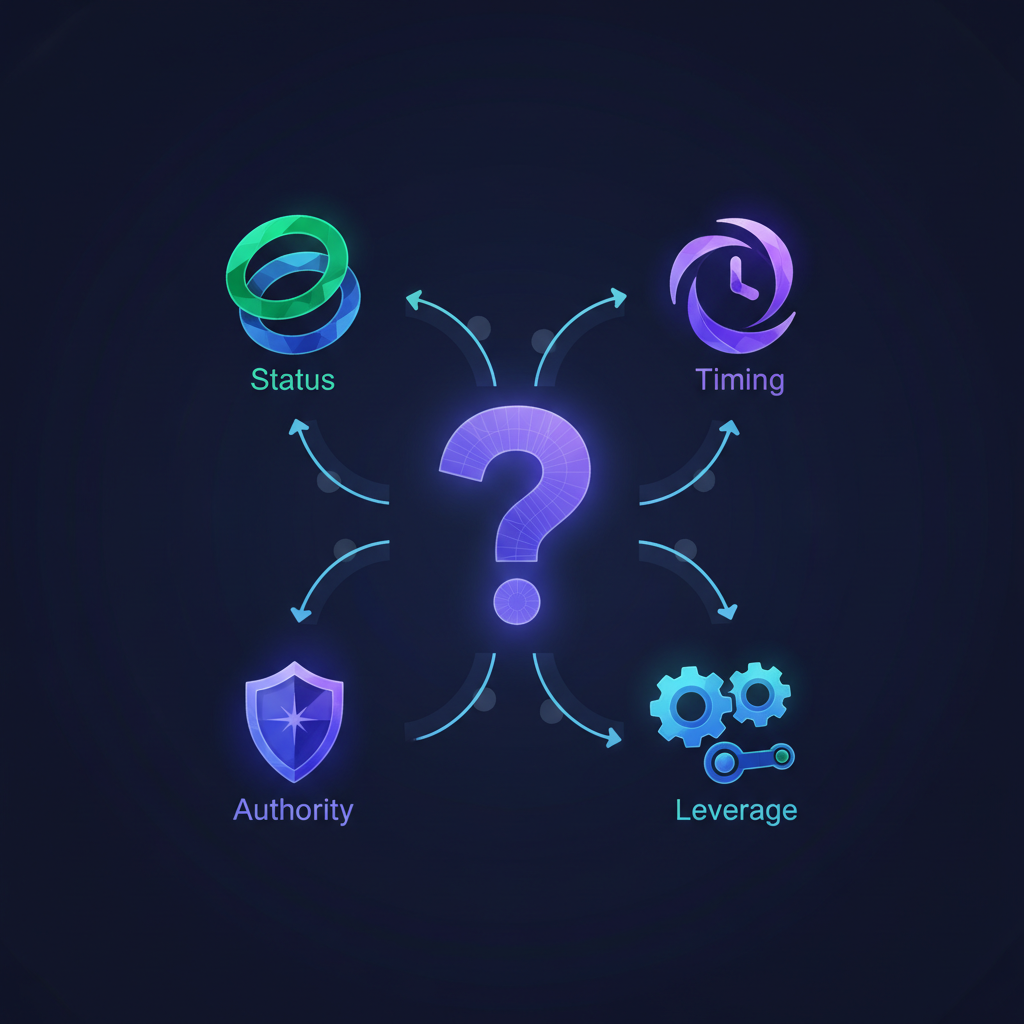
When a prospect stalls, resist the urge to accept the delay at face value or to immediately pitch harder. Instead, use this five-part framework to diagnose the root cause and create a path forward.
S – Status: Where are we really?
Ask a question that forces the prospect to articulate where the deal stands in their internal process:
- "I appreciate the heads-up on timing. Can I ask—where does this sit relative to your other priorities right now?"
- "Help me understand: is this a 'we're interested but need to wait' situation, or more of a 'we're not sure this is the right fit'?"
This question separates genuine interest from polite deflection. If the prospect can't or won't articulate the status, you likely don't have a real opportunity.
T – Timing: What's driving the date?
Anchor the conversation to their business calendar, not your quarter-end:
- "You mentioned next quarter—what's happening between now and then that makes that the right time?"
- "Is the timing tied to budget refresh, a project deadline, or something else?"
If they can't name a specific trigger, the "next quarter" is arbitrary—and you need to create urgency by connecting your solution to a nearer-term business outcome.
A – Authority: Who else is involved?
Stalls often hide authority gaps. Confirm who owns the decision and whether you've engaged them:
- "When we do reconnect, who else should be part of that conversation?"
- "Is there anyone on your side who'd want to weigh in before we move forward?"
If the answer reveals new stakeholders you haven't spoken to, the stall is a symptom of incomplete discovery. Use this insight to propose a brief alignment call with the broader team before next quarter.
L – Leverage: What changes if we wait?
Help the prospect quantify the cost of delay:
- "If we wait until Q2, what does that mean for [the pain point you discussed]—does it stay manageable, or does it get worse?"
- "Walk me through what happens if nothing changes between now and then."
This isn't a pressure tactic; it's a calibration question. If the prospect admits the problem will worsen or cost them revenue, you've just created a reason to act sooner. If they shrug, you've confirmed low urgency.
L – Loss aversion: What's at risk?
Frame the stall in terms of opportunity cost, not your product:
- "I hear you on the timing. One thing I want to make sure we don't lose sight of—you mentioned [specific goal or metric]. If we push this out, does that put [goal] at risk?"
- "What's the downside if we wait and this takes longer to implement than expected?"
This taps into loss aversion, a powerful psychological lever. Prospects weigh potential losses more heavily than equivalent gains—your job is to make the cost of inaction visible.
Tactical responses to common stall objections
Here are word-for-word scripts you can adapt for the most frequent stall scenarios. Each response follows the STALL framework and aims to surface the real blocker or create a concrete next step.
"Call me next quarter"
Your response:
"I can do that—thanks for being upfront. Before we schedule that, can I ask what's driving the timing? Is it budget cycle, a competing priority, or something else? I want to make sure when we do reconnect, we're picking up at the right point."
What this does: It acknowledges the request without surrendering control, and it forces the prospect to justify the delay. Their answer will tell you whether this is a real timing issue or a brush-off.
"We're interested, but now's not the right time"
Your response:
"I appreciate that, and I don't want to push if the timing genuinely doesn't work. Help me understand—what would need to change or happen for the timing to feel right? Is it a matter of bandwidth, budget, or something else on your roadmap?"
What this does: It invites the prospect to define the conditions for moving forward, which either surfaces a concrete milestone you can track or reveals that "not the right time" is code for "not interested."
"Let's revisit this after [event]"
Your response:
"That makes sense—[event] is a big lift. I'm curious, though: once [event] wraps, what's the first thing you'll want to tackle? And does [your solution area] factor into that, or is it further down the list?"
What this does: It tests whether your solution is truly a post-event priority or just a conversational placeholder. If it's low on their list, you can disqualify now rather than chase a ghost deal for months.
"I need to focus on other priorities first"
Your response:
"Totally fair—I know you're juggling a lot. Can I ask what those top priorities are? I want to understand if what we're discussing could actually support one of them, or if it's genuinely separate and we should reconnect later."
What this does: It positions you as a partner trying to help, not a vendor trying to sell. If your solution does tie to a top priority, you've just earned the right to reframe the conversation. If not, you've confirmed it's not a fit right now.
When to push and when to walk away
Not every stall is worth fighting. Part of mastering the sales stall objection is knowing when to invest energy in converting the delay and when to disqualify and move on.
Push when:
- The prospect can articulate a specific business pain and a date when it becomes critical.
- You've validated that the economic buyer is aware of the evaluation and supportive.
- The stall is tied to a legitimate external constraint (budget cycle, leadership transition, project dependency) that you can track.
- The prospect agrees to a mutual action plan with interim steps—even small ones—that keep the deal alive.
Walk away (or de-prioritize) when:
- The prospect refuses to commit to even a 15-minute follow-up call.
- You've asked diagnostic questions and received vague, non-specific answers.
- The "next quarter" date keeps moving every time you reconnect.
- You haven't been able to engage anyone beyond a single mid-level contact, and they won't facilitate introductions.
Walking away doesn't mean burning the bridge. It means moving the deal to a long-term nurture track and reallocating your time to opportunities with real momentum. As Salesforce's pipeline management guide emphasizes, healthy pipeline hygiene requires ruthless qualification—keeping stalled deals in your forecast destroys your credibility and your time allocation.
Building a mutual action plan to prevent stalls
The best way to handle a sales stall objection is to prevent it from happening in the first place. This requires building a mutual action plan (MAP) early in the sales cycle—a shared document that outlines each party's responsibilities, key milestones, and decision dates.
A strong MAP includes:
- Decision criteria: What factors will the prospect use to evaluate solutions?
- Stakeholders: Who needs to be involved, and what's their role?
- Timeline: What are the key dates (budget approval, vendor selection, implementation start)?
- Next steps: What happens after this call, and who owns each action?
When you co-create this plan with your champion during discovery (see our discovery call framework for how to facilitate this), you accomplish two things:
- You make the buying process explicit, which reduces the likelihood of surprise delays.
- You create a reference point to hold the prospect accountable—if they try to stall, you can point back to the MAP and ask, "We agreed [X] was happening by [date]—what's changed?"
This isn't about being adversarial; it's about treating the deal like a partnership. Prospects respect reps who bring structure and clarity to the buying process.
Role-playing stall scenarios to build confidence
Knowing the framework is one thing. Executing it under pressure—when a prospect catches you off-guard with "just call me in three months"—is another. This is where deliberate practice pays off.
At QUOTA, we see sales teams use AI role-play to simulate stall objections in realistic scenarios, complete with voice tone, pacing, and the emotional texture of a real call. Reps practice the STALL framework until the diagnostic questions become second nature, and they learn to stay calm and consultative rather than defensive or pushy.
If you're building a coaching program around objection handling, include stall scenarios in your rotation. Have reps practice:
- Responding to "call me next quarter" without immediately agreeing or pitching harder.
- Asking follow-up questions that surface the real reason for the delay.
- Proposing a low-commitment next step (a 15-minute check-in, a stakeholder intro, a pilot scope) that tests the prospect's true intent.
The goal isn't to memorize scripts—it's to internalize the logic of the framework so you can adapt it in the moment.
Tracking and learning from stalls
Finally, treat stalls as data. If you're seeing a pattern of deals stalling at a particular stage, it's a signal that something upstream in your process is broken—usually in discovery or qualification.
Ask yourself:
- Are we validating compelling events early enough?
- Are we engaging the economic buyer, or getting stuck with influencers who can't move the deal forward?
- Are we setting clear next steps and mutual commitments after every call?
- Are we qualifying out deals that don't meet our ideal customer profile?
Use your CRM and conversation intelligence tools to tag stall objections and review them in pipeline reviews. Look for common language, common stages, and common rep behaviors that correlate with stalls. Then coach to those gaps.
This kind of analysis turns stalls from frustrating mysteries into actionable coaching opportunities—and over time, you'll see fewer deals drifting into "call me next quarter" limbo.
FAQ
What is a sales stall objection?
A sales stall objection occurs when a prospect delays a decision without committing to a timeline or next step—phrases like "call me next quarter" or "let's revisit this later" signal a stall rather than genuine interest or a hard no.
Why do prospects stall instead of saying no?
Prospects stall to avoid confrontation, preserve the relationship, buy time to evaluate competitors, or because they lack the authority, budget, or urgency to move forward. A stall is often a polite deflection masking a deeper issue.
How do I know if a stall is real or an excuse?
Test the stall by proposing a specific, low-commitment next step—if the prospect resists even a 15-minute follow-up call or refuses to share their decision criteria, the stall is likely masking disinterest or a blocker you haven't uncovered.
What's the best way to respond to "call me next quarter"?
Acknowledge the request, then ask a diagnostic question to uncover the real reason: "I appreciate that—can I ask what's driving the timing? Is it budget cycle, a competing priority, or something else?" This shifts the conversation from delay to discovery.
Should I keep following up on a stalled deal?
Only if the prospect has committed to a mutual action plan with specific interim steps. If they won't engage in even low-commitment next steps, move the deal to long-term nurture and focus your energy on active pipeline.

Stefano Sechi
Co-founder, QUOTA Training
Stefano Sechi is co-founder of QUOTA Training. He works hands-on with B2B sales teams on cold calling, discovery and objection handling, and shaped much of the methodology behind QUOTA’s AI role-play scenarios.
Turn this into reps, not just reading
QUOTA Training lets your team practise these exact scenarios with an AI buyer that reacts like the real thing — then scores every call.
See it in action