Objection Handling Training: Build Reps Who Win Every Pushback
Part of the Objection Handling guide: The Complete Guide to Sales Objection HandlingTraditional objection handling training fails because it's one-and-done. Learn how to build a continuous practice system that turns every rep into a confident closer.

Key takeaways
- One-off objection handling training fails because reps forget 70% within 48 hours without practice—effective training requires continuous reinforcement through weekly role-play and real-world application.
- The best objection handling training separates objection types by call stage—cold call objections need different responses than discovery or closing objections, and training must reflect this context.
- AI role-play scales objection handling practice 10x—reps can practice on-demand against unlimited scenarios without waiting for peer availability or manager time.
- Measuring objection conversion rate (not just handling confidence) proves training ROI—track how often reps turn "not interested" into meetings and "too expensive" into next steps.
- Gamification drives 3x more practice volume—leaderboards, badges, and scenario challenges make objection handling practice addictive rather than a chore.
Why traditional objection handling training fails
Most sales organizations run objection handling training the same way: gather reps in a room (or Zoom), present a deck of frameworks, role-play for an hour with a manager, then send everyone back to their desks.
Three weeks later, reps are still freezing when a prospect says "we're all set with our current vendor."
The problem isn't the content. The problem is the delivery model.
According to Gartner research on B2B buying, buyers now raise objections earlier and more frequently than ever—often before a rep even finishes their value proposition. Yet most objection handling training treats it as a discrete module you "complete" rather than a skill you build through continuous practice.
Here's why the traditional approach fails:
1. It's a one-time event, not a practice system
You run a workshop. Reps nod along. They practice a few scenarios. Then they go back to real calls where the objections sound nothing like the sanitized examples from training.
Without repetition, the frameworks don't stick. Reps revert to their default responses—usually some version of "I understand, but..." followed by a feature dump.
2. There's no safe space to fail
Role-playing with your manager or a peer in front of the team creates performance anxiety. Reps focus on not looking stupid instead of experimenting with new approaches.
The result? Surface-level practice where everyone plays it safe and nobody pushes their limits.
3. Feedback is delayed and inconsistent
A manager might review one recorded call per week and leave a comment like "handle objections better." That's not coaching—that's a suggestion with no instruction manual.
Reps need immediate, specific feedback on what worked, what didn't, and what to try next time. Monthly coaching calls can't deliver that frequency.
4. Training doesn't match real call context
Most objection handling training lumps all objections together. But "I'm not interested" on a cold call requires a completely different response than "I'm not interested" at the end of a discovery call.
Context matters. Training that ignores call stage, buyer persona, and deal size produces generic responses that fall flat in real conversations.
5. There's no measurement of actual skill improvement
Organizations measure training completion rates, not objection conversion rates. You track who attended the workshop, not who can actually turn "send me some information" into a booked meeting.
If you can't measure whether reps are getting better at converting objections into progress, you can't improve the training.
What effective objection handling training looks like
Effective objection handling training isn't a workshop. It's a system that builds skill through continuous practice, immediate feedback, and real-world application.
Here's what that system includes:
Objection taxonomy by call stage
Not all objections are created equal. Your training must segment objections by where they appear in the sales process:
- Cold call objections: "Not interested," "Send me an email," "We're all set," "Bad timing"
- Discovery objections: "We don't have budget," "We're locked into a contract," "This isn't a priority"
- Demo/presentation objections: "Your competitor does X," "This is too complex," "We need more features"
- Closing objections: "The price is too high," "We need to think about it," "Can you do better on price?"
Each category requires different frameworks, tonality, and follow-up strategies. Reps need targeted practice for each stage, not a generic "objection handling 101" session.
For a deep dive into proven models, see our objection handling frameworks guide.
Scenario-based role-play (not script memorization)
Scripts create robots. Scenarios create thinkers.
Instead of handing reps a script for "I'm not interested," give them a scenario:
"You're calling a VP of Sales at a 200-person SaaS company. You're 15 seconds into your opener when they interrupt: 'Yeah, we're not interested.' They sound annoyed. What do you say?"
Now the rep has to think. They need to read tone, assess urgency, and choose a response that fits the moment.
Run 10 variations of that scenario with different tonalities, different industries, different objection intensities. That's how you build adaptability, not memorization.
Immediate, specific feedback loops
Feedback must be:
- Immediate: Within seconds of the practice session, not days later
- Specific: "You rushed through the objection without acknowledging it" beats "be more empathetic"
- Actionable: Tell reps exactly what to do next time
This is where AI sales objection handling training shines. AI can analyze a rep's response in real time, flag missed opportunities, and suggest alternative approaches—all without waiting for a manager's calendar to open up.
Progressive difficulty (gamified skill-building)
Start with easy objections delivered in a neutral tone. Once a rep converts 80% of those, increase difficulty:
- Add emotional intensity (frustrated buyer, skeptical gatekeeper)
- Layer multiple objections in one call
- Introduce time pressure ("I've got two minutes")
- Simulate real prospects from your ICP with industry-specific concerns
Gamification makes this progression addictive. Reps chase higher scores, unlock new scenarios, and compete on leaderboards. Practice stops feeling like work and starts feeling like a challenge worth conquering.
Platforms like QUOTA Training use this exact model—reps practice against AI that adapts difficulty based on performance, keeping them in the "growth zone" where learning happens.
Integration with real call data
Your objection handling training should pull from actual objections your reps encounter in the field.
Use conversation intelligence tools to identify the top 10 objections your team hears each month. Build practice scenarios around those exact phrases, tonalities, and contexts.
When a rep practices handling "We're already working with [competitor]" in training, then hears it on a live call the next day, the response flows naturally. That's transfer of learning.
Build a continuous objection handling practice system
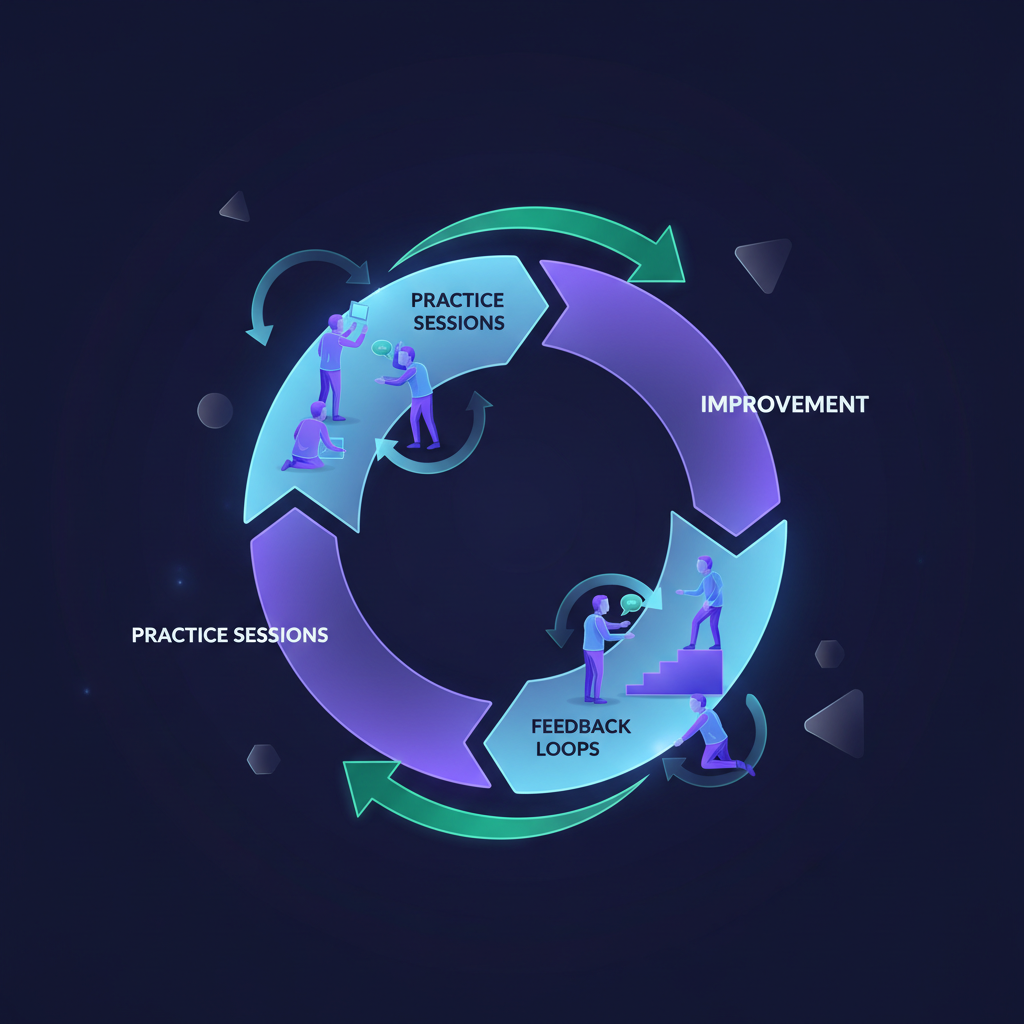
Here's how to structure ongoing objection handling training that actually sticks:
Week 1-2: Foundation (frameworks + basic scenarios)
Introduce the core objection handling frameworks your team will use:
- Feel, Felt, Found
- Acknowledge, Isolate, Reframe
- Cushion, Question, Answer
Run 5-10 basic scenarios per rep using neutral tonality and common objections. Goal: familiarize reps with the structure of a good response.
Week 3-4: Contextualization (stage-specific practice)
Segment practice by call stage. Cold call reps practice cold call objections. AEs practice discovery and closing objections.
Introduce tonality variation. Run the same objection three ways: neutral, slightly annoyed, and openly hostile. Reps learn to adjust their approach based on buyer mood.
Week 5-8: Skill acceleration (AI role-play + peer competition)
Shift to daily or every-other-day practice using AI role-play training. Reps practice on their own schedule, get instant feedback, and track improvement over time.
Add gamification: leaderboards for objection conversion rate, badges for mastering specific objection types, scenario challenges where reps compete to handle the toughest objections.
Week 9+: Real-world application + reinforcement
Reps apply their training on live calls. Managers review recorded calls weekly, flag objection handling moments (good and bad), and assign targeted practice scenarios based on what they observe.
Continue AI role-play 2-3x per week to maintain skill sharpness. Just like athletes don't stop practicing once they make the team, reps don't stop practicing objection handling once they "get it."
This is the model we use at QUOTA Training—continuous, contextual, gamified practice that builds confidence through repetition, not one-time workshops that fade within days.
For more on building a scalable sales coaching program that includes objection handling, see our complete guide.
How to measure objection handling training effectiveness
If you can't measure it, you can't improve it. Here's what to track:
Objection conversion rate
This is the most important metric. Of all the objections a rep encounters, what percentage do they convert into progress (a meeting booked, a next step scheduled, a discovery call advanced)?
Track this by objection type:
- "Not interested" → Meeting booked
- "No budget" → Discovery scheduled
- "Too expensive" → Pricing conversation continued
If conversion rates improve after training, the training works. If they don't, iterate.
Call-to-meeting conversion rate
For SDRs, this is the ultimate measure. If objection handling training is working, more cold calls should turn into meetings.
Track this weekly. A 5-10% improvement in conversion rate after implementing continuous objection handling practice is realistic and meaningful.
Time-to-productivity for new reps
How long does it take a new SDR to hit 80% of quota? Effective objection handling training should reduce ramp time by 2-4 weeks because reps gain confidence faster.
For tactics on accelerating ramp, see our guide on training reps without pulling them off the phones.
Practice volume and engagement
Are reps actually using the training? Track:
- Number of practice sessions per rep per week
- Average session length
- Scenario completion rate
If reps aren't practicing, the training isn't sticky. Gamification and leaderboards typically drive 3x higher engagement than "assigned practice."
Manager coaching efficiency
How much time do managers spend coaching objection handling? With AI role-play, this should decrease over time as reps self-serve their practice needs.
Managers shift from running role-plays to reviewing real calls and providing strategic guidance—higher-leverage coaching that moves the needle on deals.
How AI transforms objection handling training
AI doesn't replace human coaching. It scales practice.
Here's what AI-powered objection handling training enables:
Unlimited practice reps: A rep can run 10 objection handling scenarios in 30 minutes, on-demand, without waiting for a manager or peer. That's 10x more practice than traditional methods allow.
Instant feedback: AI analyzes tone, pacing, word choice, and framework usage in real time. Reps know immediately what worked and what didn't.
Adaptive difficulty: AI adjusts objection intensity based on rep performance. Struggling reps get easier scenarios to build confidence. High performers get harder challenges to stay engaged.
Contextual scenarios: AI can simulate specific buyer personas, industries, and deal contexts. A rep selling to healthcare can practice healthcare-specific objections. A rep calling into enterprise can practice multi-stakeholder objections.
Data-driven coaching: Managers see exactly where each rep struggles—specific objection types, tonality issues, framework gaps—and assign targeted practice to close those gaps.
For a detailed comparison of AI and human coaching approaches, see AI Sales Coaching vs Human: Which Delivers Better Results?
According to Salesforce on sales training effectiveness, organizations that combine AI-powered practice with human coaching see 2-3x higher skill retention than those using traditional methods alone.
Common objection handling training mistakes to avoid
Mistake 1: Teaching frameworks without context
Reps memorize "Feel, Felt, Found" but don't know when to use it. They deploy it on every objection, even when it doesn't fit.
Fix: Teach frameworks alongside scenarios that show when each framework works best.
Mistake 2: Focusing on "handling" instead of "preventing"
The best objection handling is objection prevention. If your cold call opener is weak, you'll face "not interested" every time—no framework will save you.
Train reps on cold call objection prevention alongside objection handling.
Mistake 3: Practicing only with friendly peers
Role-playing with a colleague who's rooting for you doesn't simulate a skeptical buyer. The tone is too polite, the objections too soft.
Use AI or hire actors to deliver objections with real buyer skepticism and impatience.
Mistake 4: No follow-up after initial training
You run a workshop, reps feel confident, then real calls humble them. Without follow-up practice, confidence evaporates.
Build a 90-day reinforcement plan with weekly practice and monthly skill assessments.
Mistake 5: Measuring activity instead of outcomes
"80% of reps completed objection handling training" tells you nothing about whether they can actually handle objections.
Measure objection conversion rate, call-to-meeting rate, and deal velocity instead.
How to roll out objection handling training across your team
Step 1: Audit current objection performance
Pull call recordings from the last 30 days. Identify:
- The 10 most common objections your team hears
- Which objections reps handle well (high conversion)
- Which objections reps struggle with (low conversion)
This data shapes your training priorities.
Step 2: Build a scenario library
Create 20-30 practice scenarios based on real objections, segmented by call stage and buyer persona. Include tonality notes (neutral, skeptical, hostile).
Update this library quarterly as new objections emerge.
Step 3: Launch with a live kickoff
Run a 90-minute live session to introduce frameworks, demonstrate best practices, and run a few group role-plays. This creates shared language and energy.
Then shift to continuous practice using AI role-play tools.
Step 4: Gamify daily/weekly practice
Set a team goal: "Everyone completes 3 objection handling scenarios this week." Add a leaderboard. Recognize top performers in team meetings.
Make practice visible and celebrated, not hidden and optional.
Step 5: Integrate with 1:1 coaching
Managers review real calls weekly, identify objection handling gaps, and assign specific practice scenarios to close those gaps.
Example: "You struggled with 'we don't have budget' on the Johnson call. Practice scenario #14 three times before our next 1:1."
Step 6: Measure and iterate monthly
Track objection conversion rate by rep and by objection type. If conversion rates plateau, adjust training:
- Add new scenarios
- Increase difficulty
- Introduce new frameworks
Training is never "done." It's a continuous improvement loop.
For more on building a complete comprehensive objection handling guide, explore our pillar resource.
FAQ
How often should reps practice objection handling?
Reps should practice objection handling at least 2-3 times per week in short, focused sessions. Daily micro-practice (5-10 minutes) is more effective than monthly marathon training sessions because it builds muscle memory and confidence through repetition.
What's the biggest mistake in objection handling training?
The biggest mistake is treating objection handling as a one-time workshop instead of an ongoing skill. Reps forget 70% of what they learn within 48 hours without practice. Effective training requires continuous reinforcement through role-play and real-world application.
Can AI replace human coaches for objection handling training?
AI can't fully replace human coaches but it dramatically scales practice opportunities. AI role-play allows reps to practice objection handling on-demand, get instant feedback, and build confidence before live calls. Human coaches then focus on nuanced strategy and deal-specific coaching.
How do you measure objection handling training effectiveness?
Measure effectiveness through objection conversion rates (how often reps turn objections into progress), call-to-meeting conversion rates, deal velocity, and win rates. Track these metrics before and after training, and monitor ongoing improvement through conversation intelligence tools.

Stefano Breglia
Co-founder, QUOTA Training
Stefano Breglia is co-founder of QUOTA Training. He focuses on sales methodology, deal progression and how AI simulation accelerates rep ramp time across the SDR, BDR, AE and AM roles.
Turn this into reps, not just reading
QUOTA Training lets your team practise these exact scenarios with an AI buyer that reacts like the real thing — then scores every call.
See it in action